Get in touch with Xiamen Yasin Industry & Trade Co., Ltd.


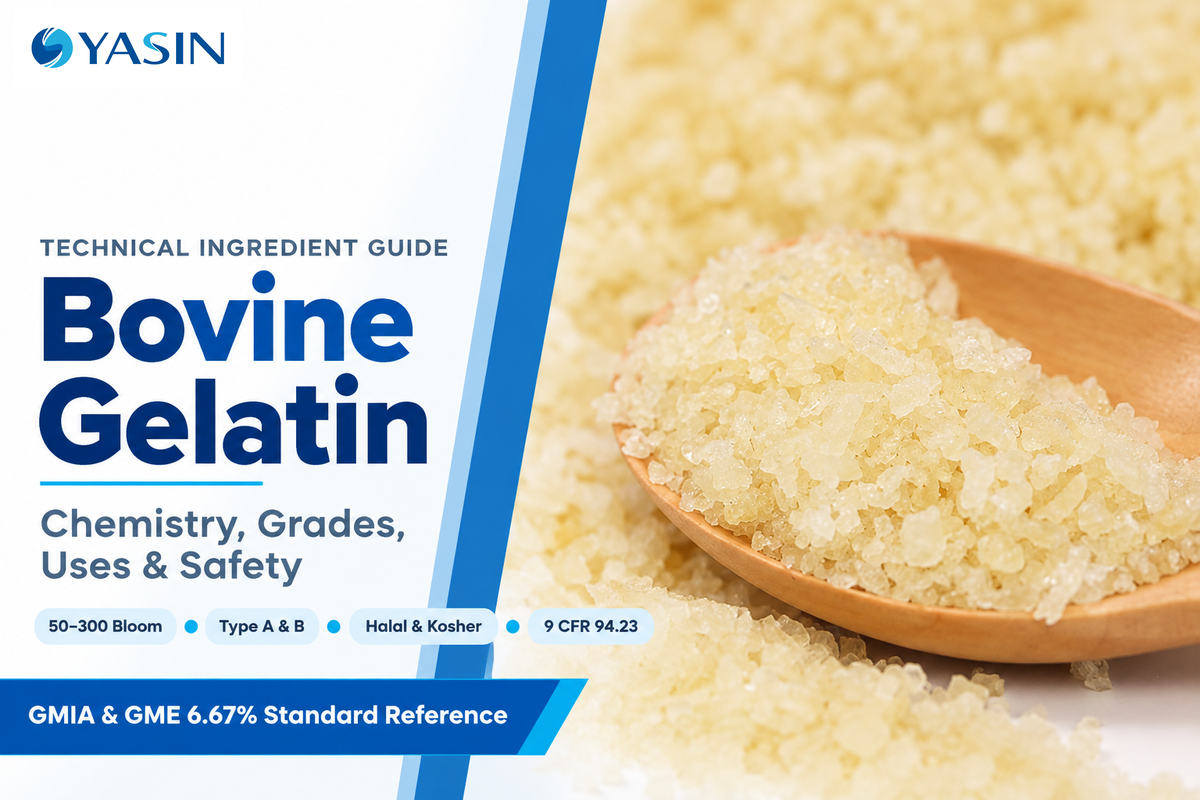
Bovine gelatin (CAS 9000-70-8) is an unflavored, pure animal protein made by partially hydrolyzing Type I and Type III collagen extracted from cattle hides and bones. Composed of 85–90% protein by dry weight, this versatile thickening agent forms thermoreversible gels that melt near body temperature at 30–35 °C. This guide covers hide versus bone processing, Bloom strength and dynamic viscosity grading, and Type A versus Type B chemistry.
You may also compare beef gelatin and hydrolyzed collagen peptides, and plant hydrocolloids and understand the differences between Halal, Kosher, and federal food safety rules.
What Is Bovine Gelatin and How Is It Made From Cattle Hide vs. Bone?
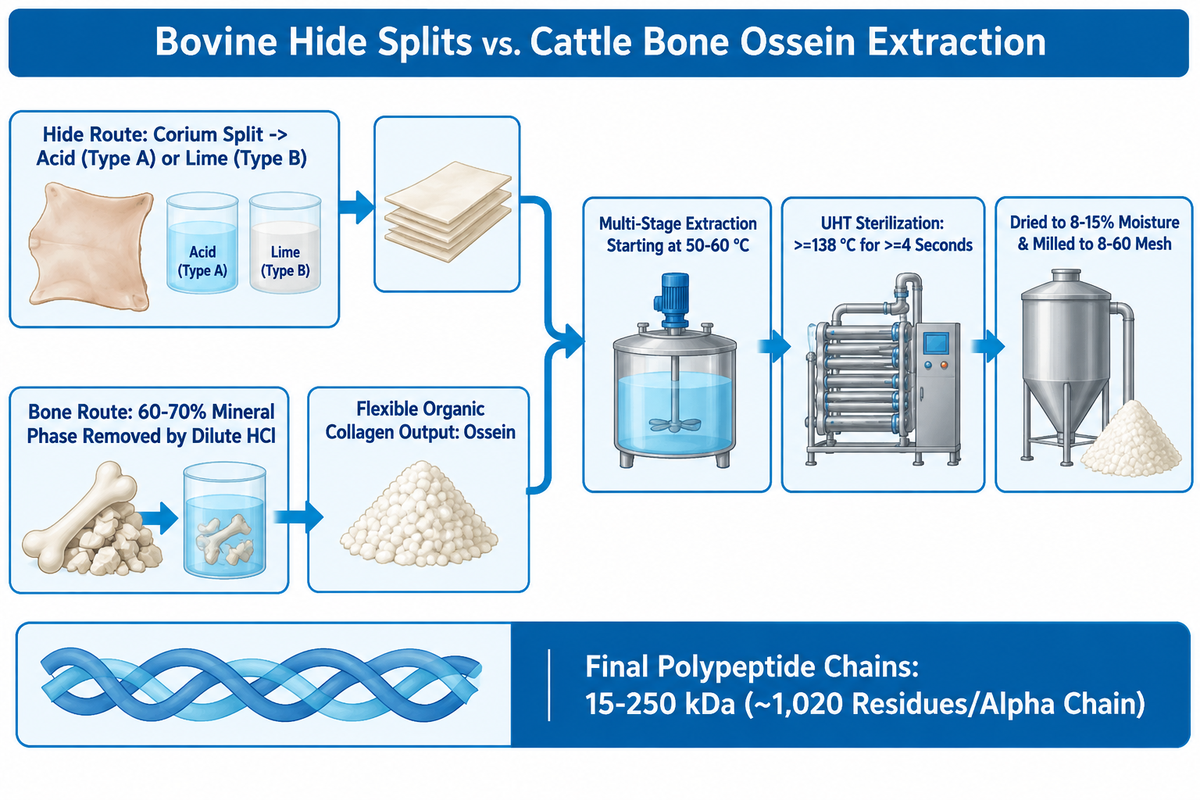
Bovine gelatin, commonly called beef gelatin or gelatine in retail and trade packaging, is a water-soluble protein compound produced by partially hydrolyzing cattle collagen. Hide splits undergo acid (Type A) or lime (Type B) conditioning, while crushed bones require dilute acid demineralization into ossein before warm aqueous extraction.
Native collagen inside cattle skin, tendons, and skeletal connective tissue forms tightly crosslinked triple-helix fibrils that swell in cold water without dissolving. According to peer-reviewed collagen hydrolysis research, partial hydrolysis breaks intermolecular crosslinks to yield a distribution of alpha, beta, and gamma polypeptide chains spanning roughly 15–250 kDa. Higher-molecular-weight strands rebuild the thermoreversible gel network, while shorter fragments add viscosity without gelling. Structurally, biochemical characterization of the gelatin molecule shows that each parent collagen alpha chain contains roughly 1,020 amino acid residues. Glycine occupies every third position alongside abundant proline and hydroxyproline, the cyclic imino acids that stabilize gel melting behavior.
Commercial manufacturing converts two primary cattle source streams—bovine hide splits and cattle bones—through distinct conditioning stages before hot-water extraction:
- Bovine hide (skin) route: Processors use collagen content of the inner split layer or corium after separating the outer leather. Hides are washed, trimmed, degreased, and conditioned in dilute mineral acid for short intervals (Type A) or in calcium hydroxide lime baths for several weeks (Type B) to loosen mature crosslinks.
- Bovine bone (ossein) route: Because vertebrate bone contains 60–70% inorganic calcium-phosphate mineral phase by dry weight, crushed and degreased cattle bones undergo dilute hydrochloric acid demineralization first. As detailed in U.S. Patent US5908921A and US6100381A, removing that mineral lattice leaves flexible organic collagen called ossein. Producers then lime and neutralize ossein to produce specialized cattle bone gelatin derived from bones.
- Progressive extraction and purification: Conditioned hides or bones undergo multi-stage aqueous extraction starting at 50–60 °C for initial high-Bloom draws and stepping upward on subsequent pulls. Clarified liquor passes through multi-stage filtration, ultrafiltration, ion-exchange de-ashing, vacuum evaporation, and ultra-high-temperature (UHT) heat treatment at 138 °C or higher for at least 4 seconds. The sterile liquor is chilled into noodles, dried to 8–15% moisture, and milled into 8–60 mesh bovine gelatin powder or granules.
First extraction draws experience gentler thermal cleavage and therefore deliver the highest molecular weight, lightest color, and highest Bloom strength. Later higher-temperature draws yield lower-Bloom, lower-viscosity cuts suited to clarification and softer food textures.
Is Bovine Gelatin From Cow or Pig, and Is It Suitable for Vegetarians?
Bovine gelatin comes strictly from cattle (Bos taurus)—never from pigs—and is not suitable for vegetarians or vegans because it is extracted from animal hides and bones.
Consumers often confuse generic “gelatin” or European food additive code E441 with porcine gelatin because pork skin supplies a large share of unlabeled European and North American confectionery. Because bovine gelatin hails from cattle, choosing and labeling “bovine gelatin” or “beef gelatin” prevents pork from being present, yet the ingredient remains strictly non-vegan, animal-derived collagen protein. Vegetarian and vegan formulations must replace it with plant hydrocolloids such as agar-agar, pectin, or carrageenan rather than any animal gelatin product.
Type A vs. Type B Processing, Bloom Strength, and Viscosity Specs
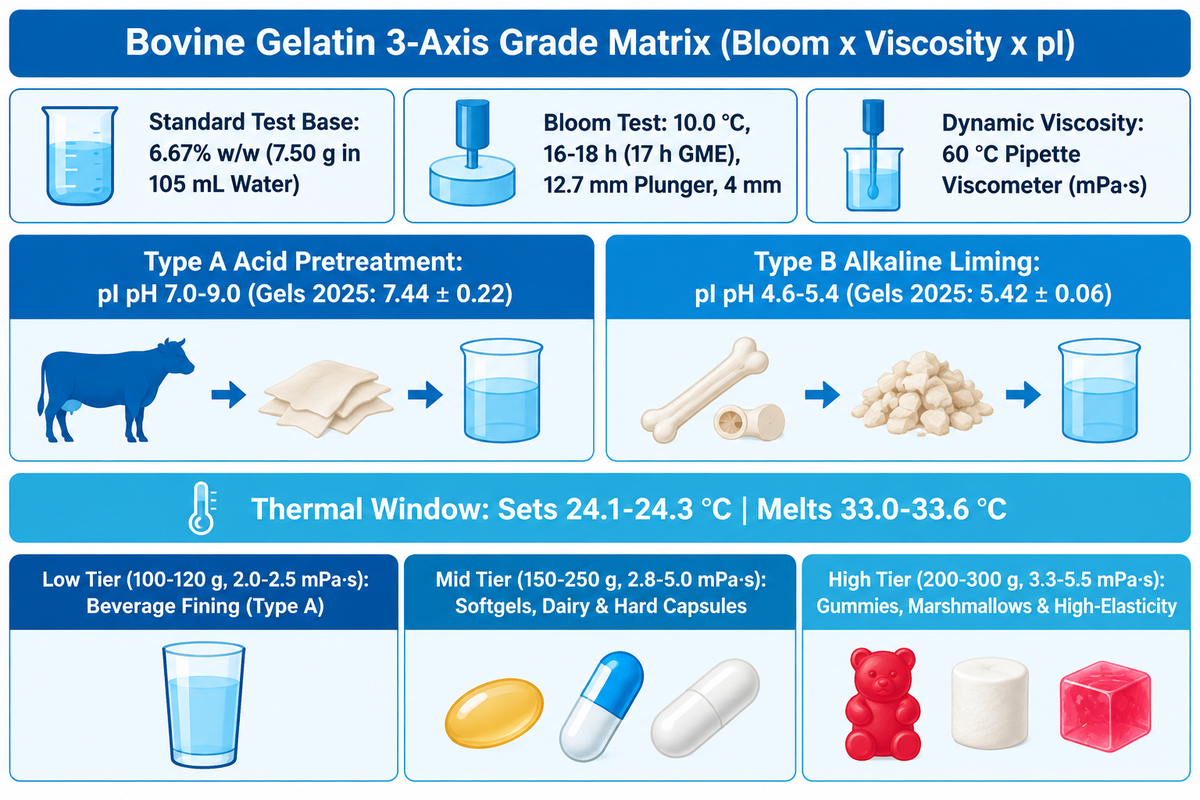
Alkaline Type B liming deamidates asparagine and glutamine residues to produce an isoelectric point for bovine gelatin of pH 4.6-5.4 while acid Type A pretreatment produces an isoelectric point of pH 7.0-9.0. A grade for production requires designation of Bloom strength, 60 °C dynamic viscosity and isoelectric point- never Bloom alone.
Both GMIA standardized gelatin testing methods and the GME October 2024 Monograph anchor physical grading on a single 6.67% w/w aqueous solution (7.50 g gelatin in 105 mL water). For Bloom strength, the solution matures at 10.0 °C for 16–18 hours (17 hours in GME), and a 12.7 mm plunger measures the gram force needed to depress the gel by 4 mm. Commercial edible and capsule grades span 50–300 Bloom, with most industrial bovine lots concentrated between 100 and 300 Bloom.
For dynamic viscosity, that same 6.67% solution is heated to 60 °C and timed through a calibrated pipette viscometer, reported in mPa·s (1 mPa·s equals 10 mP). Two lots sharing an identical 180 Bloom specification still run differently inside depositors or capsule pin bars if one measures 3.1 mPa·s and the other 4.7 mPa·s.
Experimental characterization of cattle bone gelatin in Gels (2025) quantifies how pretreatment chemistry shifts electrical charge and thermal behavior. Acid-extracted bone gelatin measured 197.33 ± 13.58 g gel strength with an isoelectric point of 7.44 ± 0.22, whereas alkaline-extracted Type B gelatin measured 207.67 ± 11.59 g with an isoelectric point of 5.42 ± 0.06. The two cuts set near 24.1–24.3 °C and melted near 33.0–33.6 °C. Because gelatin carries zero net charge at its isoelectric point and flips polarity across it, electrical mismatch causes formulation defects. Substituting positively charged Type A into a neutral or mildly acidic dairy or pectin system built for negatively charged Type B triggers turbidity or precipitation.
The Bovine Gelatin 3-Axis Grade Matrix (Bloom × Dynamic Viscosity × Isoelectric Point)
Formulators select reliable grades by pairing Bloom strength, hot-solution dynamic viscosity, and isoelectric point alongside particle mesh size (8–60 mesh) or culinary leaf format (Bronze 150, Silver 180, Gold 200, Platinum 240 Bloom):
| Functional Grade Tier | Bloom (6.67%, 10 °C) | Viscosity (6.67%, 60 °C) | Typical Type & pI | Mesh / Format |
|---|---|---|---|---|
| Beverage Clarification / Fining | 100–120 g | 2.0–2.5 mPa·s | Type A Hide (pI 7.0–9.0) | 40–60 mesh |
| Softgel Capsule Shell | 150–220 g | 2.8–4.5 mPa·s | Type B Bone/Hide (pI 4.6–5.4) | 8–15 mesh |
| Stirred Yogurt & Cultured Dairy | 150–220 g | 3.0–3.8 mPa·s | Type B Hide (pI 4.6–5.4) | 30–60 mesh |
| Aerated Mousses & Chilled Desserts | 180–240 g | 3.2–4.0 mPa·s | Type B Hide (pI 4.6–5.4) | 30–60 mesh |
| Meat Binding & Savory Aspic | 180–280 g | 3.5–4.8 mPa·s | Type B Hide/Bone (pI 4.6–5.4) | 20–40 mesh |
| Two-Piece Hard Capsule Shell | 200–250 g | 4.5–5.0 mPa·s | Type B Bone (pI 4.6–5.4) | 8–20 mesh |
| Confectionery Fruit Gummies | 200–260 g | 3.3–4.0 mPa·s | Type A/B Hide (pH-matched) | 20–40 mesh |
| Whipped Marshmallows | 200–260 g | 3.3–4.2 mPa·s | Type A/B Hide (pH-matched) | 20–40 mesh |
| High-Elasticity / Specialty Gummies | 260–300 g | 4.2–5.5 mPa·s | Type B First-Extract Hide | 20–40 mesh |
| Culinary Leaf Gelatin Sheets | 150 / 180 / 200 / 240 g | 2.8–4.5 mPa·s | Type B Hide (leaf cut) | 2.5–5.0 g sheets |
Coarse 8–20 mesh granules sink cleanly with minimal airborne dust inside vacuum capsule melters, while fine 40–60 mesh bovine gelatin powder blends evenly into dry dessert sachets before cold-water soaking.
Beef Gelatin vs. Collagen Peptides, Porcine, Fish, and Plant Hydrocolloids
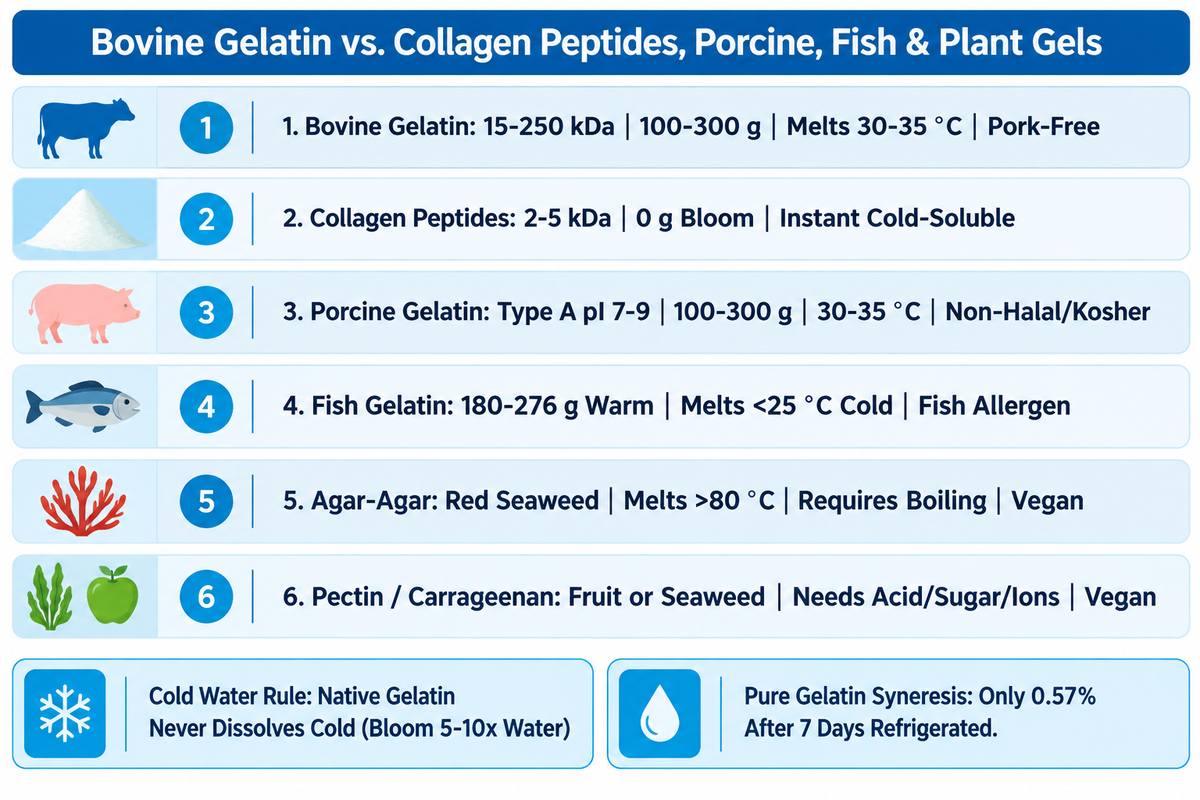
After cold blooming, gentle warming, and cooling, bovine gelatin forms an elastic, melt-in-the-mouth protein gel that melts at 30–35 °C, whereas hydrolyzed collagen peptides carry 0 Bloom and dissolve cold without gelling. Porcine gelatin matches bovine mechanics at equal Bloom but differs in charge and dietary status, while plant hydrocolloids yield firmer, higher-melting gels.
Let’s compare collagen and gelatin at the start with the length of their polypeptide chain. Both come from cattle hides or bones and share core glycine, proline, and hydroxyproline blocks, which is why cooks call gelatin “cooked collagen.” Unlike gelatin, hydrolyzed collagen (collagen peptides or hydrolysate) undergoes enzymatic cleavage into short 2–5 kDa peptides unable to rebuild triple helices, yielding cold-dispersible peptides for coffee and smoothies without thickening, while beef gelatin powder forms a reliable gel.
Across animal and plant gelling alternatives, melting temperature and texture determine whether a direct substitute works. Comparative marine gelatin research reports 180.8 Bloom for black tilapia skin and 276 Bloom for channel catfish skin, with carp skin measuring 19.16–20.86% imino acids. Even warm-water fish gelatin melts several degrees below bovine, while cold-water marine species soften below 25 °C. On the plant side, refrigerated hydrocolloid comparison trials recorded just 0.57% syneresis for pure gelatin after 7 days (and 0.73% for gelatin–gellan after 14 days). Blending gelatin with high-melting agar raised fruit gummy heat tolerance toward about 50 °C for warm climates, whereas pure agar-agar produces firmer, brittle textures. Similarly, a 2025 Gels review of carrageenan blends notes that standalone kappa-carrageenan forms strong but brittle gels prone to syneresis, though lambda-carrageenan can form gels in the presence of trivalent ions.
| Ingredient | Origin & Structure | Bloom Range | Gel Melt Temp | Cold-Water Soluble | Dietary Fit |
|---|---|---|---|---|---|
| Bovine Gelatin | Cattle hide/bone protein (15–250 kDa) | 100–300 g | 30–35 °C | No (bloom + warm) | Pork-free; Halal/Kosher when certified |
| Hydrolyzed Collagen Peptides | Enzymatic bovine/marine peptides (2–5 kDa) | 0 g (non-gelling) | Not applicable | Yes (instant) | Animal-derived; Halal/Kosher when certified |
| Porcine Gelatin | Pigskin protein (Type A dominant, pI 7–9) | 100–300 g | 30–35 °C | No (bloom + warm) | Non-Halal, non-Kosher |
| Fish Gelatin (Warm / Cold) | Tilapia, carp, or cold-water fish skin | 180–276 g (warm) | Below bovine / <25 °C cold | No (warm) / Partial | Pescatarian; fish allergen declaration |
| Agar-Agar | Red seaweed polysaccharide | Not measured in Bloom | High-melting (>80 °C) | No (requires boiling) | Vegan, Halal, Kosher |
| Pectin / Carrageenan | Fruit or seaweed polysaccharides | Not measured in Bloom | System-dependent | Requires heat + acid/sugar/ions | Vegan, Halal, Kosher |
Does Beef Gelatin Dissolve in Cold Water Like Collagen Peptides?
No—native beef gelatin powder never dissolves directly in cold water; instead, bloom the powder in 5–10 times its weight of cold water for 5–10 minutes before warming gently until dissolved into a clear liquid. Its granules absorb 5–10 times their weight in cold water to swell, then melt into a clear liquid only when gently warmed.
Stirring unflavored beef gelatin straight into iced beverages or boiling liquid causes instant clumping because hydrated outer shells trap dry powder inside. Anyone seeking unheated mixing for cold coffee and smoothies should choose enzymatically hydrolyzed bovine collagen peptides or hydrolyzed fish collagen instead of gelling gelatin.
Food, Confectionery, and Pharmaceutical Applications by Gelatin Grade
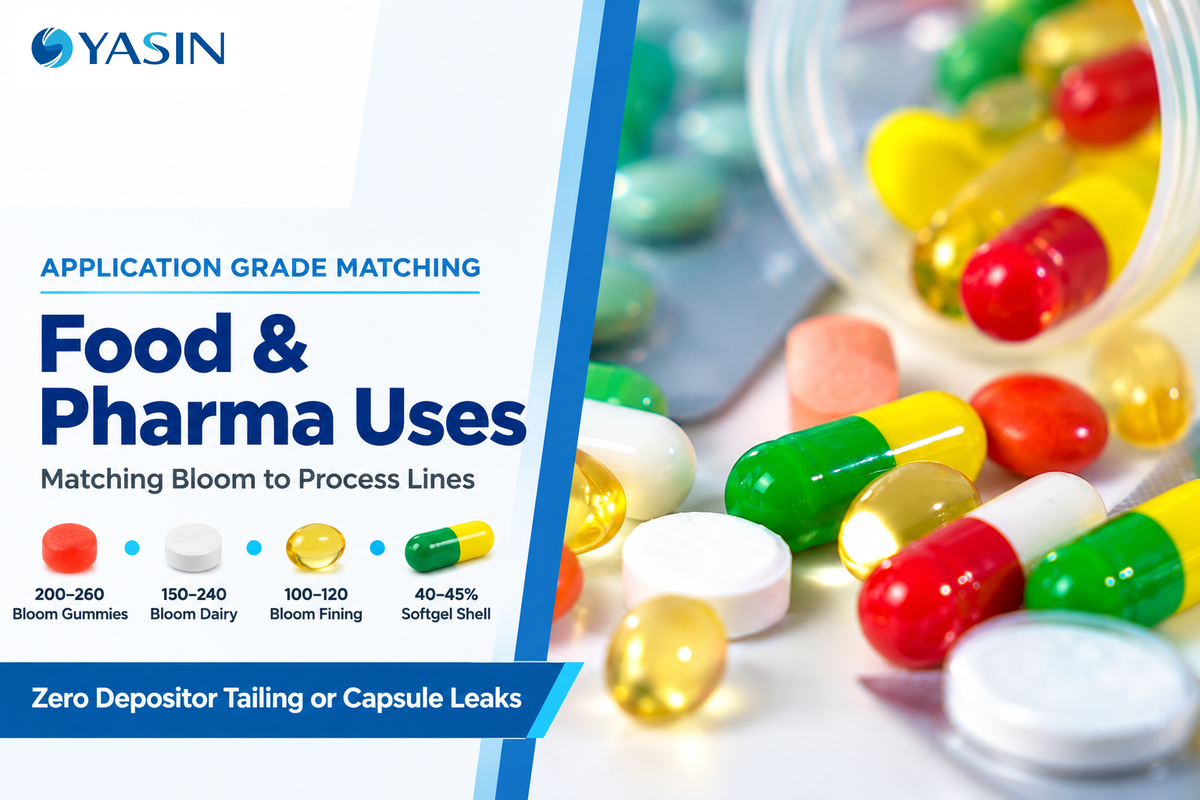
Unlike plant hydrocolloids or cold-soluble peptides, native bovine gelatin grades serve as gelling, foaming, film-forming, and stabilizing functional ingredients across confectionery, dairy, meat processing, beverage fining, and capsules. Matching Bloom, hot-solution viscosity, and conductivity prevents depositor tailing, weeping, and capsule leaks.
In food and confectionery, bovine hide grades lead because neutral flavor and elastic chew release fruit aromatics immediately on the palate:
- In fruit gummies (200–260 Bloom, 20–40 mesh), higher Bloom builds bouncy chew, speeds starch-mogul or silicone-tray demolding, and resists warm-weather slumping. Both industrial depositors and homemade gummies balance gelatin solids with sugar or syrup to avoid tough rubberiness.
- For marshmallows (200–260 Bloom) and aerated mousses (150–240 Bloom), amphiphilic gelatin chains lower air-water surface tension during high-shear whipping and lock fine air bubbles into a heat-reversible foam that holds shape without graininess.
- Inside stirred yogurts and chilled dairy desserts (150–240 Bloom, with stirred yogurts typically using 150–220 Bloom), low inclusion levels of Type B bovine gelatin bind free whey and curb syneresis, while 180–280 Bloom grades slice cleanly in cooked ham glazes and savory meat aspics.
- During juice and wine fining (100–120 Bloom, 2.0–2.5 mPa·s), positively charged Type A cuts flocculate negatively charged polyphenols and tannins before filtration.
In pharmaceutical gelatin and nutraceutical capsules, tolerances tighten around film thickness, mineral conductivity, and chemical stability. According to a peer-reviewed encapsulation review in Advanced Healthcare Materials, rotary-die softgel shells contain 40–45% gelatin graded at 150–220 Bloom and 2.8–4.5 mPa·s with low conductivity (<1 mS/cm). Formulators blend softgel gelatin with non-volatile plasticizers such as glycerin or sorbitol and test finished shells under elevated heat and humidity (such as 37 °C / 75% RH) to screen for crosslinking. Specialty medical devices such as absorbable hemostatic gelatin sponges demand far stricter raw-material endotoxin limits paired with OEM-validated terminal 10⁻⁶ sterility assurance level (SAL) processing under U.S. FDA 510(k) sterility criteria.
Hard Shell Gelatin Capsules vs. Softgels: Which Grade Works Best?
Two-piece hard capsules require stiffer, higher-viscosity 200–250 Bloom bovine bone gelatin (4.5–5.0 mPa·s) for uniform stainless pin-bar dipping, whereas softgels need flexible 150–220 Bloom grades (2.8–4.5 mPa·s) paired with plasticizers to seal cleanly on rotary dies.
Low-viscosity softgel gelatin on a hard-capsule dipping line forms microcracks and tears as it’s filled. High-viscosity hard-capsule gelatin through a rotary softgel melter results in ribbon stringing and leakers. Commercial gelatin equilibrates within an 8–15% water window, and trace aldehydes in liquid fills crosslink either bovine gelatin capsule grade into insoluble pellicles.
Nutritional Profile, Amino Acids, and Realistic Health Evidence
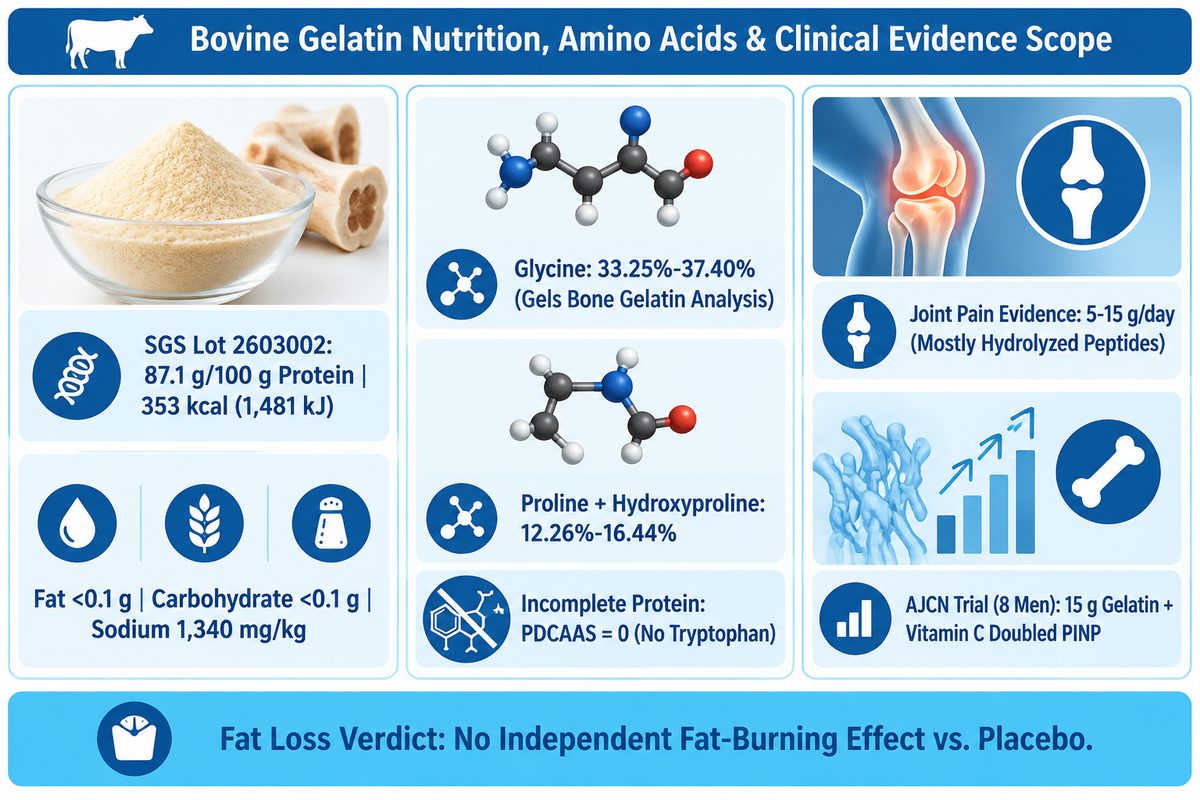
Unflavored bovine gelatin delivers 85–90% protein by dry weight (roughly 353 kcal and under 0.1 g fat or carbohydrate per 100 g) and is rich in glycine, proline, and hydroxyproline, yet lacks tryptophan. Human trials (mostly using hydrolyzed collagen peptides) support 5–15 g/day for easing joint pain, not independent fat loss.
Third-party nutritional testing published by Yasin on commercial food-grade bovine gelatin (SGS lot 2603002) records 87.1 g/100 g protein, 353 kcal (1,481 kJ), under 0.1 g fat, under 0.1 g carbohydrate, and 1,340 mg/kg sodium. This macro profile makes unflavored gelatin naturally compatible with keto, paleo, low-carb, and gluten-free diets. Many retail consumers also favor grass-fed beef gelatin powder sourced from pasture-grazing cattle for daily cooking. Its amino acid profile mirrors simmered bone broth: cattle bone gelatin analyses in Gels measured 33.25% to 37.40% glycine and 12.26% to 16.44% combined proline and hydroxyproline. Because tryptophan is absent, bovine gelatin is an incomplete protein (PDCAAS = 0) and should complement, never replace, complete proteins like eggs, dairy, fish, meat, or legumes.
Human clinicals on gelatin supplement and collagen supplement intake support 5–15 g/day for joint pain relief, while showing no independent fat-loss or muscle protein synthesis advantage over complete protein:
- Joint comfort and collagen synthesis: In a crossover trial in the American Journal of Clinical Nutrition, 8 active men took 15 g of vitamin C-enriched gelatin 1 hour before rope-skipping. Their blood procollagen I N-terminal propeptide (PINP) doubled relative to 5 g and placebo. A broader systematic review in Amino Acids confirmed strong evidence for 5–15 g/day easing joint pain. That same review noted that Clifford et al. (2019) and Lis and Baar (2019) observed no PINP shift at 15–20 g doses, while hydrolyzed collagen peptides trailed isonitrogenous complete whey or lactalbumin protein for muscle protein synthesis. Later, a 2024 resistance-exercise trial reported a larger PINP response at 30 g hydrolyzed collagen than at 15 g or 0 g.
- Gut health and skin elasticity: Preclinical models link glycine and gelatin amino acids to intestinal barrier support, and human collagen-peptide trials report modest skin-hydration and elasticity gains over 8–12 weeks. Few studies support using gelling bovine gelatin directly in humans with “leaky gut” in a comparison trial.
What Are the Ingredients in the Gelatin Trick for Weight Loss?
The viral “gelatin trick for weight loss” blooms 1–2 tablespoons (7–14 g) of unflavored bovine gelatin powder in cold water, then dissolves it in warm water, tea, or diluted juice. Consume it before your meal by 20-30 minutes to suppress appetite.
While adding 6–12 g of low-calorie protein (the protein content of 7–14 g of gelatin powder) in a warm thickened liquid can temporarily increase satiety and reduce meal calorie intake, bovine gelatin contains no fat-burning compound. Controlled resistance-training collagen-peptide trials summarized in the Amino Acids systematic review (citing Oertzen-Hagemann et al., 2019) recorded no significant change in fat mass versus placebo. Any weight loss comes from a sustained calorie deficit rather than a metabolic shortcut.
Halal, Kosher, and Dietary Certification Rules for Bovine Gelatin
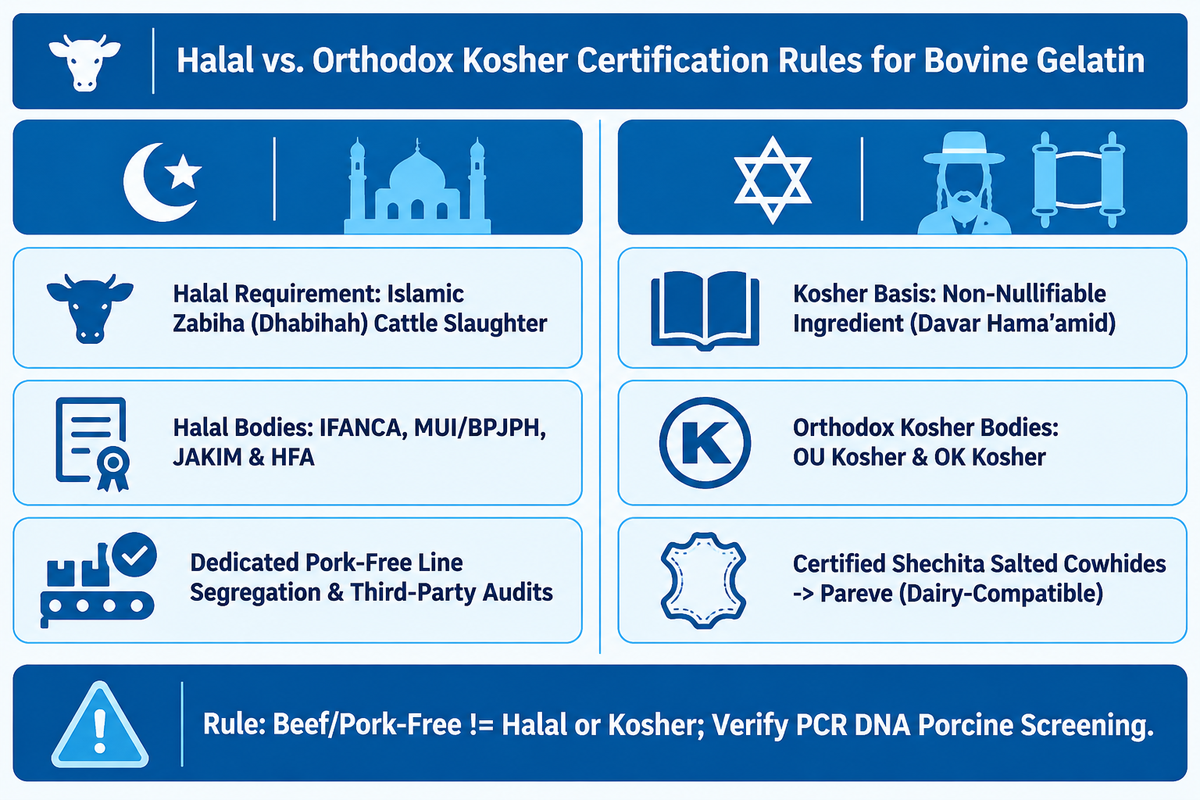
Bovine gelatin is Halal or Kosher only when certified under the matching slaughter and processing rules; “beef gelatin,” “bovine gelatin,” or “pork-free” labels identify the animal species only.
For Muslim consumers and food exporters, the Islamic Food and Nutrition Council of America (IFANCA) requires cattle slaughtered by a Muslim under Islamic Dhabihah (Zabiha) rules for genuine halal gelatin. Production also requires dedicated segregation from porcine lines and third-party auditing. Major certifiers, including IFANCA, Indonesia’s MUI and BPJPH, Malaysia’s JAKIM, and the Halal Food Authority (HFA), reject uncertified cattle hides. Although a minority juristic view discusses whether chemical transformation (Istihalah) renders non-Zabiha gelatin permissible, mainstream halal certified export programs require documented Zabiha traceability.
Orthodox Jewish dietary law applies a separate framework. In Jewish Law, gelatin is a non-nullifiable ingredient (Davar Hama’amid), so OK Kosher and OU Kosher Halacha Yomis can’t approve uncertified cowhides.
2. Following the rulings of Rav Moshe Feinstein and Rav Aharon Kotler, OU Kosher certifies kosher gelatin strictly from the hides of kosher-slaughtered (shechita) and salted cows under supervision.
Because unprocessed cowhide is inedible before chemical extraction, that certified hide gelatin carries a pareve status (neither meat nor dairy), allowing use in dairy desserts.
⚠️ Kosher Pareve Does Not Mean Vegan or Automatically Halal
A Kosher pareve seal confirms rabbinical supervision and dairy compatibility, not plant origin or Halal acceptance. Bulk purchasing customers confirm certification with their destination organization (IFANCA, MUI/BPJPH or JAKIM) and cross-reference certificates to PCR DNA screening to exclude porcine cross-contact.
Food Safety, BSE/TSE Controls, Pharmacopoeias, and Allergen Risks
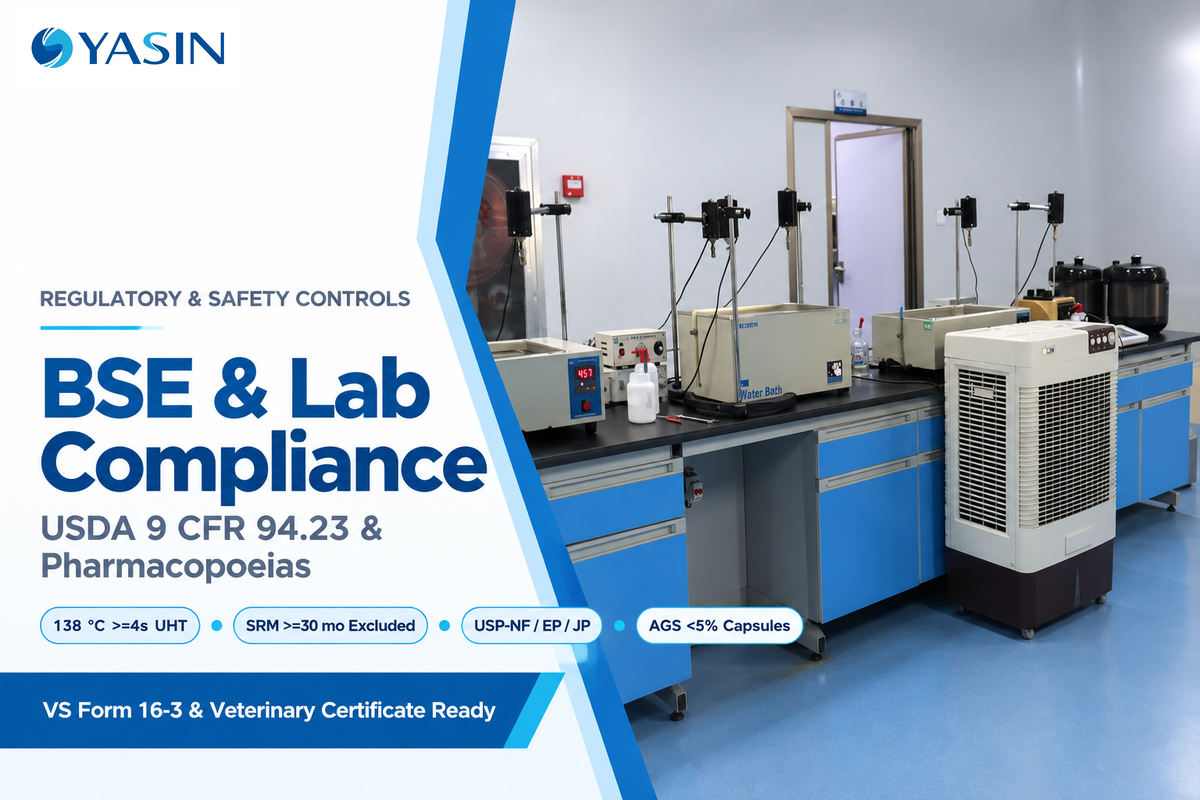
Under federal rules, cattle hide gelatin is distinguished from bone gelatin to protect from BSE. Under U.S. law, bone gelatin from controlled or undetermined BSE-risk regions requires strict risk-material exclusion.
Processors must also apply thermal sterilization at 138 °C or higher for at least 4 seconds, or a validated process at least as effective against BSE infectivity. Specifically, USDA APHIS regulation 9 CFR 94.23(d)(2)–(3) defines the exact specified-risk-material exclusion and sterilization pathway required for eligible bovine bone gelatin imports:
“The bones from which the gelatin was derived did not include the skulls of bovines or the vertebral column of bovines 30 months of age or older. The bones were subjected to a process that includes all of the following steps, or to a process at least as effective in reducing BSE infectivity: (i) Degreasing; (ii) Acid demineralization; (iii) Acid or alkaline treatment; (iv) Filtration; and (v) Sterilization at 138 °C (280.4 °F) or greater for a minimum of 4 seconds.”
USDA APHIS, 9 CFR 94.23(d)(2), (3), amended 86 FR 45627 (Aug. 16, 2021)
Reading 9 CFR 94.23(b), (f) prevents customs detention. Bovine hide gelatin enters under paragraph (b) backed by an official certificate signed by a full-time salaried national government veterinary officer under paragraph (e) or an APHIS import permit via VS Form 16-3 under paragraph (f). Imported cattle-bone lots from controlled or undetermined BSE-risk countries must document either every step of paragraph (d) or a validated equivalent process. A factory Certificate of Analysis (COA) or ISO 22000 audit certificate never replaces national veterinary export papers. Within U.S. human-food facilities, producers maintain U.S. FDA FSMA 21 CFR 117.126 written food safety plans. Pharmaceutical grades follow USP–NF, European Pharmacopoeia, or Chinese Pharmacopoeia (ChP 2025) limits covering 1–2% mineral salts, 8–15% water, sulfur dioxide (≤50 ppm), chromium (≤10 ppm), and absence of E. coli and Salmonella. For example, June 2026 European Pharmacopoeia release records published on Yasin’s bovine gelatin specification page (Lots 2606121, 2606065, and 2606106) measured 0.38–0.47 ppm chromium, 12–22 ppm SO2, 12.2–12.6% moisture, 0.1 mS/cm conductivity, and <10 CFU/g total plate count.
From an allergen standpoint, neither U.S. federal law nor EU Regulation (EU) No 1169/2011 Annex II lists bovine gelatin as a major food allergen. By contrast, marine collagen and fish gelatin require specific fish-species labeling under U.S. FD&C Act Section 403(w)(2). One rare clinical exception is tick-borne red meat allergy, known as alpha-gal syndrome (AGS). Radioimmunoassay testing in the Journal of Allergy and Clinical Immunology detected 0.44–0.52 μg of alpha-gal per gram in intravenous bovine gelatin colloids versus undetectable levels (<0.01 μg) in fish gelatin. In a clinical review of 2,500 AGS patients by Commins (2020), fewer than 10% of patients avoided dietary gelatin and under 5% reacted to gelatin capsules. Gelatin-stabilized vaccines and IV colloids carry higher clinical sensitivity, and red-seaweed carrageenan also carries alpha-gal epitopes affecting 1–2% of AGS patients.
Spec Sheet Misconceptions and Formulation Failures That Ruin Bovine Gelatin Batches
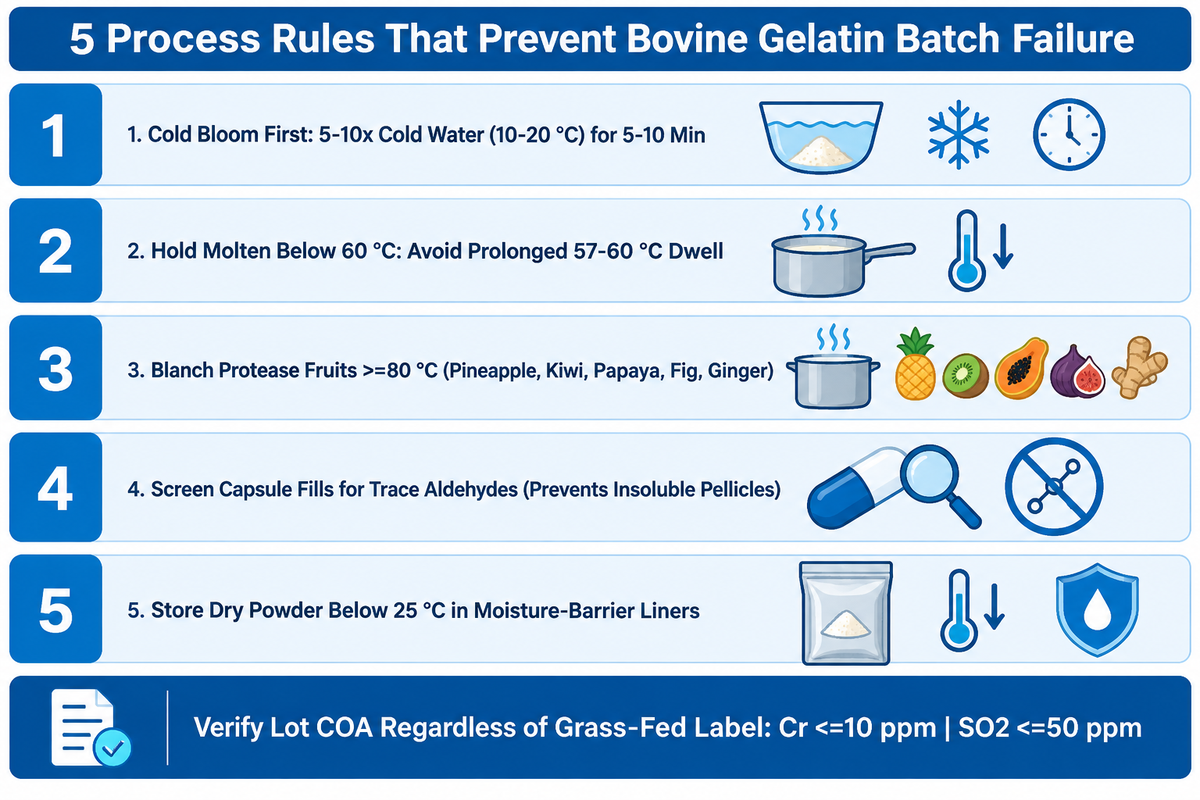
Five recurring shortcuts ruin more bovine gelatin batches than raw material defects. They include buying on Bloom without checking viscosity or pI, equating retail sourcing labels with lab purity, expecting fine 40–60 mesh to dissolve cold, overheating molten kettles, and adding raw proteolytic fruit enzymes.
First, separate pasture-sourcing claims from laboratory purity. Retail brands such as Great Lakes Wellness beef gelatin and Perfect Bovine Gelatin highlight brazilian pasture raised cattle to communicate grazing practices. Other consumer canisters advertise grass fed gelatin or grass fed bovine sourcing alongside non-gmo feed programs. Those grazing and feed statements don’t verify pharmacopeial purity, buyers still check lot-specific Bloom, chromium (≤10 ppm), and SO2 (≤50 ppm) on a COA. Second, never treat fine 40–60 mesh powder as cold-instant; as cooks on r/Cooking and r/CandyMakers note, skipping cold blooming traps dry powder inside rubbery lumps.
Five process rules remove batch failure across all the home bovine gelatin recipes and factory kettles:
- Bloom dry granules in cold water first (5–10× liquid ratio, 5–10 minutes): sprinkle evenly across cool 10–20 °C water until uniformly swollen before warming gently until clear.
- Hold molten gelatin below 60 °C and limit tank dwell time: boiling breaks polypeptide chains quickly, and encapsulation kinetics data show that even prolonged kettle holding at 57–60 °C causes progressive hydrolytic Bloom drop.
- Blanch protease-active fruits to ≥80 °C: raw pineapple (bromelain), kiwi (actinidin), papaya (papain), fig, and fresh ginger cleave gelatin into non-gelling peptides. Heating those juices to ≥80 °C for several minutes denatures the enzymes before mixing.
- Screen capsule fills for trace aldehydes: in softgels, trace aldehydes in botanical oils, flavors, or PEG excipients—accelerated by heat or UV light—crosslink gelatin ribbons into insoluble pellicles that fail disintegration testing.
- Keep dry powder in cool, dry storage below 25 °C: sealed inside moisture-barrier kraft liners or airtight jars away from odors, dry quality gelatin maintains stable Bloom performance for years.
💡 When Not to Use Bovine Gelatin
Do not specify native bovine gelatin for unheated cold ready-to-drink beverages (use 0-Bloom hydrolyzed collagen peptides instead), vegan or vegetarian labels (use agar-agar or pectin), or unrefrigerated tropical distribution above 35 °C without co-formulating high-melting agar to raise melt tolerance toward ~50 °C.
Bulk Pricing Benchmarks, Global Manufacturers, and 2025-2026 Supply-Chain Shifts
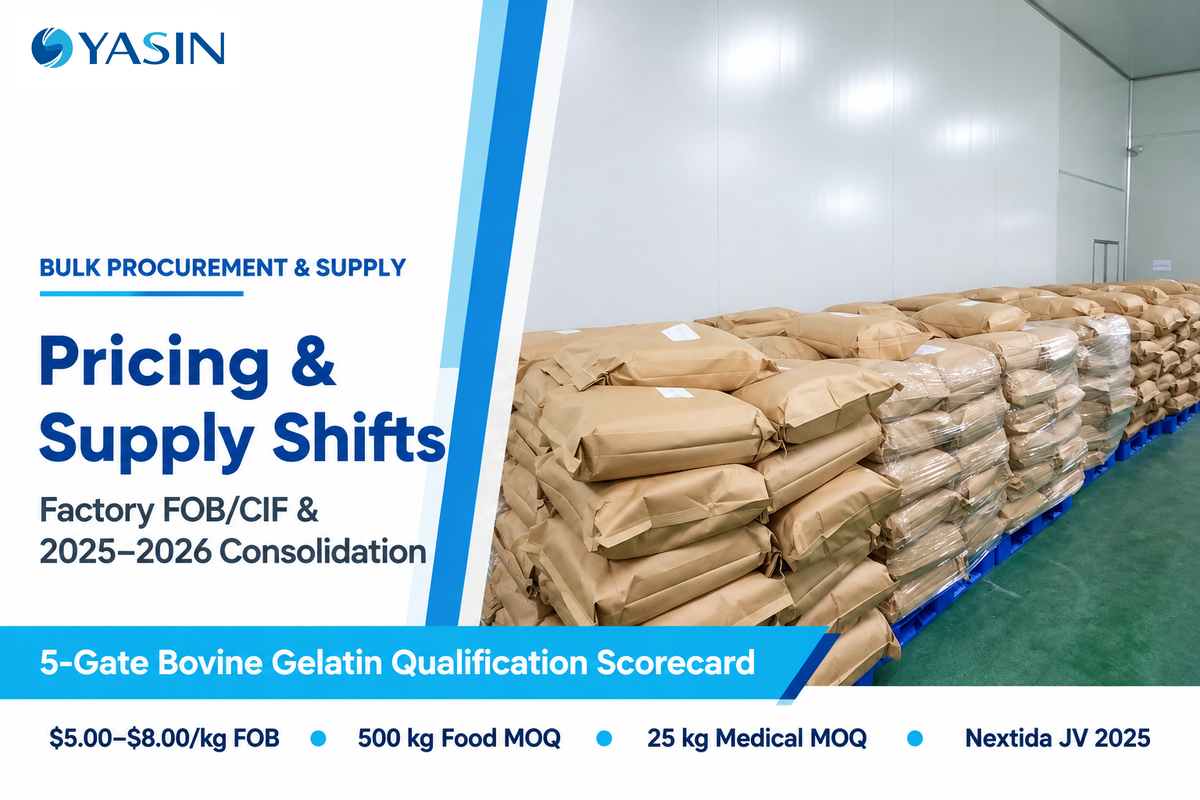
Published factory-direct export baselines (such as Yasin’s commercial reference tier) run $5.00–$8.00 USD/kg (FOB or CIF) at 500 kg minimum order quantities. Pharmaceutical monographs, landed regional stock, and retail tins are quoted separately by testing scope and packaging. Meanwhile, global supply is consolidating around the planned Rousselot–PB Leiner Nextida joint venture.
Accurate supplier benchmarking requires separating factory-direct commercial baselines from specialized medical grades, landed regional distribution, and retail consumer canisters:
| Supply Channel & Grade | Pricing Structure | Typical MOQ | Primary Cost Drivers |
|---|---|---|---|
| Factory FOB / CIF — Standard Food & Capsule | $5.00–$8.00 USD/kg baseline | 500 kg | Bloom tier (100–300 g), Halal/Kosher audit, 25 kg kraft bags |
| Factory Direct — Specialty Hemostatic / Medical | Quoted per specification | 25 kg | Low-endotoxin controls, pharmacopeial dossier, BSE traceability |
| Regional Landed Distributor Stock | Varies by port and volume | 25–250 kg | Ocean freight, veterinary clearance, local warehousing, LCL handling |
| Retail Grass-Fed Consumer Tins | Multi-fold retail markup | Single canister | Retail canning, grass-fed branding, direct parcel fulfillment |
The global manufacturing tier is undergoing its largest consolidation in decades. Darling Ingredients Inc. (parent of Rousselot, which acquired Brazilian producer Gelnex in 2023) and Tessenderlo Group (parent of PB Leiner) signed a December 10, 2025 definitive agreement filed with the U.S. SEC. The planned joint venture, named Nextida (85% Darling Ingredients / 15% Tessenderlo Group), combines roughly $1.5 billion in expected annual revenue and 200,000 metric tons of gelatin and collagen capacity across 22 facilities, scheduled to close in 2026 pending regulatory approvals. Alongside Nextida, major global producers include Germany’s GELITA AG, Japan’s Nitta Gelatin, France’s Weishardt Group, Italy’s Lapi Gelatine, and audited regional mills across China, India, and Latin America. For procurement teams, multinational consolidation means relying on both Rousselot and Gelnex, or Rousselot and PB Leiner, no longer delivers independent dual-sourcing resilience. Buyers increasingly qualify geographically distinct backup mills while verifying destination-specific export eligibility, such as EU TRACES Section XIV facility listing for European shipments versus Halal and Kosher export corridors for collagen products.
5-Gate Bovine Gelatin Qualification Scorecard
Before placing a pallet or container order, procurement and quality teams verify five concrete gates on every candidate lot:
- ✔ Gate 1, Tissue & Pretreatment Match: Confirm bovine hide vs. bone ossein origin and Type A (pI 7.0–9.0) vs. Type B (pI 4.6–5.4) against your formulation pH.
- ✔ Gate 2, Paired Rheology COA: Require both standardized GME Bloom (10 °C, 17 h) and hot-solution dynamic viscosity (mPa·s) plus mesh range (8–60 mesh) on the lot COA.
- ✔ Gate 3, Purity & BSE Regulatory Dossier: Verify SO 2 (≤50 ppm), Cr (≤10 ppm), mineral ash within pharmacopeial limits, microbiology, and national veterinary certificates (9 CFR 94.23 for U.S. entry; EU Section XIV listing for EU entry).
- ✔ Gate 4, Accredited Religious & Species Proof: Confirm your exact certifier (IFANCA, MUI/BPJPH, JAKIM, OU, or OK) covers the producing plant, supported by PCR species testing where required.
- ✔ Gate 5, Bench Hydration & Stability Trial: Run a 500 g pilot trial verifying cold swelling ratio, warm dissolved clarity, setting and melting curve, and excipient or fruit-acid compatibility before scale-up.
Once target Bloom, dynamic viscosity, mesh granularity, and religious certification scope are locked, teams sourcing industrial lots can review Yasin’s bulk bovine gelatin specifications and grade-matching catalog. That catalog details 100–300 Bloom hide and bone grades, published CNAS lot COA parameters, and standard 500 g evaluation samples.
Frequently Asked Questions About Bovine Gelatin
Q: Is bovine gelatin safe to eat, and does it carry a mad cow disease (BSE) risk?
Yes, commercial food-grade and pharmaceutical bovine gelatin is safe for the general public, and its BSE risk is tightly controlled under USDA APHIS 9 CFR 94.23.
Imported cattle hide gelatin requires an official national veterinary certificate or an APHIS import permit. Bone lots from controlled or undetermined BSE-risk regions cannot contain skulls and vertebral columns from cattle aged 30 months or older. Processors then complete acid demineralization, chemical conditioning, filtration, and sterilization at 138 °C (280.4 °F) minimum for four seconds (or an approved equivalent process).
People with tick-borne alpha-gal syndrome remain the main rare clinical exception and should check with an allergist before taking large gelatin doses.
Q: Can Muslims eat beef gelatin, and is Kosher bovine gelatin automatically Halal?
Muslims can eat beef gelatin only when it carries credible Halal certification verifying Islamic Zabiha slaughter and segregated processing; Kosher bovine gelatin is not automatically Halal.
Major Islamic certifiers like IFANCA, MUI/BPJPH, and JAKIM demand Zabiha-slaughter and audited pork-free facilities. By contrast, OU Kosher certifies shechita-slaughtered cowhides as kosher pareve under Jewish dietary law—a separate standard that does not verify Islamic invocation or Halal supply-chain controls.
Q: What is the difference between bovine gelatin and hydrolyzed collagen peptides?
Bovine gelatin is partially hydrolyzed collagen (15–250 kDa) that swells in cold water, melts when warmed, and sets into an elastic gel. Hydrolyzed collagen peptides are fully cleaved (2–5 kDa) and dissolve cold without gelling.
Both ingredients come from cattle connective tissue and provide nearly the same amount of glycine, proline and hydroxyproline amino acids (85-90% protein). Use bovine gelatin for gummy sweets, marshmallows, desserts, soups or capsule shells; and choose hydrolyzed collagen peptides for cold coffee, smoothies, and unheated protein drinks where thickening isn’t needed.
Q: Is bovine gelatin suitable for vegetarians or vegans?
No-bovine gelatin is made from cattle hides and bones. Therefore it’s neither vegetarian nor vegan.
Plant recipes substitute agar-agar, fruit pectin, or carrageenan blends instead.
Q: What is the healthiest gelatin to use for cooking or daily nutrition?
The cleanest option is single-ingredient, unflavored bovine or fish gelatin backed by third-party heavy-metal, sulfur dioxide, and microbiological testing rather than sweetened dessert mixes.
Look for zero added sugars or artificial dyes, verified low chromium and SO 2 levels, and any preferred Halal, Kosher, or pasture-raised sourcing.
Q: How do you convert gelatin sheets to bovine gelatin powder without ruining a recipe?
Convert leaf gelatin sheets to bovine gelatin powder 1:1 by dry weight when both share the same Bloom strength, for example, replace four 2.5 g Gold sheets (10 g at 200 Bloom) with 10 g of 200 Bloom powder.
Because standard sheet weights vary across Bronze 150, Silver 180, Gold 200, and Platinum 240 Bloom tiers (2.5 g, 3.3 g, or 5.0 g leaves), weigh sheets on a gram scale first. Then bloom the matching powder in 5–10 times its weight of cold water for 5–10 minutes before warming gently until dissolved into a clear liquid.
References & Sources
- 9 CFR 94.23, Importation of Gelatin Derived From Bovines U.S. Electronic Code of Federal Regulations (USDA APHIS, amended 86 FR 45627)
- 21 CFR 117.126, Food Safety Plan (FSMA Preventive Controls for Human Food) U.S. Electronic Code of Federal Regulations (U.S. FDA)
- Standardised Methods for the Testing of Edible Gelatine (October 2024) Gelatine Manufacturers of Europe (GME)
- GMIA Standardized Edible Gelatin Testing Methods (FDA Docket Attachment) Gelatin Manufacturers Institute of America
- Physicochemical and Functional Properties of Yanbian Cattle Bone Gelatin Extracted Using Acid, Alkaline, and Enzymatic Hydrolysis Methods Gels (2025, NIH PMC11942094)
- Soft Gelatin Capsule Encapsulation Rheology and Crosslinking Stability Review Advanced Healthcare Materials (NIH PMC11468233)
- Partial Collagen Hydrolysis Polypeptide Fractions and Alkaline Type B Deamidation National Institutes of Health (PMC13119067)
- Gelatin as It Is: History and Modernity International Journal of Molecular Sciences (NIH PMC9963746)
- Vitamin C-Enriched Gelatin Supplementation Before Intermittent Activity Augments Collagen Synthesis Shaw et al., American Journal of Clinical Nutrition (2017, PMC5183725)
- The Effects of Collagen Peptide Supplementation on Body Composition, Collagen Synthesis, and Recovery From Joint Injury and Exercise: A Systematic Review Amino Acids (2021, PMC8521576)
- The Collagen Synthesis Response to an Acute Bout of Resistance Exercise Is Greater When Ingesting 30 g Hydrolyzed Collagen Compared With 15 g and 0 g National Institutes of Health (2024, PMC11282471)
- κ-Carrageenan and Its Synergistic Blends: Next-Generation Food Gels Spena et al., Gels (2025, PMC12732820)
- Hydrocolloid Comparison: Gelatin Syneresis vs. Agar and Gellan Thermal Stability National Institutes of Health (PMC10453816)
- Warm-Water vs. Cold-Water Fish Gelatin Imino Acid and Bloom Properties National Institutes of Health (PMC4152545)
- The Relationship Between Red Meat Allergy and Sensitization to Gelatin and Galactose-Alpha-1,3-Galactose Mullins et al., Journal of Allergy and Clinical Immunology (2012, PMC3340561)
- Diagnosis & Management of Alpha-Gal Syndrome: Lessons From 2,500 Patients Commins, Journal of Allergy and Clinical Immunology: In Practice (2020, PMC8344025)
- Why Does the OU Certify Kosher Beef Gelatin as Pareve? OU Kosher Certification (Halacha Yomis)
- What Is Halal? Zabiha Slaughter and Certification Standards Islamic Food and Nutrition Council of America (IFANCA)
- Darling Ingredients and Tessenderlo Group Definitive Agreement to Form Nextida (Form 8-K Exhibit 99.1, Dec. 10, 2025) U.S. Securities and Exchange Commission (EDGAR)
About This Analysis
This technical reference on bovine gelatin biochemistry, Bloom-to-viscosity grading, religious certification, and USDA/FDA import rules was cross-checked against live eCFR statutes, GME testing standards, and peer-reviewed scientific literature. Physical grade tolerances and batch purity benchmarks draw on commercial edible and pharmaceutical gelatin release records across food, capsule, and nutraceutical applications. Reviewed by the Xiamen Yasin Industry & Trade Co., Ltd. technical team.