
Get in touch with Xiamen Yasin Industry & Trade Co., Ltd.

Type B Gelatin Powder, Alkaline-Processed Bovine Gelatin (150–250 Bloom)
Core Type B: 150–250 Bloom (6.67% w/w, 10 °C)
3.5–5.0 mPa·s (6.67% w/w, 60 °C)
500 kg MOQ per grade
Quotes within one business day (24 hours)
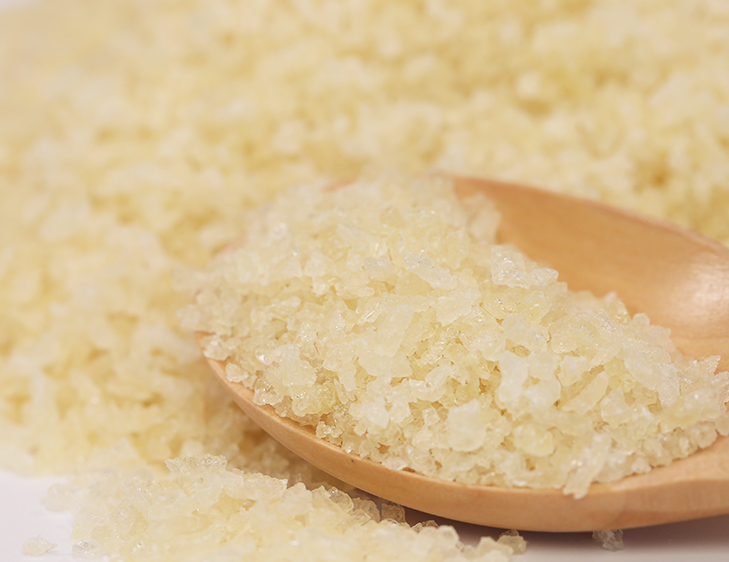
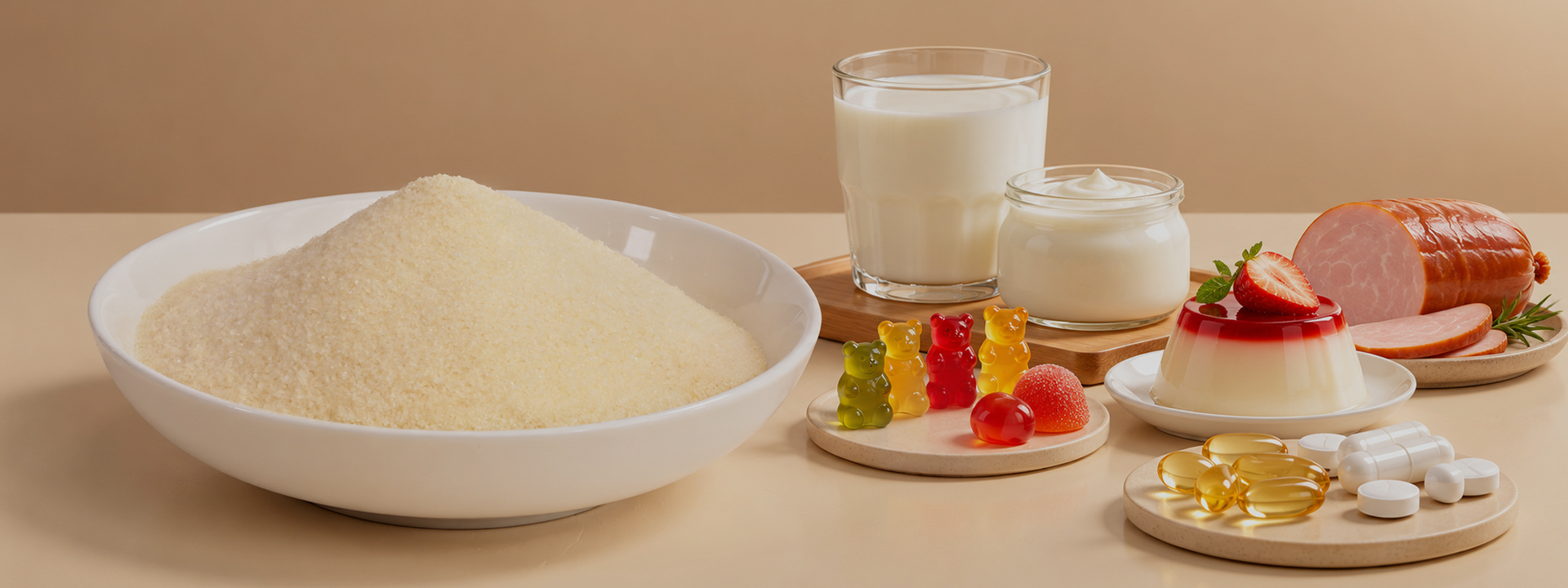
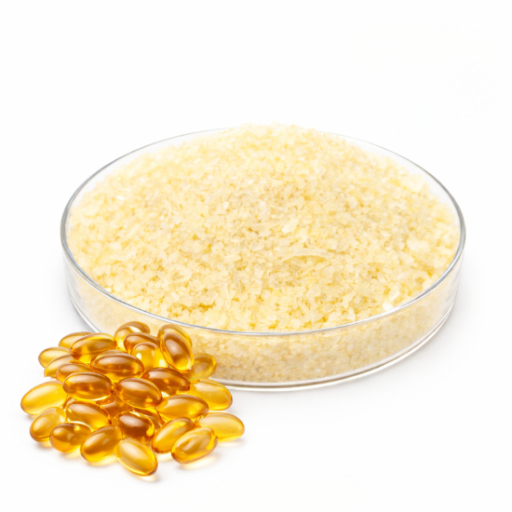
We supply bulk type b gelatin powder derived from bovine hide splits and bovine bone through alkaline (lime-cured) hydrolysis. Our core Type B range holds 150–250 Bloom and 3.5–5.0 mPa·s, alongside application-specific grades documented by a lot Certificate of Analysis (COA). Food, nutraceutical, and pharma plants use our grades for hard gelatin capsules, soft capsules, gummies, dairy, and meat formulations.
Request Quote & Free 200–500 g Sample
Free 200–500 g evaluation samples ship in 3–5 business days after specification confirmation, with TDS and lot COA; buyer covers courier freight.
Core Bloom Range
150–250 Bloom (6.67% w/w, 10 °C, 16–18 h)
Core Dynamic Viscosity
3.5–5.0 mPa·s / 35–50 mP (6.67% w/w, 60 °C)
Minimum Order Quantity
500 kg per grade (25 kg bag or jumbo bag)
Evaluation Samples
Free 200–500 g with TDS & COA in 3–5 business days
Quote & Dispatch
Within one business day (on business days); dispatch in 10–15 days
Testing Standards
ChP 2025 & GB 6783-2013 lot release
Alkaline-Processed Bovine Gelatin Supply and Process Capability
Capsule and gummy lines lose shifts when incoming type b bovine gelatin arrives with drifting viscosity, clumping, or incomplete export paperwork. Xiamen Yaxun Industry & Trade Co., Ltd. (Yasin) has integrated gelatin R&D, manufacturing, and export supply since September 2009. Our platform holds an annual production capacity of 26,000 tons of gelatin, 19,000 tons of collagen peptides, and 8.5 billion empty capsule shells, supplying buyers across North America, South America, Southeast Asia, South Korea, Japan, and the Middle East.
Alkaline (Lime-Cured) Hydrolysis Mechanism
Type b gelatin is derived from the partial hydrolysis of collagen from either bovine skin splits or demineralized bovine bone (ossein). Prolonged alkali conditioning in lime (calcium hydroxide) transforms amide groups into aspartic and glutamic acids. According to the GME Gelatin Reference and GMIA Gelatin Handbook, this deamidation lowers the isoelectric point (pI) to 4.7-5.4.
Extraction Cuts & Particle Sizing
Fractions of differing molecular weights are separated by multiple warm-water draws. Lower extraction temperatures yield a higher Bloom strength of gelatin, confirmed by the Gelatine Manufacturers of Europe. We supply gelatine in granular (such as 8-mesh) and milled gelatin powder cuts; confirm your target particle size against kettle shear at RFQ. Standard 8-mesh granules wet cleanly. Specify fine milled particle size for high-shear kettles at RFQ.
Production of Gelatin: Controlled Industrial Steps
Bovine raw material screening
Bovine hide splits and bones pass veterinary origin checks before washing, degreasing, and alkali conditioning.
Alkaline liming bath
The material is soaked in a lime slurry for a few weeks to loosen collagen crosslinks.
Neutralization and washing
Before extraction, dilute acid neutralizes residual alkali and adjusts the pH to the target value.
Staged warm-water extraction
Repeated draws remove soluble gelatin that contains glycine, proline, and hydroxyproline.
Filtration and ion-exchange deionization
Polishing filtration removes suspended solids and insoluble matter, while ion-exchange deionization strips dissolved ionic salts and reduces ash to improve 450 nm and 620 nm clarity.
Vacuum evaporation and flash sterilization
Vacuum evaporation increases gelatin concentration, followed by flash sterilization to meet microbial limits.
Tunnel drying, milling, and lot COA release
Dehumidified drying brings moisture within the GB 6783-2013 limit (≤14.0%), followed by blending to exact Bloom number targets and sealing into 25 kg kraft bags or FIBC jumbo bags.
“Matching nominal Bloom strength alone never keeps a softgel rotary die or gummy depositor stable. Every commercial blend is verified for both 10 °C Bloom and 60 °C dynamic viscosity under the 6.67% w/w protocol (GB 6783-2013 / ChP 2025) to keep ribbon thickness consistent.”
Yasin Gelatin Application Engineering Technical NoteType B Gelatin Grades by Application and Bloom Strength
Higher Bloom does not automatically mean better softgel performance; it creates a real trade-off between gel firmness, crosslinking risk, and cost. Published softgel research confirms medium-Bloom grades (150–220 Bloom) fit rotary-die softgels best. All Bloom values below use 6.67% w/w gel (10 °C, 16–18 h) and 60 °C viscosity across pharmaceutical applications and food hydrocolloids for type b gelatin uses.
Type B Alkaline Gelatin vs. Type A Acid-Processed Gelatin
Formulators comparing type a and type b gelatin often think the only difference is the species of animal from which they are sourced. In fact, alkaline or acid pretreatment shifts the isoelectric point (pI) and, consequently, the net electrostatic charge of the polymer at a given formulation pH. This has significant implications on batch clarity and viscosity, as is described in the GME Gelatin Reference and GMIA Handbook.
| Parameter | Type B Gelatin (Alkaline / Lime-Cured) | Type A Gelatin (Acid-Processed) | Formulation Impact |
|---|---|---|---|
| Raw Material | Bovine hide splits and demineralized bovine bone | Pig skin (porcine skin gelatin), acid-cured bovine hide/bone, or fish skin | Species and certified slaughter/plant controls — not Type A/B label alone — determine Halal or Kosher eligibility |
| Pretreatment | Alkaline lime slurry (calcium hydroxide) for weeks | Dilute mineral acid soak (18–30 hours) | Alkaline deamidation builds higher carboxyl density |
| Isoelectric Point (pI) | pH 4.7–5.4 | pH 7.0–9.0 | Viscosity hits its minimum near pI; keep process pH away from pI |
| Charge at pH 6.0–7.0 | Net negative charge (anionic) | Net positive charge (cationic) | Net negative charge above pI reduces electrostatic complexation with anionic gums (pectin, carrageenan, alginate), though salt and concentration still require trial checks |
| Mixing Hazard | Avoid unbuffered blends with Type A at pH 5.5–7.5 | Avoid anionic gums below pH 7.0 | Opposite net charges in that pH window trigger coacervation and haze |
| Acidic Storage (30 °C) | Faster molecular-weight loss in acidic 30 °C gels | Slower molecular-weight loss in acidic 30 °C gels | Per Food Hydrocolloids (2022), verify acid dosing and warm-climate stability |
| Melt Behavior | Thermoreversible gel melts near body temperature (depends on Bloom and concentration) | Thermoreversible gel melts near body temperature (depends on Bloom and concentration) | Supports oral release alongside shell hydration and crosslinking controls |
| Core B2B Uses | Soft capsules, hard capsule shells, bovine gummies, dairy, meat | Acidic confectionery, clear acid gels, fast-set foams | Select Type B for pharma excipients, neutral emulsions, and alkaline-cut capsule shells |
Type B Gelatin Technical Specifications and Testing Limits
Two suppliers can quote an identical 200 Bloom label yet run differently because 60 °C viscosity drifted outside tolerance. That limitation means Bloom alone cannot be relied upon to lock in line speed. Following standard 6.67% w/w testing (NIH PMC11468233), we pair Bloom (10 °C, 16–18 h) and 60 °C viscosity with grade-specific GB 6783-2013 or ChP 2025 release limits.
Bulk Type B Gelatin Pricing Drivers, MOQ, and Delivery Terms
Mid-size buyers often face a painful trade-off between multi-ton factory minimums and opaque broker pricing. Instead, we publish a 500 kg per-grade MOQ and free 200–500 g trial samples upfront. Your unit price follows six measurable specification and logistics drivers rather than a fixed list.
Six Factors That Move Bulk Type B Gelatin Price
| Pricing Driver | Effect on Cost | How to Lower Total Landed Cost |
|---|---|---|
| Bloom & Viscosity Band | Higher Bloom grades (220–260 Bloom) require early low-temperature extraction cuts with lower yield per ton | Use 150–180 Bloom for softgels instead of over-specifying 240+ Bloom; check dosage via our Bloom Dosage Converter |
| Hide vs. Bone Source | Bovine hide splits and demineralized bone follow different liming cycles and export veterinary paths | Specify standard bovine hide unless your capsule line explicitly requires bone shell rigidity |
| Testing Scope (Pharma vs. Food) | Pharmaceutical gelatin used in capsule excipients requires tighter peroxide and monograph release testing | Match limits to ChP 2025, GB 6783-2013, or your target monograph without stacking redundant tests |
| Particle Mesh Size | Finer milled powders require extra grinding energy and screening compared to coarser granular cuts | Order standard granular cuts (such as 8-mesh) when your plant uses cool-water soaking and jacketed melt tanks |
| Religious & Export Dossiers | Halal, Kosher, and country-specific veterinary health certificates require coordinated lot scheduling | Confirm US 9 CFR 94.23, EU, Halal, or Kosher requirements at RFQ before batch allocation |
| Order Volume & Container Fill | Small LCL orders below 1–2 MT carry higher per-kilogram ocean freight and customs handling cost | Validate on our 500 kg MOQ, then consolidate grades into full 20 ft container loads |
Committed Commercial Terms & Dispatch Schedule
| Commercial Term | Yasin Committed Standard | Scope |
|---|---|---|
| Written Quotation | Within one business day (24 hours) on business days | Reviewed by technical sales with matched grade TDS |
| Minimum Order Quantity | 500 kg per grade | Packed in 25 kg kraft paper bags or FIBC jumbo bags |
| Evaluation Samples | Free 200–500 g in 3–5 business days after specification confirmation | Includes TDS and lot COA; buyer covers international courier freight |
| Standard Commercial Orders | 10–15 days ex-factory dispatch | Starts after order confirmation and deposit receipt; excludes ocean transit |
| Full-Container & Custom Blends | Starting from 15 days (confirmed in your quotation) | Full-container and custom-blended schedules are confirmed in your quotation against extraction cut and export dossier release |
| Payment & Incoterms | 30% T/T deposit + 70% before dispatch or against B/L copy, or L/C at sight | Shipped under EXW, FOB, CFR, and CIF; DDP quoted on request |
Performance & Cost-Control Payoff: Locking narrow 60 °C viscosity (3.5–5.0 mPa·s) and medium 150–180 Bloom for softgels reduces crosslinking pellicle defects, prevents enzyme-assisted retest delays, and lowers scrap compared to over-specified high-Bloom lots.
Quality Control, Batch COA, and Compliance Documentation
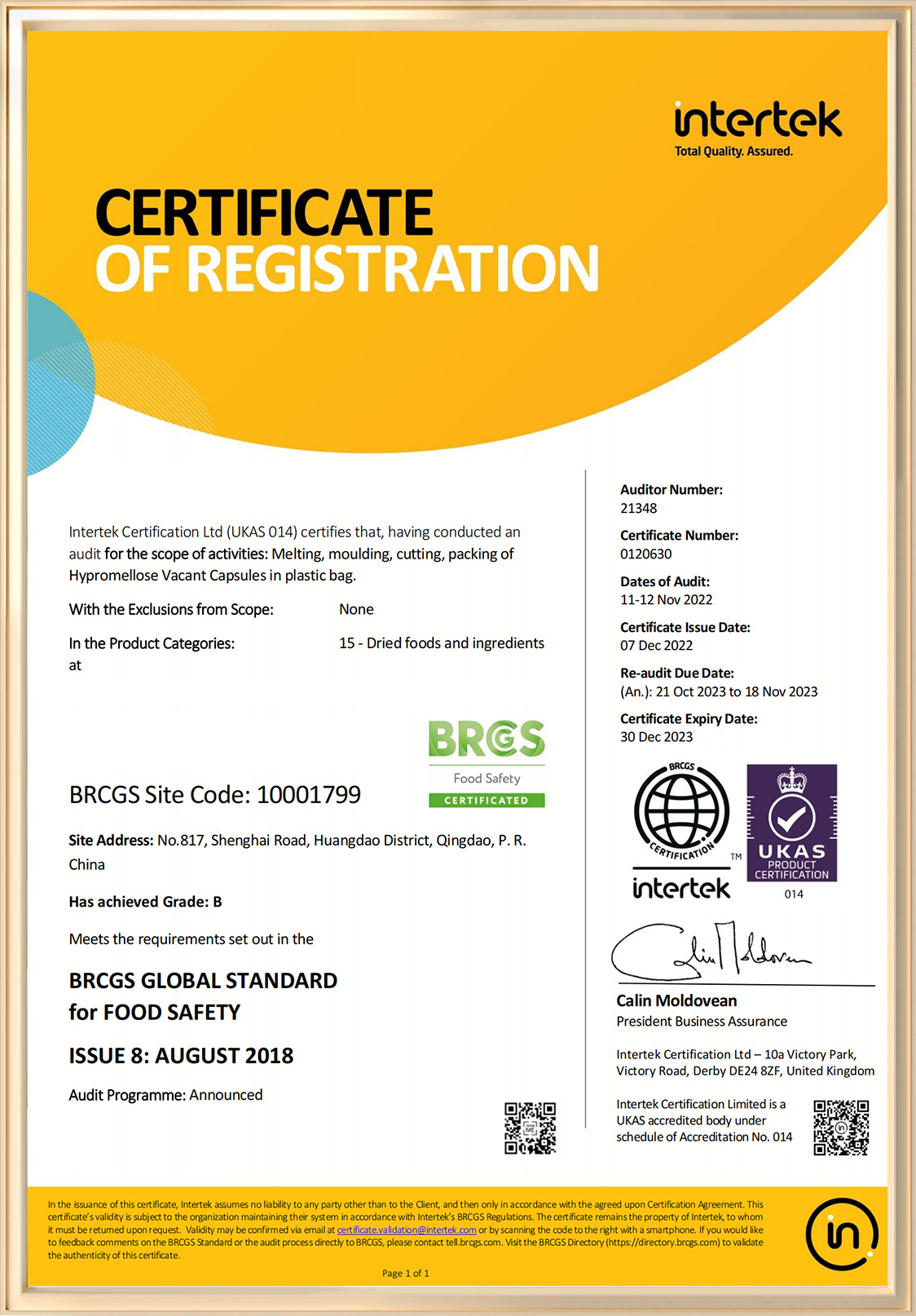
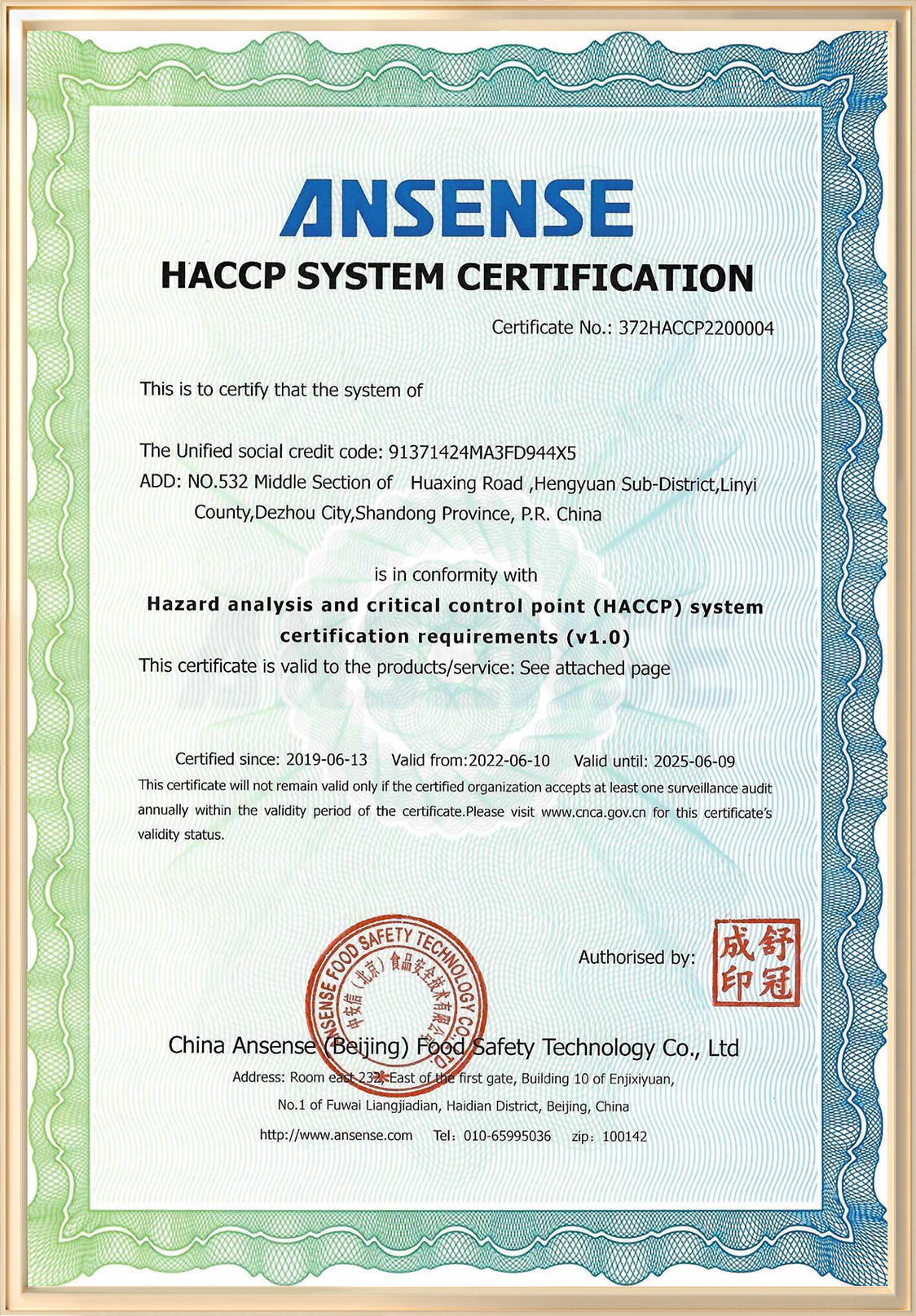
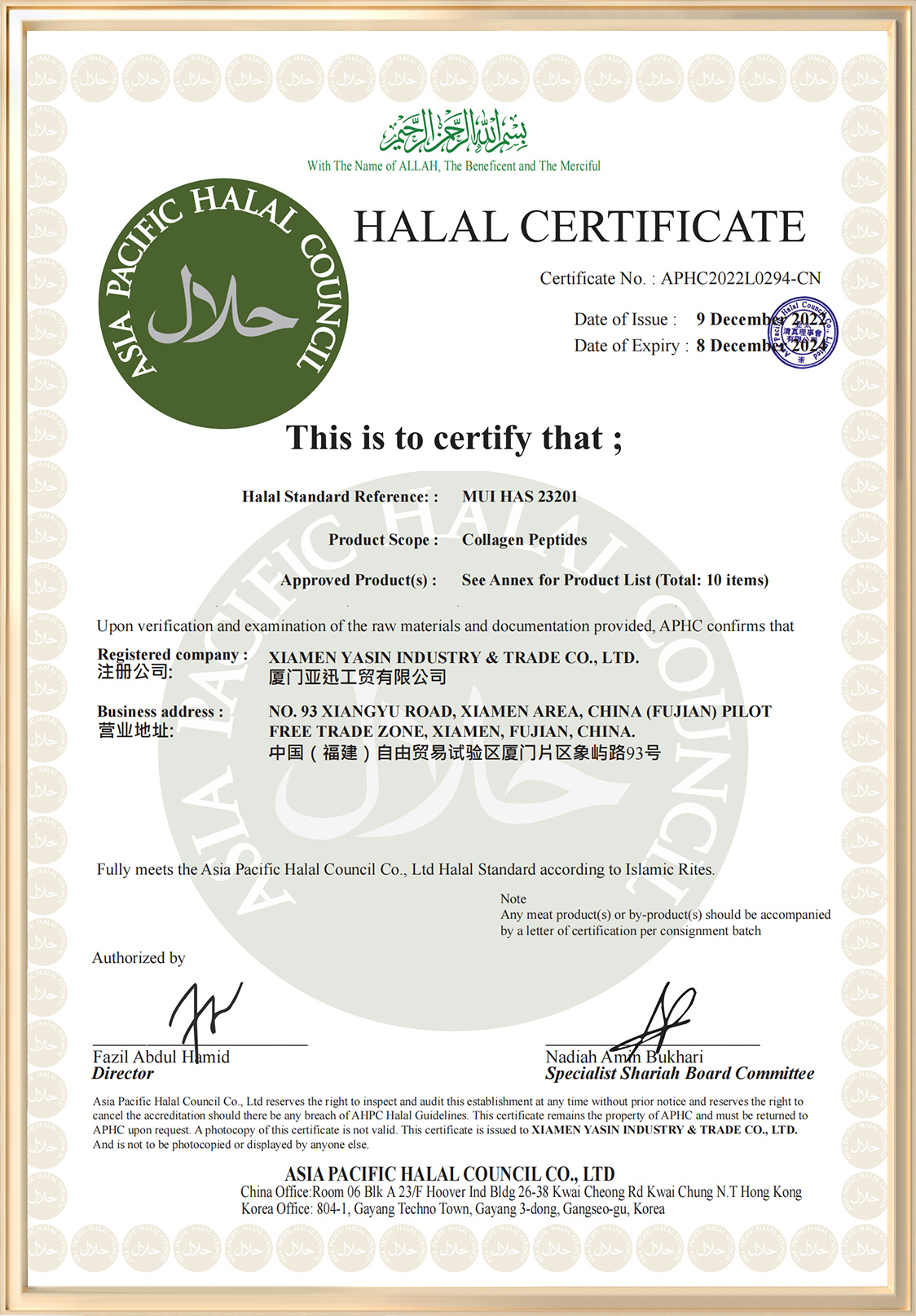
International QA audits find exporters blur the lines of trading-entity versus factory certificate ownership, or lead buyers to believe a batch COA clears US customs alone. Rather than hiding manufacturing-site ownership behind vague badges, we separate lot testing, factory compliance files, and government veterinary import papers at the request for quote (RFQ) stage.
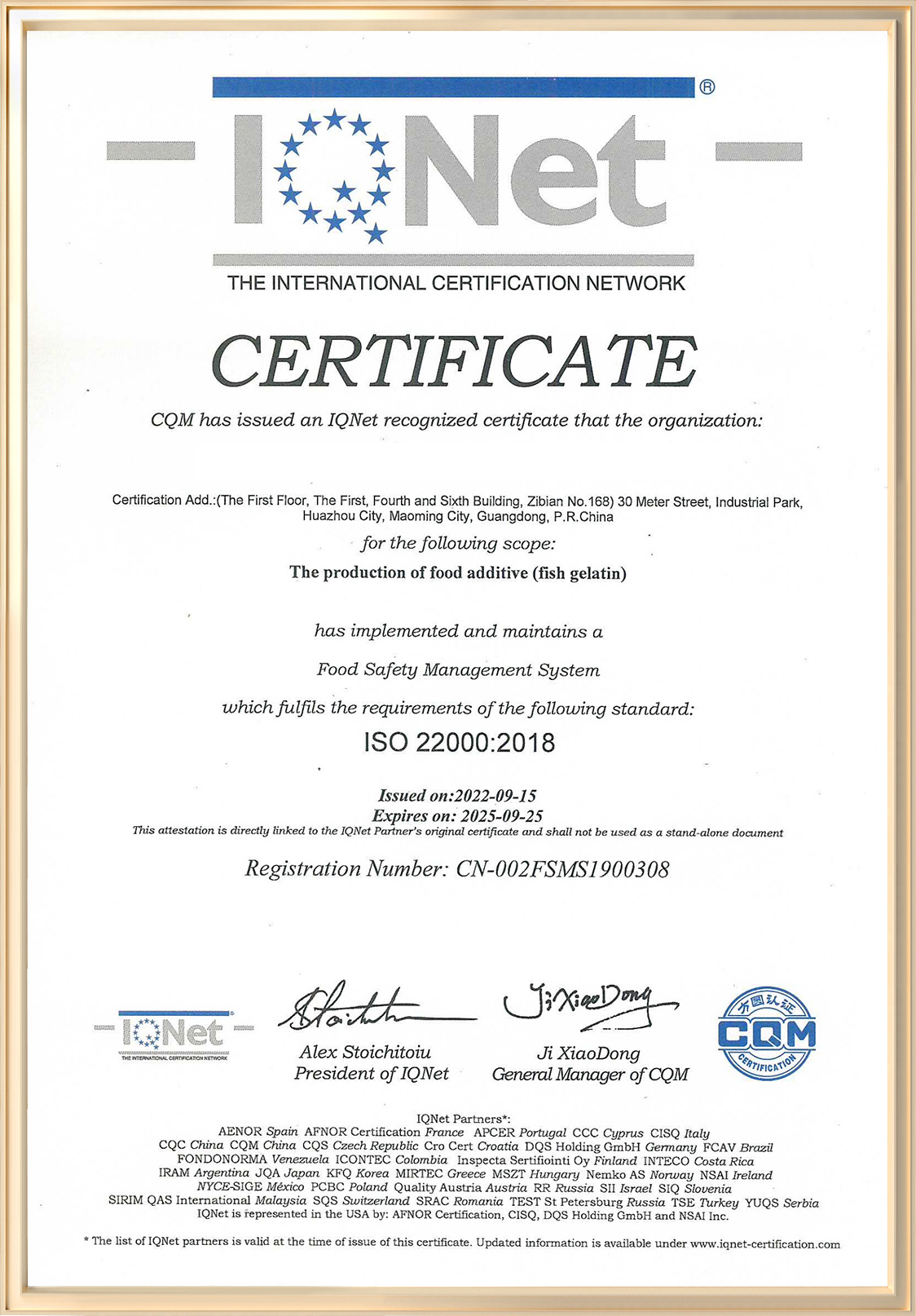
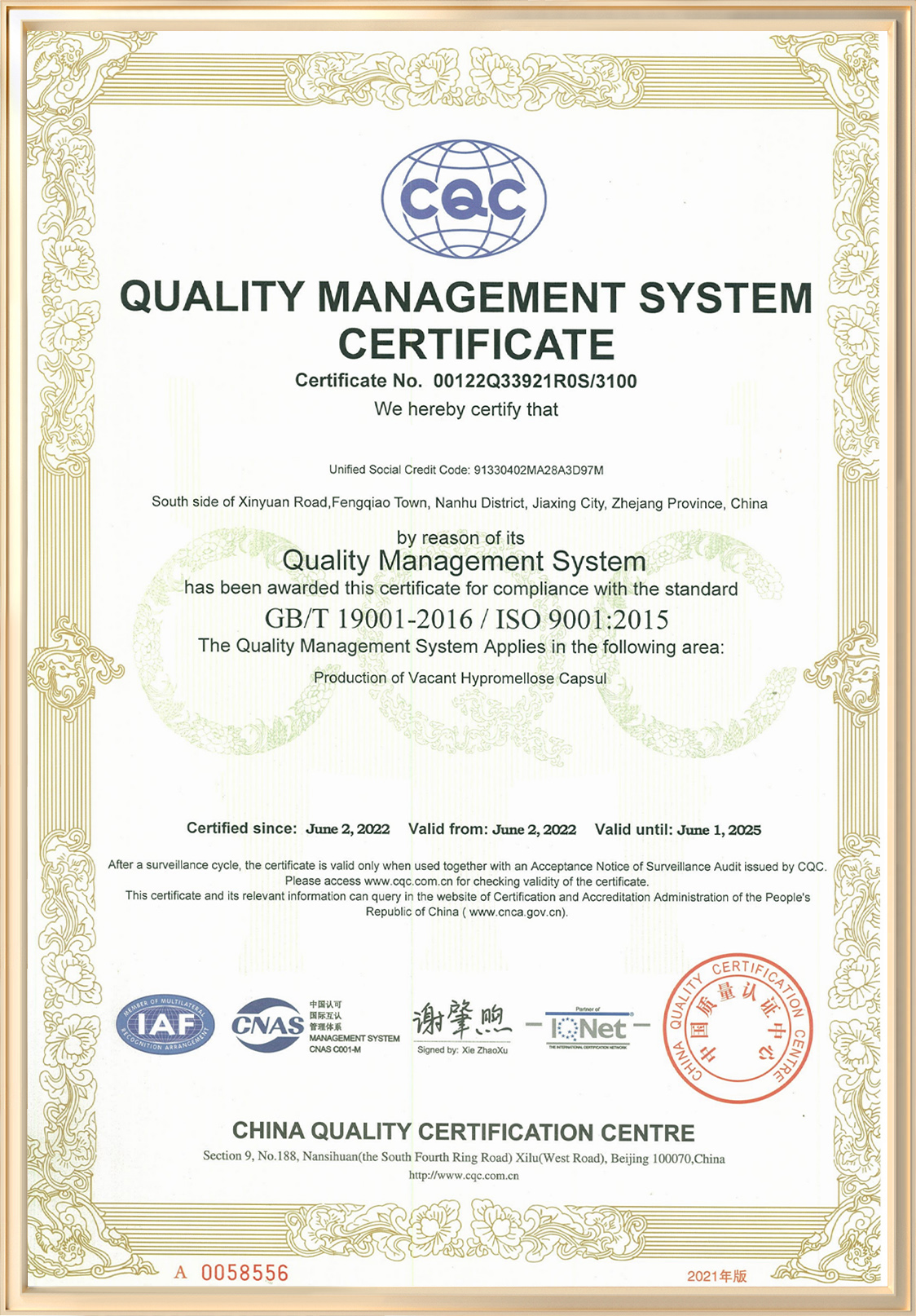
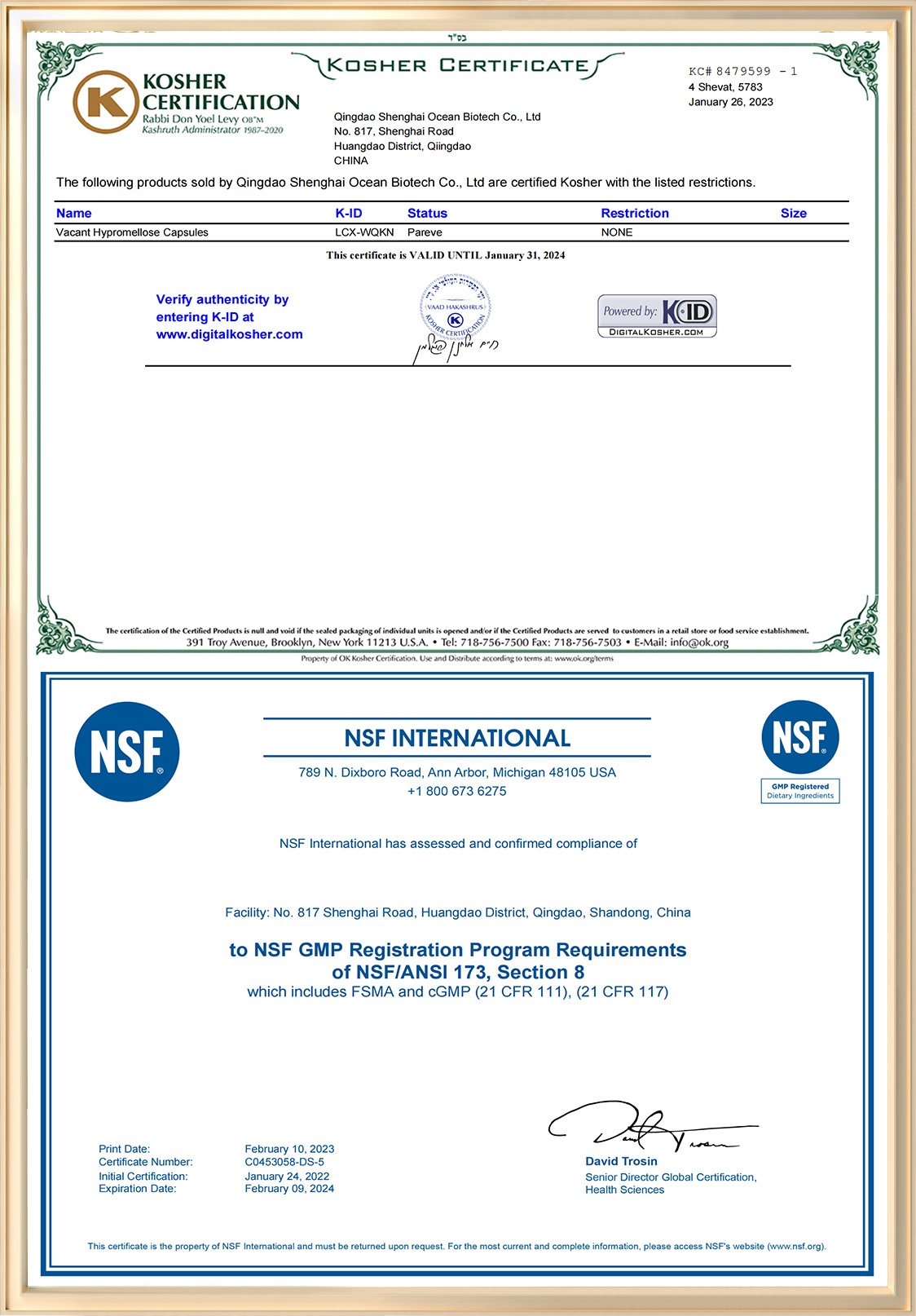
Lot Release Records With Every Shipment
A batch Certificate of Analysis (COA) and product specification sheet (TDS) ship with every commercial lot. Each COA logs measured Bloom (6.67% w/w, 10 °C), viscosity (6.67% w/w, 60 °C), moisture, ash, pH, and optical transmittance (450 nm and 620 nm). It also verifies SO2, peroxide, insoluble matter, heavy metals (As, Cr, Pb), and microbiology against ChP 2025 or GB 6783-2013 limits.
Manufacturing-Site Compliance Dossiers (Supplied on Request)
Xiamen Yaxun coordinates export qualification directly with our partner manufacturing facility. During supplier onboarding and RFQ evaluation, we provide the following manufacturing-site compliance files:
-
Food Safety & Quality Systems:
ISO 9001:2015, FSSC 22000, BRCGS Food Safety, and Codex Alimentarius GMP. -
Religious Certification:
BPJPH-MUI Halal and Kosher bovine pareve dossiers for lots produced under certified controls. -
Pharmaceutical Safety Files:
EDQM CEP files for alkaline bovine hide gelatin, provided under confidential qualification review.
US Bovine Gelatin Import Rules (9 CFR § 94.23 Hide vs. Bone Split)
Food-grade gelatin falls under US Food and Drug Administration rules, while animal-origin import entry is governed by 9 CFR § 94.23. To be clear on compliance limits, a lot COA or FSSC 22000 certificate cannot replace official US veterinary clearance. We align your raw-material route before production:
| Raw Material Pathway | 9 CFR § 94.23 Requirement | Required US Entry Paperwork |
|---|---|---|
| Bovine Hide Gelatin (§ 94.23(b)) | Derived exclusively from bovine hides and skins with verified segregation | Certificate from a salaried national government veterinary officer (§ 94.23(e)) or an issued USDA APHIS import permit under § 94.23(f) (VS Form 16-3 is the permit application) |
| Bovine Bone Gelatin (§ 94.23(c), (d)) | Negligible-risk origins enter under § 94.23(c); non-negligible-risk origins (§ 94.23(d)) must exclude skulls (all ages) and vertebral column (≥30 mo), degrease, acid demineralize, acid/alkali treat, filter, and sterilize at ≥138 °C (280.4 °F) for ≥4 seconds (or a validated equivalent process) | Certificate from a salaried national government veterinary officer verifying sterilization parameters or an issued USDA APHIS import permit under § 94.23(f) |
We investigate any commercial lot that tests outside the agreed specification sheet on arrival against retained QC samples and resolve it under the confirmed contract.