
Get in touch with Xiamen Yasin Industry & Trade Co., Ltd.

Food-Grade Gelatin & Collagen Peptides for Dairy & Desserts: Industrial Stabilization & Texture Engineering
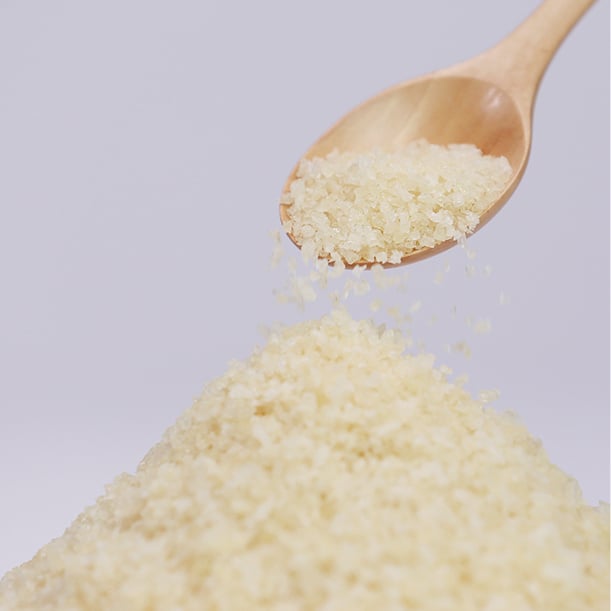
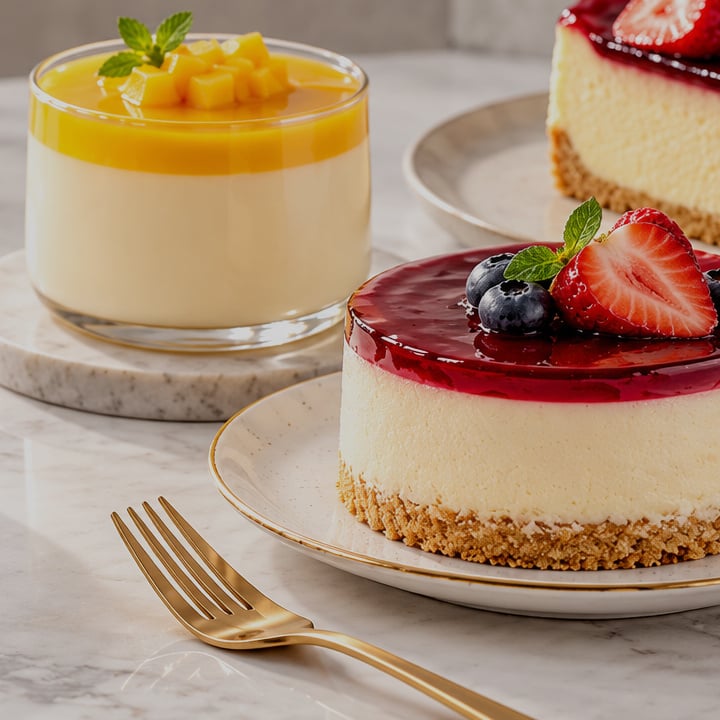
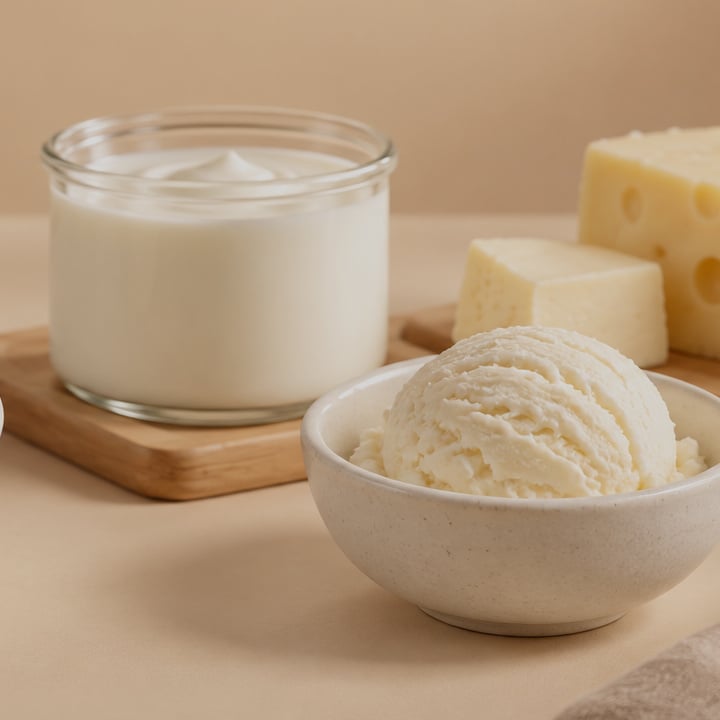
We manufacture and supply food-grade gelatin for dairy and chilled dessert formulations through our Xiamen headquarters and certified production lines, delivering a core dairy portfolio of 180–240 Bloom gel strength and 3.0–4.0 mPa·s viscosity (6.67% solution at 60°C, with specialized 240–260 Bloom dry-mix grades also available). Our bovine hide gelatin powder and leaf gelatin sheets inhibit whey syneresis in yogurt, stabilize overrun in mousse, restrict ice crystal growth in ice cream, and provide a thermo-reversible melt in panna cotta, while our 0 Bloom hydrolyzed collagen peptides deliver non-gelling protein fortification.
- Dairy Gelatin Bloom & Viscosity
- 180–240 Bloom | 3.0–4.0 mPa·s (6.67%, 60°C, GB 6783-2013)
- Leaf Gelatin Sheet Grades
- Bronze 150 / Silver 180 / Gold 200 / Platinum 240 Bloom (2.0 g, 2.5 g, 3.3 g, 5.0 g)
- Reference FOB & CIF Price
- Gelatin: USD 5–8/kg | Bovine Peptide: USD 6.5–8/kg | Fish Peptide: USD 10–15/kg
- MOQ & Pilot Trial Quantity
- 500 kg production MOQ (25 kg single-bag trial order supported)
- Free R&D Lab Sample
- 500 g for food-grade gelatin and 200 g for hydrolyzed collagen peptides
- Production Lead Time
- 20 days for food-grade gelatin | 10 days for collagen peptides
- Quotation Response Time
- Formal technical quotation issued within 24 hours on business days
- Incoterms, Payment & Packaging
- FOB and CIF | T/T and L/C (O/A for VIP) | 25 kg kraft bag or 500 kg, 1,000 kg jumbo bag
- Food Safety & Religious Compliance
- FSSC 22000, BRC, GMP, ISO 9001, BPJPH & MUI Halal, Kosher & batch Certificate of Analysis
Dairy & Dessert Functional Capabilities: Preventing Whey Syneresis and Foam Collapse
Acidified milk gels and whipped dairy toppings lose structural stability during chilled distribution when free serum drains from the protein matrix or air cells coarsen. Directly cooking or heating fermented yogurt with unhydrated gelatin causes separation by curdling; for post-fermentation addition you must bloom and temper before folding into acidic dairy, whereas in industrial yogurt lines we disperse gelatin into neutral sweet milk (pH 6.6–6.7) at 60–65°C prior to 85–95°C pasteurization and fermentation. A common assumption fails when formulators think higher Bloom grades are always better at ultra-low dosages below 0.20% w/w: field experience contradicts that old rule of thumb because cutting polypeptide concentration below 0.20% w/w leaves open pores in the serum network. Higher Bloom is not always a substitute for minimum network coverage, and understanding this trade-off helps R&D teams evaluate industrial gelatin for dairy recipes. We engineer our 180–240 Bloom bovine hide gelatin (3.0–4.0 mPa·s viscosity at 60°C) to build a continuous serum-phase interpenetrating network inside the acid-coagulated casein matrix without masking dairy flavor.
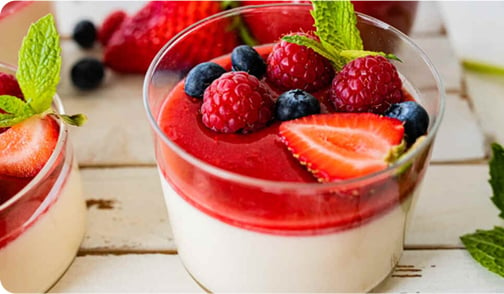
Whey Syneresis Suppression in Set, Stirred & Greek Yogurt
In set yogurt, stirred yoghurt, and strained Greek yogurt, gelatin polypeptide chains form a water-binding network during cooling that helps retain serum within the acid-coagulated casein matrix (Journal of Dairy Science, 2017). In a 28-day 4°C yogurt storage study reported in PubMed Central (PMC13324756) testing 230 Bloom gelatin from 0% to 0.40% w/w in a starch-containing yogurt system, an optimized formulation containing 0.35% w/w (230 Bloom) gelatin recorded 6.68% accelerated centrifugal syneresis (222×g for 10 min) at day 28.
Interfacial Foam Stabilization in Aerated Mousse & Whipped Cream
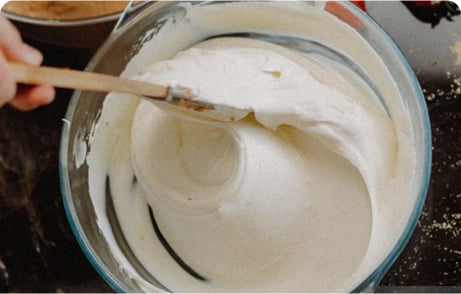
Aerated dairy mousse, bavarois, and whipped cream toppings require rapid interfacial film viscoelasticity during whipping and cooling. Dosing 0.60% to 1.00% w/w of our 200 to 220 Bloom (or 220–240 Bloom High-Whip grade) gelatin stabilizes 75% to 80% overrun (and up to 150% in high-whip toppings) by increasing the storage modulus (G’) of the continuous serum lamellae and preventing serum drainage across 14 to 21 days of chilled display at 4°C (39.2°F), consistent with Food Hydrocolloids (2022) findings on aerated dairy emulsions.
Cryo-Protection & Ice Crystal Restriction in Ice Cream
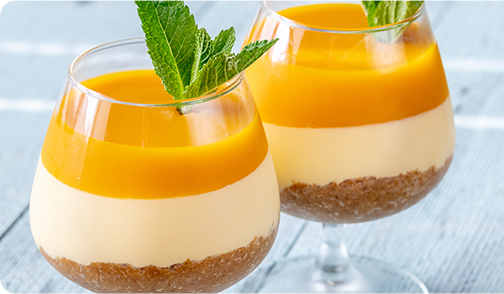
Water in ice cream and gelato is not uniformly frozen and at times exist as free water that can migrate on to ice crystals and grow them over time. During fluctuating cold chain and freezer storage the ice crystals can increase in size beyond the sensory threshold of 45 – 50 μm and make the ice cream or gelato unpleasant to the touch and coarse in texture. The inclusion of 0.15% to 0.35% w/w (1.5 to 3.5 g/kg) of 180 to 220 Bloom gelatin during the production of ice cream or gelato reduces the mean diameter of ice crystals to below 40 μm in standard frozen dairy mixes.
Thermo-Reversible 30.3°C Oral Melt in Panna Cotta & Milk Jelly
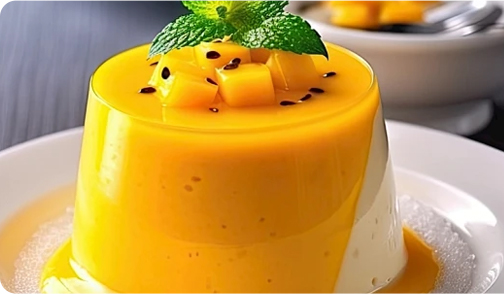
In comparative rupture-stress testing of experimental milk jelly gels (Journal of Cookery Science of Japan, J-STAGE 2001), the gelatin milk jelly sample melted at 30.3°C (86.5°F), compared with 52.3°C for iota-carrageenan, 55.8°C for low-methoxyl pectin, and 84.1°C for agar. Because that 30.3°C experimental transition sits below human oral temperature (37°C / 98.6°F), gelatin for panna cotta (0.70%–0.90% w/w for cup-set or 1.00%–1.20% w/w for demolded desserts at 180–200 Bloom) unmolds cleanly while melting smoothly on the tongue.
“When dairy processors report grainy curds after adding gelatin to yogurt milk, the cause is almost never the Bloom grade itself. It happens when concentrated gelatin is shock-dosed into cold or pre-acidified milk below pH 4.8. We specify alkali-processed Type B bovine hide gelatin with an isoelectric point of pH 4.8 to 5.2 and hydrate it into sweet, neutral milk at pH 6.6 to 6.7 at 60°C to 65°C, prior to homogenization and 85°C to 95°C pasteurization. That sequence gives a glossy, spoonable coagulum without casein flocculation.” Senior Dairy Hydrocolloid Application Engineer, Xiamen Yaxun Industry & Trade Co., Ltd. (Yasin R&D Center)
Want to model estimated Bloom substitution dosage and hydration water weight for your dairy tank?
Launch the Dairy Gelatin Bloom & Dosage Calculator →
Bovine Hide Gelatin, Fish Gelatin, and Hydrolyzed Collagen Peptides for Dairy Matrices
Choosing the right collagen protein grade depends if your dairy SKU is seeking a self-supporting thermo-reversible gel, a fish-derived pescatarian stabilizer, or a zero-Bloom protein fortifier that will not thicken cold milk into a gel. We manufacture all three collagen protein categories across four bovine and fish product lines, giving your R&D and procurement teams the opportunity to consolidate specifications with a single manufacturer.
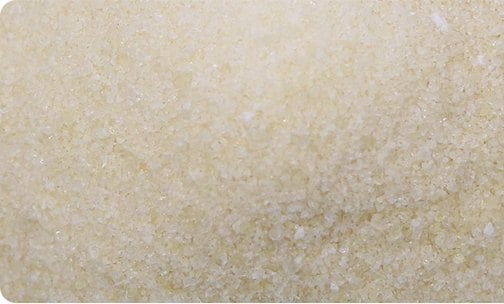
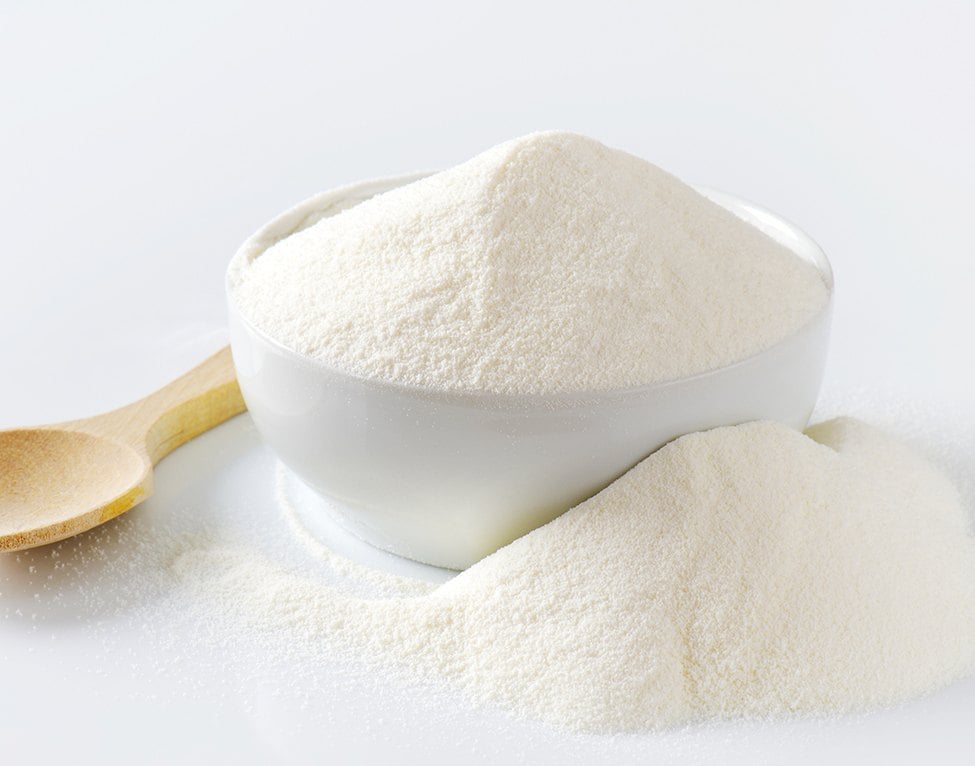
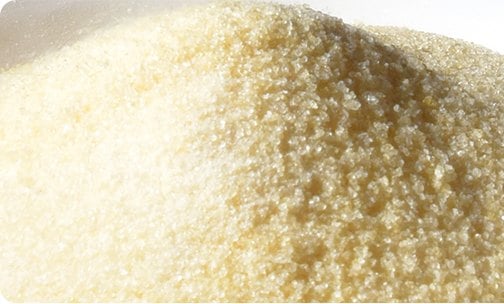
| Material Line | Raw Material Source & Process | Bloom Gel Strength & 60°C Viscosity | Isoelectric Point (pI) & Molecular Weight | Primary Dairy & Dessert Role |
|---|---|---|---|---|
| Type B Bovine Hide Edible Gelatin | Traceable bovine hide (alkali lime process, Halal & Kosher certified) | 180–240 Bloom g | 3.0–4.0 mPa·s (6.67% at 60°C / 140°F) | pI 4.8–5.2 | Mean MW 80,000–120,000 Da | Set yogurt, stirred yoghurt, greek yogurt, panna cotta, mousse, cheesecake, and ice cream stabilization |
| Fish Edible Gelatin (Tilapia / Marine & Freshwater Grades) | Freshwater tilapia or marine fish skin / scale (acid process, Halal & Kosher certified) | 180–240 Bloom g | 2.8–3.8 mPa·s (6.67% at 60°C / 140°F) | pI 7.0–9.0 | Gelling point 8–10°C (46.4–50°F), melt 22–25°C | Pescatarian dairy desserts, religious export lines avoiding mammalian sources, and low-temperature flavor release |
| Hydrolyzed Bovine Collagen Peptides | Enzymatic hydrolysis of food-grade bovine hide collagen | 0 Bloom (non-gelling at 20% w/w) | 1.2–1.8 mPa·s at 10% solution | Mean MW 1,000–3,000 Da (instant cold-water soluble) | High-protein Greek yogurt (1.5%–3.0% w/w) and drinkable yogurt or RTD dairy shakes (1.5%–5.0% w/w protein boost) |
| Hydrolyzed Fish Collagen Peptides | Enzymatic hydrolysis of tilapia or marine fish skin / scale | 0 Bloom (non-gelling) | Transmittance ≥98% at 620 nm | Mean MW 1,000–2,500 Da (deodorized neutral sensory profile) | Functional dairy beverages, fermented milk shots, and clean-label probiotic yoghurt drinks (1.5%–5.0% w/w) |
First-Party Nutritional & Clean-Label Profile (SGS Report QDF26-0022186-05)
On EU and NA ingredients labels, food-grade gelatin (or gelatine) is classified as a food ingredient (rather than an E-number additive, like E407 carrageenan, E415 xanthan gum, or E466 carboxymethyl cellulose). Independently-tested bovine hide gelatin batch 2603002, by SGS-CSTC Standards Technical Services (Report QDF26-0022186-05, CNAS L0604 accredited), showed 87.1 g/100 g protein (GB 5009.5-2025 Method I), <0.1 g/100 g total fat, <0.1 g/100 g total carbohydrates, and Not Detected (below method detection limit) for five tested sugars (glucose, fructose, sucrose, maltose, and lactose), with an energy value of 1,481 kJ/100 g (353 kcal/100 g).
When your formulation requires both structural gel stabilization and a higher front-of-pack protein claim in high-protein greek yogurt, we supply a dual-component system. In early dairy trials, off-odor and heavy animal flavor in low-grade collagen peptides ruined delicate dairy beverage flavor profiles until switching to deodorized 1000–3000 Da bovine and fish peptides. Combining 0.20% to 0.35% w/w of 220–240 Bloom bovine gelatin to lock whey serum with 1.5% to 3.0% w/w deodorized hydrolyzed collagen peptides (1,000–3,000 Da, ≥90% protein on dry basis) boosts total dairy protein without excessive gelling during pumping or filling.
Leaf Gelatin Sheets and Custom Mesh Granulation (20 to 80 Mesh) for Industrial Dispersion
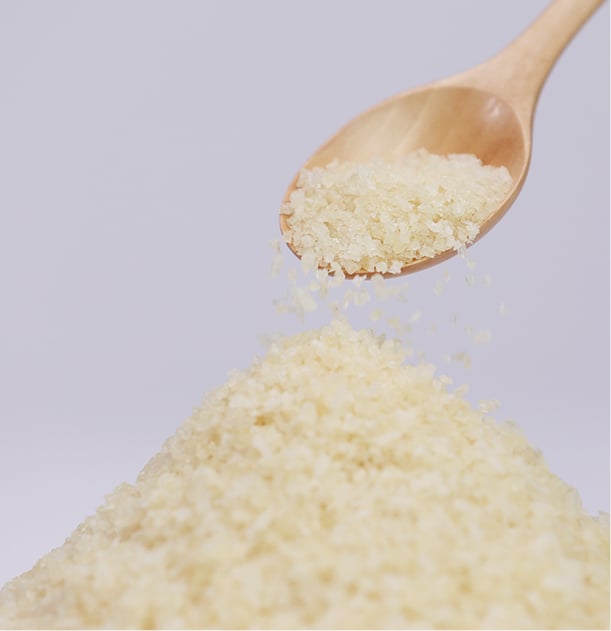
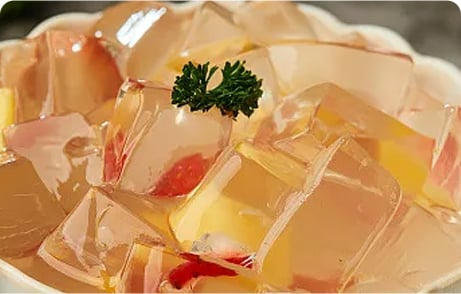
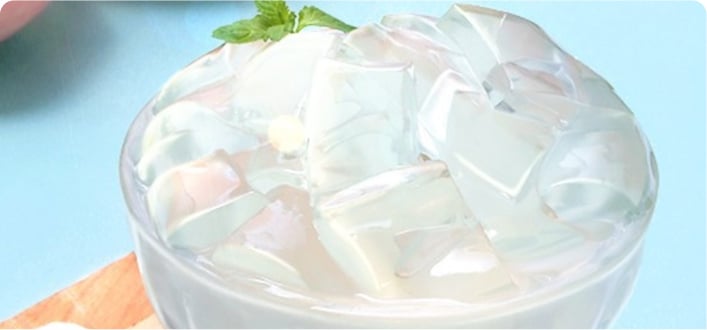
What sets gelatin apart is particle size distribution. This determines if gelatin powder will hydrate to a smooth consistency in your mixing tank, or if it will swell and form “fish-eyes” and clog your inline filters. Pouring hot gelatin over cold cream cheese, whipped cream or yogurt can cause thermal shock and seizing. Sheet gelatin (Bronze 150, Silver 180, Gold 200 or Platinum 240 Bloom) can be used in replacement of powder, but requires adjusting for dry gelatin mass and bloom strength as well as the recipe for consistency. Too much gelatin will result in a rubbery texture for panna cotta and mousse. Too little will result in a soft and unstable texture. Whether your team is selecting gelatin for mousse, panna cotta, or ice cream formulations, we mill our dairy gelatin powder across three ASTM E11 sieve ranges and manufacture four calibrated leaf gelatin sheet grades. We mill our dairy gelatin powder across three ASTM E11 sieve ranges. We manufacture four calibrated leaf gelatin sheets.
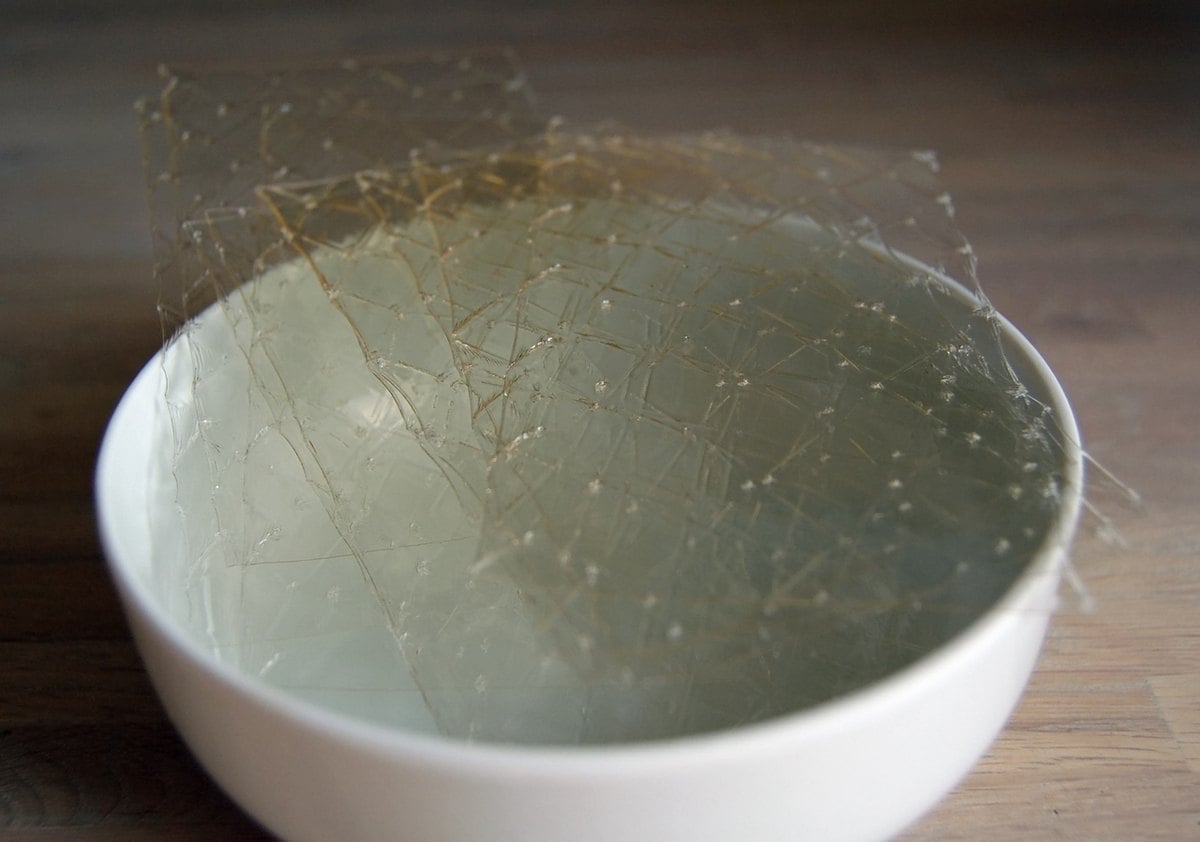
| Physical Format / Grade | Mesh Size or Sheet Cut | Metric & Imperial Aperture / Mass | Bloom Gel Strength | Recommended Plant Hydration Method |
|---|---|---|---|---|
| Coarse Industrial Granule | 20–40 Mesh Powder | 850–425 μm (0.0335–0.0167 in) | 180–240 Bloom | Cold-water pre-swelling tank (1 part gelatin to 5 parts water at 15–25°C / 59–77°F for 15–20 min), then melt at 55–65°C |
| Standard Dairy Granule | 40–60 Mesh Powder | 425–250 μm (0.0167–0.0098 in) | 180–240 Bloom | High-shear recirculation mixer or warm milk dispersion tank at 60–65°C (140–149°F) prior to homogenization |
| Fine Fast-Dispersing Powder | 60–80 Mesh Powder | 250–180 μm (0.0098–0.0071 in) | 180–240 Bloom | Dry pre-blend 1 part gelatin with 5 parts crystalline sugar or skim milk powder at ambient temperature, then disperse into 60–65°C milk |
| Platinum Leaf Gelatin Sheet | Reticulated Leaf Sheet | 2.5 g / sheet (400 sheets per kg) | 240 Bloom | Soak in cold water (5–15°C) for 5–7 min, drain swollen sheet, dissolve in warm dessert base (50–60°C) |
| Gold Leaf Gelatin Sheet | Reticulated Leaf Sheet | 2.0 g or 2.5 g / sheet | 200 Bloom | Culinary benchmark for panna cotta, mousse cake, mirror glaze, and central pastry kitchen batching |
| Silver Leaf Gelatin Sheet | Reticulated Leaf Sheet | 2.5 g or 3.3 g / sheet | 180 Bloom | Standard pastry cream, fruit curd, and chilled dairy tart filling stabilization |
| Bronze Leaf Gelatin Sheet | Reticulated Leaf Sheet | 3.3 g or 5.0 g / sheet | 150 Bloom | Foodservice and bakery glaze applications requiring higher sheet mass per batch |
Converting Culinary Leaf Gelatin Sheet Recipes to Industrial Gelatin Powder
Pastry chefs develop signature panna cotta, tiramisu, and mousse recipes using Gold 200 Bloom or Platinum 240 Bloom leaf gelatin sheets because sheets simplify manual counting in small kitchens. Plant scale ups to a 1,000 liter or 5,000 liter batch in a central kitchen, can seize using gelatin powder 1:1 sheet for sheet without adjusting for dry mass and bloom. This will also impact the final gel firmness.
As an engineering starting point for pilot validation, estimate equivalent powder mass by multiplying total dry sheet mass in gram units by the square root of the Bloom ratio: Mpowder = Msheet × √(Bloomsheet / Bloompowder). For example, 1,000 sheets of Gold 200 Bloom leaf gelatin (2.5 g per sheet = 2,500 gram dry weight) corresponds to an estimated 2,282.2 gram (2.282 kg / 5.03 lb) of our 240 Bloom industrial powder; using a 1:5 powder-to-water pre-hydration ratio, that 2.282 kg of powder requires 11.41 kg of pre-hydration water counted toward the recipe’s total water balance.
Scaling a culinary leaf gelatin sheet recipe to a 25 kg bag industrial powder line?
Use the Leaf Gelatin Sheet to Powder Converter →
Sub-Application Dosage, Bloom Strength, and Viscosity Matrix Across Dairy Categories
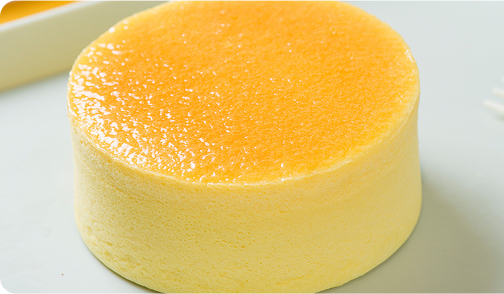
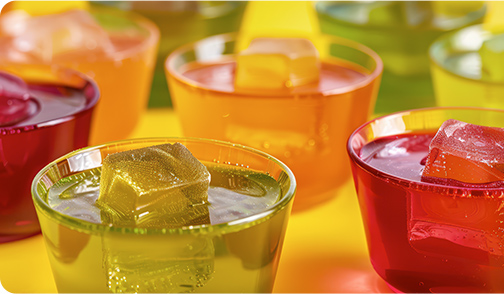
In dairy processing, getting dosage control right is critical for determining texture. Under-dosing in yogurt leads to serum pooling, whereas over-dosing results in yogurt with an over-firm gel structure. Using the GMIA Gelatin Handbook (2019), peer-reviewed dairy rheology literature, and our application lab guidelines, we developed the 9-row sub-application specification matrix and 5 hydrocolloid melting point comparison, included below.
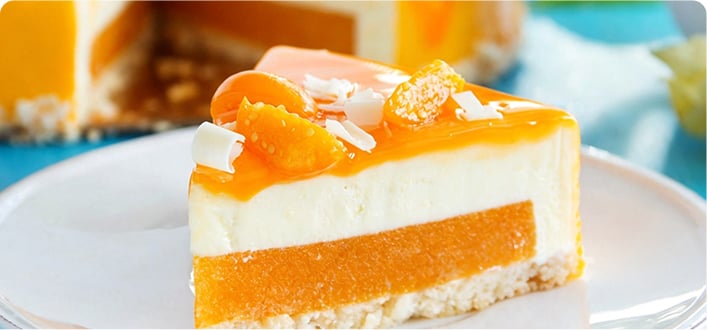
| Dairy / Dessert Sub-Application | Recommended Yasin Bloom Grade | 60°C Viscosity (6.67% Solution) | Recommended Mesh / Format | Dosage (% w/w) & Metric / Imperial per Ton | Hydration & Addition Temperature | Target Rheological & Sensory Outcome |
|---|---|---|---|---|---|---|
| Set-Style Fermented Yogurt (Cup-Fermented, pH 4.2–4.6) | 200–230 Bloom (within 180–240 Bloom Type B line) | 3.0–4.0 mPa·s (3.0–4.0 cP) | 40–60 Mesh (425–250 μm / 0.0167–0.0098 in) | 0.25%–0.50% w/w (2.5–5.0 g/kg | 5.0–10.0 lb/US ton) | Disperse at 60–65°C (140–149°F) before 85–95°C pasteurization | Clean spoon cut; 0.35% at 230 Bloom held 28-day 4°C 222×g syneresis to 6.68% |
| Stirred & Swiss-Style Yoghurt (Sheared Coagulum) | 200–220 Bloom (within 180–240 Bloom Type B line) | 3.0–4.0 mPa·s (3.0–4.0 cP) | 40–60 Mesh (425–250 μm / 0.0167–0.0098 in) | 0.25%–0.50% w/w (2.5–5.0 g/kg | 5.0–10.0 lb/US ton) | 60–65°C (140–149°F) in sweet milk pre-homogenization | Smooth shear recovery after cooling plate, glossy body, minimal serum separation |
| Strained High-Protein Greek Yogurt & Skyr | 220–240 Bloom Gelatin + 0 Bloom Peptide Co-Dose | 3.0–4.0 mPa·s (Gelatin phase) | 60–80 Mesh (250–180 μm / 0.0098–0.0071 in) | 0.20%–0.35% w/w gelatin + 1.5%–3.0% w/w peptide (4.0–7.0 lb/US ton gelatin) | 60–65°C (140–149°F) after 1:5 dry pre-blend with sugar or SMP | Prevents whey weeping in strained curds while boosting total dairy protein |
| Drinkable Yogurt & Cultured Milk Beverages | 180–200 Bloom Gelatin (or separate 0 Bloom Peptide for protein boost) | 3.0–4.0 mPa·s (3.0–4.0 cP) | 60–80 Mesh (250–180 μm / 0.0098–0.0071 in) | 0.15%–0.25% w/w gelatin (1.5–2.5 g/kg | 3.0–5.0 lb/US ton) | 55–65°C (131–149°F) prior to inline homogenization | Smooth mouth-coating body (use 1.5%–5.0% w/w 0 Bloom peptide for non-gelling protein fortification) |
| Aerated Dairy Mousse, Bavarois & Whipped Cream | 200–220 Bloom (or 220–240 Bloom High-Whip Grade) | 3.0–4.0 mPa·s (3.0–4.0 cP) | 20–40 Mesh (850–425 μm / 0.0335–0.0167 in) | 0.60%–1.00% w/w (6.0–10.0 g/kg | 12.0–20.0 lb/US ton) | Pre-swell 1:5 at 20°C (68°F), melt at 55–60°C (131–140°F) | Stabilizes 75%–80% overrun (up to 150% in toppings) over 14–21 days chilled storage |
| Panna Cotta, Chilled Milk Jelly & Custard Flan | 180–200 Bloom (or 200–240 Bloom / Gold & Platinum Sheet) | 3.0–4.0 mPa·s (3.0–4.0 cP) | 20–40 Mesh or 2.0 g / 2.5 g Gold & Platinum Sheet | 0.70%–0.90% w/w cup-set | 1.00%–1.20% w/w demolded (14.0–24.0 lb/US ton) | Dissolve into 55–65°C (131–149°F) cream-milk blend | Clean cup demolding, elastic bounce, and low-temperature oral melt below 37°C |
| Ice Cream, Gelato & Frozen Yogurt | 180–220 Bloom (Cryo-Stabilizer) | 3.0–4.0 mPa·s (3.0–4.0 cP) | 40–60 Mesh (425–250 μm / 0.0167–0.0098 in) | 0.15%–0.35% w/w (1.5–3.5 g/kg | 3.0–7.0 lb/US ton) | Add to mix vat at 60–65°C (140–149°F) before aging at 4°C | Increases unfrozen serum viscosity to keep ice crystals <40 μm in standard freeze-thaw tests |
| Cold-Set Cheesecake, Tiramisu & Cream Cheese Spread | 200–240 Bloom Powder or Gold/Platinum Leaf Sheet | 3.0–4.0 mPa·s (3.0–4.0 cP) | 40–60 Mesh or 2.0 g / 2.5 g Gold & Platinum Sheet | 0.50%–0.90% w/w (5.0–9.0 g/kg | 10.0–18.0 lb/US ton) | Melt hydrated gel at 55°C (131°F), temper into 25–30°C cheese curd | Clean knife slice without crumb tearing or moisture weeping under chilled storage |
| Dry-Mix Instant Dessert & Jelly Powder Sachets (Custom High-Bloom Line) | 240–260 Bloom (Custom High-Bloom Grade outside 180–240 dairy baseline) | 3.5–4.2 mPa·s (3.5–4.2 cP) | 60–80 Mesh (250–180 μm / 0.0098–0.0071 in) | 1.20%–2.00% w/w on reconstituted dessert weight (24–40 lb/US ton) | Pre-blended with sucrose; dissolves in 75–85°C (167–185°F) liquid | Fast household refrigeration gelation and high optical clarity (≥90% at 450 nm) |
Formulators evaluating how to make panna cotta with gelatin powder or selecting the best stabilizer for ice cream and yogurt frequently compare bovine gelatin against plant hydrocolloids. Comparative rupture-stress rheology on experimental milk jelly gels (Journal of Cookery Science of Japan, J-STAGE 2001) illustrates why gelatin is the only hydrocolloid in the study whose milk gel melted below human oral temperature (37.0°C / 98.6°F):
| Hydrocolloid Stabilizer | Reported Experimental Milk Jelly Melting Point (J-STAGE 2001) | Gelation & Ion Mechanism | Oral Melt & Flavor Release at 37°C (98.6°F) | Impact on Dairy Texture & Clean Label |
|---|---|---|---|---|
| Food-Grade Gelatin (Experimental Milk Jelly Sample; Yasin Portfolio 180–240 Bloom) | 30.3°C (86.5°F) (J-STAGE 2001 experimental milk jelly sample) | Thermo-reversible collagen triple-helix network; no calcium or sugar threshold required | Melts below 37°C oral temperature; fast cream and fruit flavor release | Declared as food ingredient (Gelatin / Gelatine); supports elasticity, foam overrun, and creamy mouthfeel |
| Iota-Carrageenan (E407) | 52.3°C (126.1°F) (J-STAGE 2001 experimental milk jelly sample) | Electrostatic interaction with kappa-casein and divalent cations | Does not melt at 37°C; requires mechanical chewing to break gel | Forms elastic thixotropic dairy gels (whereas kappa-carrageenan forms firmer brittle gels that risk syneresis if overdosed) |
| Low-Methoxyl (LM) Pectin (E440) | 55.8°C (132.4°F) (J-STAGE 2001 experimental milk jelly sample) | Calcium-crosslinked “egg-box” junction zones (sensitive to Ca2+ level) | Non-melting at 37°C; shears into fragments under tongue pressure | Widely used in acidic fruit preparations; provides lower interfacial whipping overrun than gelatin in aerated dairy mousse |
| Agar-Agar (E406) | 84.1°C (183.4°F) (J-STAGE 2001 experimental milk jelly sample) | High-hysteresis double-helix aggregation (sets 32–40°C, melts >84°C) | Zero oral melt at 37°C; firmer bite with slower dairy aroma release | Provides physical gel heat resistance at warm room temperatures (microbiological shelf stability still requires proper preservation or cold chain) |
| Native Corn Starch / Modified Starch (E1422 / E1442) | Non-reversible granule swelling (gelatinizes at 62–75°C / 143.6–167°F) | Amylose/amylopectin water absorption (dosed at 1.0%–2.5% w/w) | Viscous paste; does not form a thermo-reversible elastic gel | Increases total carbohydrate solids, can mute delicate lactic notes, and reduces gel clarity |
Not sure what Bloom grade or mesh size gelatin best fits your needs?
Run the Interactive Dairy Hydrocolloid Spec Selector →
Bulk Pricing, Minimum Order Quantities, and Production Lead Times
Procurement managers comparison shopping for bulk gelatin powder often notice higher Bloom grades (between 220-240 Bloom) cost more per kilogram than 180 Bloom grades. When reviewing gelatin’s costs per kilogram, the square root relationship between the strength of Bloom and the estimated formulation dose is often overlooked. Fairly transparent factory reference pricing, delivery lead times, and minimum order quantities enable your sourcing team to take landing costs into consideration.
| Commercial Parameter | Yasin Confirmed Factory Commitment | Operational Scope & Buyer Benefit |
|---|---|---|
| Reference Bulk Price Range (FOB and CIF) | Food-grade gelatin: USD 5–8/kg | Bovine collagen peptides: USD 6.5–8/kg | Marine fish collagen peptides: USD 10–15/kg | Factory-direct pricing across 180–240 Bloom grades under FOB Xiamen or CIF destination port |
| Minimum Order Quantity (MOQ) & Pilot Trial | 500 kg standard production MOQ; 25 kg single-bag trial order supported | Allows dairy plants to validate a full 25 kg bag on industrial homogenizers before committing to 500 kg |
| Free R&D Lab Sample Policy | 500 g for food-grade gelatin and 200 g for hydrolyzed collagen peptides | Dispatched for benchtop yogurt, mousse, ice cream, and panna cotta evaluation |
| Quotation Turnaround & Production Lead Time | Formal technical quotation within 24 hours on business days | Gelatin shipment lead time: 20 days after order confirmation | Collagen peptides lead time: 10 days | Includes CNAS-accredited batch testing, export palletization, and batch Certificate of Analysis |
| Payment Terms & Trade Incoterms | T/T and L/C standard payment (O/A credit terms supported for qualified VIP accounts) | FOB and CIF | Flexible settlement structures for recurring quarterly and annual dairy supply contracts |
| Industrial Export Packaging | 25 kg multi-wall kraft paper bag with inner PE liner, or 500 kg–1,000 kg moisture-barrier jumbo bag | Protects powder below the 14.0% GB 6783-2013 moisture limit (verified batch 2607060 measured 10.9%) across ocean transit |
Cost-in-Use Engineering Analysis: High-Bloom Square-Root Substitution Model
A higher Bloom grade can lower gelatin ingredient cost per ton of finished yogurt or mousse when (P2 / P1) × √(B1 / B2) is below 1.0, the resulting yogurt dose remains at or above 0.20% w/w , and the lower dose meets the same finished-product performance targets. According to the gel rigidity approximation described by Schrieber & Gareis (Gelatine Handbook) and the GMIA Manual (G ∝ C2 × Bloom), the estimated concentration C2 required for comparable gel firmness scales by the square root of the Bloom ratio:
C2 = C1 × √(B1 / B2) | Net Cost-in-Use Ratio = (P2 / P1) × √(B1 / B2)
- When upgrading from 180 Bloom to 240 Bloom, the Bloom ratio 180 / 240 equals 0.75, and its square root is 0.8660 , which gives an estimated 13.40% reduction in dry gelatin dosage mass (provided C 2 stays ≥0.20% w/w). Whenever the 240 Bloom per-kilogram unit price premium is less than 15.47% above the 180 Bloom price (1 / 0.8660 = 1.1547), upgrading to 240 Bloom yields a lower estimated stabilizer cost per ton of finished dairy.
- When upgrading from 200 Bloom to 240 Bloom, the Bloom ratio 200 / 240 equals 0.8333, and its square root is 0.9129 , giving an estimated 8.71% reduction in gelatin mass per batch. If the unit price of 240 Bloom is less than 9.54% (1/0.9129 = 1.0954), the estimated stabilizer cost per batch is lower with the use of the 240 Bloom.
Ready to compare landed FOB and CIF pricing for your annual yogurt or dessert volume?
Request a 24-Hour Custom Volume Quotation →
Food Safety Certifications, Halal and Kosher Compliance, and Batch COA Testing
Multinational dairy brands exporting yogurt, ice cream, and chilled desserts require verifiable batch traceability and religious compliance documentation. Every shipment we dispatch includes a lot-matched Certificate of Analysis tested in our CNAS-accredited laboratory against Chinese National Standard GB 6783-2013 (Food Additive Gelatin), alongside USP, EP, and ChP 2025 pharmacopeial compliance where specified.
First-Party Batch COA Verification: Lot 2607060 (Report No. CSP20260778) vs. GB 6783-2013
To illustrate our analytical reporting, the table below lists actual measurements from our 6,000 kg production batch 2607060 (180 Bloom food-grade gelatin grade, Report No. CSP20260778, inspected under GB 6783-2013):
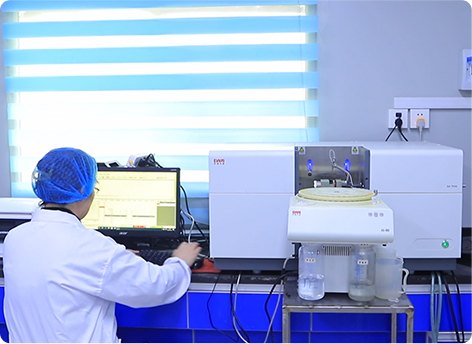
| Test Parameter | GB 6783-2013 Limit / Declared Grade Specification | Yasin Actual Batch 2607060 Result | Testing Method & Dairy Quality Impact |
|---|---|---|---|
| Gel Strength (Bloom, 6.67% at 10°C) | Declared Grade Specification: ≥180 Bloom g | 185 Bloom g | Bloom Gelometer (GB 6783-2013); verifies lot-specific gel rigidity |
| Dynamic Viscosity (6.67% at 60°C) | GB 6783-2013 Limit: ≥2.5 mPa·s (Core dairy specification: 3.0–4.0 mPa·s) | 4.0 mPa·s | Capillary Viscometer at 60°C; supports emulsion and whipping stability |
| Light Transmittance (450 nm / 620 nm) | ≥65% (450 nm) / ≥85% (620 nm) | 90% (at 450 nm) / 98% (at 620 nm) | Spectrophotometer; supports clear mirror glazes and clean white panna cotta |
| pH (1.0% Aqueous Solution at 35°C) | 5.5–7.0 | 5.7 | Potentiometric pH meter; compatible with sweet milk dispersion at pH 6.6–6.7 |
| Loss on Drying (Moisture) & Total Ash | Moisture ≤14.0% | Ash ≤2.0% | 10.9% Moisture | 0.24% Ash | Gravimetric furnace; preserves dry protein solids per 25 kg bag |
| Water-Insoluble Matter & Peroxides | Insolubles ≤0.2% | Peroxides: Not Detected (pass/fail limit) | <0.1% Insolubles | Not Detected (below method detection limit) | Minimizes residue on dairy homogenizer valves and avoids peroxide oxidation |
| Sulfur Dioxide (SO2 Residual) | GB 6783-2013 Limit: ≤30 mg/kg (30 ppm) | 14 mg/kg (14 ppm in raw gelatin powder) | Distillation titration; at 0.30%–1.00% dairy dosage, contributes 0.04–0.14 mg/kg SO2 to finished dairy |
| Heavy Metals (Arsenic, Lead, Chromium) | As ≤1.0 mg/kg | Pb ≤1.5 mg/kg | Cr ≤2.0 mg/kg | As: Not Detected | Pb: 0.012 mg/kg | Cr: 0.19 mg/kg | ICP-MS trace metal verification; lead is 0.8% and chromium is 9.5% of the statutory cap |
| Microbiology (TPC, Coliforms, Salmonella) | TPC ≤10,000 CFU/g | Coliforms ≤30 MPN/100g | Salmonella: Absent in 25 g | TPC <10 CFU/g | Coliforms: Factory COA reported as <3.0 MPN/g (confirm MPN/100g method for ≤30 MPN/100g audit) | Salmonella: Not Detected in 25 g | Verified prior to container release to support hygienic dairy processing |
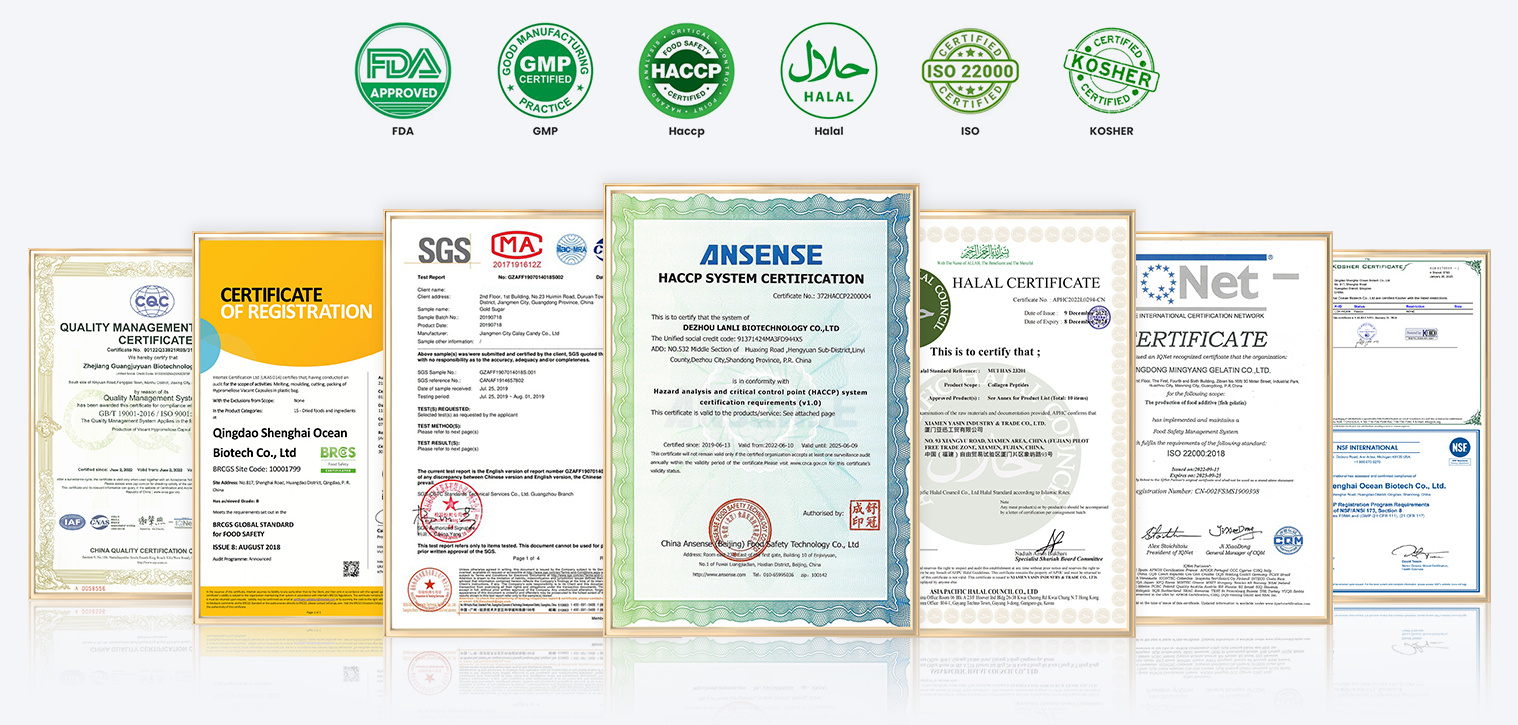
Active Global Certifications & Verified Validity Dates
In B2B ingredient sourcing, a supplier quoting a Bloom number without specifying the 6.67% solution at 10°C / 16–18h test method or showing suspiciously identical zero-variance COAs across batches is a major procurement red flag. Likewise, previous supplier export paperwork errors such as missing or mismatched Veterinary Certificate VC and Halal scope have caused CCS delays. We continuously have third party certifications in food safety and religious compliance:
- Our active FSSC 22000 Food Safety System Certification is valid until 2029-04-25 covering gelatin and collagen peptides manufacture for food grade and GFSI HACCP.
- Our shipments include a BPJPH & LPPOM MUI Halal Certificate (MUI Halal decree valid through 2028-05-17 ), supporting Halal dairy ingredient compliance and Indonesian Government Regulation PP Nomor 40 Tahun 2026 import documentation requirements.
- Our BRCGS Global Standard for Food Safety certificate is valid until 2027-08-23 for International dairy ingredients.
- Our facility holds GMP & ISO 9001 Quality Management certifications, with GMP valid through 2028-08-10 and ISO 9001:2015 valid through 2027-09-29.
- We hold Kosher Certification (valid through 2026-12-31 ), maintain EDQM TSE/BSE compliance documentation, and issue an official export Veterinary Certificate (VC) with every container.
“For dairy exporters shipping into Southeast Asia, the Middle East, and Latin America, customs clearance hinges on document synchronization. Before a container leaves Xiamen port, our quality assurance team cross-verifies the CNAS lab batch Certificate of Analysis, the Veterinary Certificate, and our BPJPH-MUI Halal or Kosher lot certificates so your shipment clears destination port inspection without paperwork delays.” Quality Assurance & Regulatory Affairs Director, Xiamen Yaxun Industry & Trade Co., Ltd.
Do you need to review our FSSC 22000, BPJPH-MUI Halal, BRC, Kosher, and batch 2607060 COA PDFs for your vendor onboarding file?
Request the Complete Compliance & COA Document Pack →
From 500g Lab Sample Validation to 25kg Pilot Trial and Bulk Container Delivery
Qualifying a gelatin or collagen peptide supplier on an active yogurt or ice cream line requires structured validation from benchtop to homogenizer. We follow a 5 step technical onboarding workflow.
- Application Audit & 24-Hour Formal Quotation You share your dairy matrix (set yogurt, stirred yoghurt, mousse, panna cotta, or ice cream), pasteurization temperature, pH profile, and target Bloom strength. Within 24 hours on business days, our application engineers issue a formal FOB and CIF technical quotation (within our USD 5–8/kg food-grade gelatin or USD 6.5–8/kg bovine peptide reference tiers) along with representative product specifications.
- Free 500 g Gelatin / 200 g Collagen Lab Sample Dispatch We ship a free 500 g food-grade gelatin sample (for benchtop evaluation of 180–240 Bloom gel strength, 3.0–4.0 mPa·s 60°C viscosity, transmittance, and yogurt centrifuge syneresis) or a free 200 g hydrolyzed collagen peptide sample (for evaluating 0 Bloom cold-milk solubility and sensory neutrality).
- 25 kg Single-Bag Pilot Homogenizer Validation Before committing to our 500 kg standard production MOQ, you can order a single 25 kg kraft bag trial lot. Our engineers provide a dispersion SOP: pre-swell 1 part 20–40 mesh gelatin in 5 parts cold water (15–25°C) before warming to 55–65°C, or dry-preblend 1 part 60–80 mesh gelatin with 5 parts crystalline sugar at ambient temperature before dispersing into 60–65°C milk.
- Master Lot Reservation & Pre-Shipment CNAS Testing Once your pilot run passes evaluation, we lock your target specification in our production system. Confirmed orders ship within 20 days for food-grade gelatin and within 10 days for hydrolyzed collagen peptides under T/T and L/C payment terms (with O/A available for approved VIP partners).
- Moisture-Barrier Container Loading & Customs Dossier Delivery We pack your order in 25 kg multi-wall kraft paper bags (with inner food-grade PE liners) or 500 kg, 1,000 kg jumbo bags on ISPM-15 pallets, accompanied by a batch-specific Certificate of Analysis, Veterinary Certificate, Certificate of Origin, and Halal/Kosher certificates.
Verified Dairy & Dessert Formulation Case Studies and Factory Production Capacity
With enterprise origins tracing back to 1986 (and Xiamen Yaxun Industry & Trade Co., Ltd. established in September 2009 as our integrated R&D, manufacturing and export company), we operate a production base with an annual capacity of 36,000 tons of gelatin (including 26,000 tons of core food and pharmaceutical gelatin lines), 19,000 tons of hydrolyzed collagen peptides, and 8.5 billion empty capsule shells. Photographs of our products and three of our international customers are included below to illustrate our commercial history.
Colombia, 5-Year Supply of Custom 260 Bloom Bovine Hide Gelatin for Dry-Mix Dessert & Jelly Powder
| Customer Challenge: | A single local distributor monopoly in Colombia kept jelly dessert powder gelatin costs artificially high until qualifying a direct Chinese 260 Bloom bovine hide gelatin factory with 5-year lot stability, as the processor sought to stabilize procurement costs and batch-to-batch gel consistency. |
| Our Solution: | Beyond our 180–240 Bloom core dairy line, we supplied a custom high-Bloom 260 Bloom bovine hide gelatin (60–80 mesh / 250–180 μm) tailored for dry-mix dessert sachets to blend uniformly with sugar and dissolve rapidly in hot water (75–85°C). |
| Verified Commercial Result: | Across 5 consecutive years of direct factory shipments to Colombia, the customer broke its single-distributor dependency, maintained stable lot-to-lot gel strength and clarity across multi-ton orders, and lowered annual raw material procurement spend. |
Costa Rica, 180 Bloom Type B Bovine Gelatin for Yogurt & Ice Cream Stabilization
| Customer Challenge: | A Costa Rican food and dairy manufacturer required a reliable 180 Bloom food-grade gelatin supplier to control whey separation in cultured yogurt and improve texture stability in frozen ice cream products while eliminating customs delays from incomplete export documents. |
| Our Solution: | We supplied our 180 Bloom Type B bovine hide gelatin (3.0–4.0 mPa·s viscosity at 60°C, 40–60 mesh / 425–250 μm) dispersed into sweet milk at 60–65°C prior to homogenization, backed by synchronized pre-shipment COA and Veterinary Certificate documentation. |
| Verified Commercial Result: | The customer achieved stable yogurt coagulum viscosity and smooth ice cream texture across chilled and frozen distribution while clearing Costa Rican customs on schedule. |
Thailand, Freshwater Tilapia Gelatin & Collagen Peptides for Functional Dairy & Dessert Lines
| Customer Challenge: | A Thai dairy and dessert brand needed to transition from mammalian collagen sources to fish-derived raw materials across specific customer SKUs to satisfy regional religious and pescatarian sourcing preferences without compromising sensory quality. |
| Our Solution: | We supplied a paired freshwater tilapia solution: 200 Bloom freshwater fish gelatin for chilled dessert gels and 1,000–2,500 Da deodorized hydrolyzed fish collagen peptides (0 Bloom) for fortified yoghurt beverages, validated across multiple terminal production batches. |
| Verified Commercial Result: | Multi-batch terminal validation confirmed neutral odor and flavor, clear light transmittance, stable product texture throughout shelf life, and full Halal export compliance across Southeast Asian channels. |
Want a free 500 g gelatin or 200 g collagen sample matched to one of these commercial dairy profiles?
Request Your Matched Dairy Trial Kit →

Technical Boundaries: When to Combine or Substitute Gelatin in Dairy Formulations
As the manufacturer of gelatin and collagen peptides, we think that being transparent with our technology saves clients months of unsuccessful pilot trials. Gelatin is not always the standalone answer to every thermal regime, and we are straightforward when not to use standard gelling gelatin. Understanding each formulation trade-off, thermal trade-off, and processing trade-off helps you decide where a hybrid hydrocolloid system or our non-gelling collagen peptide line is required:
| Dairy Operating Condition | Thermal & Matrix Mechanism | Recommended Formulation Action |
|---|---|---|
| For Unrefrigerated Ambient-Shelf Dairy Desserts Stored Above 30–32°C (86–89.6°F), | because an experimental pure gelatin milk gel melts at 30.3°C (86.5°F), a standalone gelatin panna cotta or milk pudding held above 32°C without refrigeration will soften or liquefy. | For ambient shelf-stable puddings, consider a gelatin-carrageenan or gelatin-agar system based on your thermal hold and microbiological preservation. |
| Under Direct Ultra-High-Temperature (UHT >135°C) or Retort Sterilization (>121°C for 15-20 min), | exposing hydrated gelatin chains to severe UHT or retort heat partially hydrolyzes peptide bonds and reduces the effective Bloom gel strength by 25% to 45%. | For chilled pasteurized dairy, use standard HTST pasteurization (85-95°C for 15-30 seconds); for aseptic UHT lines, dose sterile-filtered gelatin downstream under aseptic filling conditions, or use our 0 Bloom hydrolyzed collagen peptides, for protein fortification, in place of gelation. |
| For Strictly Vegan or 100% Plant-Based Label Declarations, | bovine hide gelatin, fish gelatin, and collagen peptides are animal-derived proteins (87.1 g/100 g protein in tested bovine gelatin batch 2603002 and ≥90% dry-basis protein in hydrolyzed collagen peptides) and cannot be used in vegan-certified SKUs. | Therefore, they cannot be used in vegan-certified SKUs. Our BPJPH-MUI Halal, Kosher, and fish grades satisfy religious and pescatarian markets. Strict vegan lines require pectin or agar. |
| In High-Protein Liquid Milk Beverages Requiring Zero Gelling at 4°C (1.5%–5.0% w/w Protein Addition), | dosing high concentrations (>0.60% w/w) of 180–240 Bloom gelling gelatin into a cold-stored RTD milk drink can cause unwanted gelation or excessive thickening at 4°C depending on total solids and pH. | When your objective is adding 1.5% to 5.0% w/w collagen protein to a pourable milk shake or drinking yoghurt without forming a gel network, specify our 0 Bloom hydrolyzed collagen peptides (1,000–3,000 Da). |
Frequently Asked Questions on Dairy & Dessert Gelatin Selection
What Bloom strength and dosage of gelatin should we use for set yogurt, stirred yoghurt, and Greek yogurt?
We recommend 180–240 Bloom Type B bovine hide gelatin with a 60°C viscosity of 3.0–4.0 mPa·s. For cup-set and stirred yogurt, our recommended operating range is 0.25% to 0.50% w/w (2.5 to 5.0 g per kg of yogurt mix, or roughly 2.6 to 5.15 gram per litre of milk at 1.03 kg/litre density; in published 28-day 4°C trials, 0.35% w/w at 230 Bloom held 222×g centrifugal syneresis to 6.68%). For high-solids strained greek yogurt, dose 0.20% to 0.35% w/w of 220–240 Bloom gelatin (optionally co-dosed with 1.5% to 3.0% w/w hydrolyzed collagen peptides). Using the square-root substitution model C2 = C1 × √(180/240), moving from 180 to 240 Bloom gives an estimated 13.40% dosage reduction for comparable predicted gel firmness, provided total gelatin dosage remains at or above the 0.20% w/w minimum serum network coverage threshold.
How do we prevent gelatin powder from clumping (“fish-eyes”) or causing casein curdling in yogurt milk?
Match your dispersion protocol to the powder mesh size: pre-swell 1 part 20–40 mesh (850–425 μm) granules in 5 parts cold water (15–25°C) for 15–20 minutes before warming, or dry-preblend 1 part 60–80 mesh (250–180 μm) powder with 5 parts crystalline sugar or skim milk powder at ambient temperature before dispersing into agitated milk at 60–65°C (140–149°F). For pre-fermentation addition, dissolve gelatin in neutral sweet milk at pH 6.6–6.7 before homogenization and pasteurization (85–95°C), then cool before starter culture inoculation; for post-fermentation addition, bloom and temper the gelatin solution before gently folding it into the acidified curd.
How do we convert Gold 200 Bloom or Silver 180 Bloom leaf gelatin sheets to industrial gelatin powder?
Begin by estimating powder mass by multiplying total dry sheet weight in grams by √(Bloomsheet / Bloompowder) and then hydrate powder at a 1:5 powder-to-water ratio, including the water in the total recipe water. 250 g of 200 Bloom sheets is estimated to be 228.2 g of 240 Bloom powder hydrated in 1,141 g of water.
Why does gelatin outperform modified starch, pectin, and agar in panna cotta and dairy mousse?
In comparative milk jelly testing (J-STAGE 2001), the experimental gelatin gel melted at 30.3°C (86.5°F), below human oral temperature (37°C / 98.6°F), whereas the tested iota-carrageenan sample melted at 52.3°C, low-methoxyl pectin at 55.8°C, and agar at 84.1°C. That sub-37°C melting behavior gives panna cotta its signature melt-in-the-mouth flavor release, while gelatin’s amphoteric protein chain also provides interfacial film viscoelasticity to help stabilize 75%–80% overrun in aerated dairy mousse.
What are your reference FOB/CIF prices, minimum order quantities, and free sample policies?
Our reference FOB and CIF prices are USD 5–8/kg for food-grade gelatin (180–240 Bloom), USD 6.5–8/kg for bovine collagen peptides, and USD 10–15/kg for marine fish collagen peptides. Standard production MOQ is 500 kg with a 25 kg single-bag trial option, free samples of 500 g gelatin and 200 g collagen peptides, and technical quotations within 24 hours on business days.
What are your production lead times, packaging options, and accepted payment terms?
Confirmed orders ship within 20 days for gelatin and 10 days for collagen peptides, packed in 25 kg kraft bags or jumbo bags under FOB and CIF terms with T/T and L/C payment (O/A for VIP).
Are your dairy gelatin and collagen peptide lines Halal, Kosher, and FSSC 22000 certified?
Yes. Our manufacturing facility holds active FSSC 22000 (valid to 2029-04-25), BRC (valid to 2027-08-23), GMP (valid to 2028-08-10), and ISO 9001 (valid to 2027-09-29) certifications, alongside EDQM compliance documentation. For religious compliance, we hold BPJPH & MUI Halal certification (MUI decree valid to 2028-05-17) and Kosher certification (valid to 2026-12-31), and every shipment includes a batch-specific Certificate of Analysis and official Veterinary Certificate (VC).
Can we boost total protein in yogurt or dairy drinks without turning the product into a firm gel?
Yes. Specify our 0 Bloom hydrolyzed collagen peptides (1,000–3,000 Da, ≥90% dry-basis protein) at 1.5% to 5.0% w/w; they dissolve in cold milk without forming a gel network at 4°C.