
Get in touch with Xiamen Yasin Industry & Trade Co., Ltd.

Hydrolyzed Plant Protein: Enzymatic Pea, Rice, Soy, Corn & Wheat Peptides
We manufacture enzymatically hydrolyzed plant protein and low-molecular-weight plant peptides from pea, rice, soy, corn, and wheat. Our deeply hydrolyzed grades specify a molecular weight fraction below 1000 Da of ≥ 85.0% under GB/T 22729, while our mildly hydrolyzed pea grade is tailored for emulsion body. Backed by 19,000 tons of annual peptide capacity, every lot ships with a batch Certificate of Analysis (COA).
- Quote returned within 24 hours
- 200 g free sample per peptide grade
- 10 days production dispatch
- 500 kg minimum order quantity
Share your target botanical source, pH window, and order volume. Our technical team returns a grade match, TDS, and FOB or CIF quote within 24 hours.
- Molecular Weight Profile
- < 1000 Da fraction ≥ 85.0% and oligopeptides ≥ 50.0% (soy peptide ≥ 80.0%)
- Botanical Sources & Grades
- 5 vegetable proteins (Pea, Rice, Soy, Corn, Wheat) across 7 enzymatic grades
- Quote Turnaround
- Written technical quote returned within 24 hours
- Production Lead Time
- 10 days dispatch cycle from our 19,000 tons/year peptide plant
- Minimum Order & Packing
- 500 kg per grade in 10 kg cartons, 15 kg bags, or 20 kg kraft bags
- Sample Policy
- 200 g free sample per peptide grade for laboratory testing with lot COA
Enzymatic Plant Protein Peptides vs. Acid-Hydrolyzed Vegetable Protein (aHVP)
Procurement buyers interested in hydrolyzed vegetable protein powder or bulk HVP may receive quotes for high-salt seasonings instead of nutritional peptides. For the preparation of Acid hydrolysis, vegetables are boiled in hydrochloric acid to release glutamic acid and glutamate. These are combined with msg food additive seasonings in soups to complete the umami flavour enhancer. Savory acid-HVP and our enzymatic oligopeptides are not interchangeable: our enzymatic route uses food-grade protease enzymes to cleave proteins with zero acid-route 3-MCPD risk.
| Parameter | Yasin Enzymatic Plant Protein Peptides | Savory Acid-Hydrolyzed Vegetable Protein (aHVP) | Intact Plant Protein Isolate |
|---|---|---|---|
| Hydrolysis Route | Targeted food-grade protease enzymatic hydrolysis at neutral pH | Reflux boiling in hydrochloric acid followed by NaOH neutralization | Alkaline extraction and precipitation without peptide cleavage |
| Molecular Weight (< 1000 Da) | ≥ 85.0% under 1000 Da (GB/T 22729) on deeply hydrolyzed grades | Dominated by free amino acids and salt rather than oligopeptides | 10,000 Da to 300,000 Da intact globulins and glutelins |
| Dry-Basis Protein & Peptides | 77.5% to 95.6% dry-basis protein; ≥ 50.0% to ≥ 80.0% oligopeptides | Low true peptide content due to residual sodium chloride from neutralization | Intact storage protein without oligopeptide specification |
| Ash & Sodium Profile | Limit ≤ 7.0 g/100g (0.07 lb/lb); 2026 lots measure 2.0% to 6.6% | High ash load from acid neutralization; unsuitable for beverages | Moderate ash; forms chalky suspensions in cold water |
| Acid Beverage Clarity (pH 3.8–5.5) | Soluble across the isoelectric point; dedicated acid pea grade (pH 4.34) | Dark brown color and strong savory flavoring prevent drink use | Precipitates near pH 4.5, causing gritty texture and sediment |
| Primary Applications | Clear RTD beverages, whey or vegan blends, supplements, hair and skin care | Bouillon cubes, soy sauces, savory snacks, and umami seasonings | Meat analogues, baked food products, and thick opaque shakes |
An enzymatic protein hydrolysate has a low ash content and eliminates the chalky texture of intact isolates. There is a common misconception that increased hydrolysis leads to increased bitterness. Exposed hydrophobic side chains can contribute to bitterness [1]. For grades undergoing carbon treatment, our selective protease cleavage and carbon adsorption remove bitter peptides, which is validated by batch sensory testing under Q/DLL 0014S.
Controlled Protease Cleavage & Debittering
Random cleavage of plant proteins exposes hydrophobic amino acid residues because non-selective enzymes split internal peptide bonds. Research by Arteaga and co-authors (2020) confirms a weak link between hydrolysis degree and bitterness when selective proteases are used [2]. We pair protease cleavage with activated carbon debittering and perlite filtration on our deeply hydrolyzed lines at Dezhou Lanli Biotechnology Co., Ltd.
Isoelectric Point Solubility (pH 3.5 to 5.5)
Intact pea, rice, and soy isolates precipitate near pH 4.5 because zero net charge triggers protein aggregation. Our enzymatic process cleaves globulins below 1000 Da to expose hydrophilic terminal groups for cold-water solubility. Patent WO2019090011A1 documents enzymatic pea protein hydrolysate solubility at pH 3.4, and our Acid Pea Lot 20260113230 is formulated to a 10% aqueous pH of 4.34 [3].
Core Formulation Capabilities Across Botanical Lines
- Five botanical feedstocks (pea, rice, soy, corn, and wheat) are processed under Q/DLL 0014S, GB/T 22492-2008, and QB/T 4707-2014.
- Deeply hydrolyzed oligopeptides (< 1000 Da ≥ 85.0%) serve clear drinks, while mildly hydrolyzed pea peptide (Lot 20260319230) supports emulsified shakes.
- Dual 0.45 μm and 0.22 μm microfiltration sterilization membranes (CCP1) operate at ≤ 0.40 MPa (58 psi) and 800–1500 L/h (211–396 gal/h).
- Strict threshold limits for heavy metals indicate lead ≤ 0.2 mg/kg (0.2 ppm), arsenic ≤ 0.3 mg/kg (0.3 ppm), mercury ≤ 0.1 mg/kg (0.1 ppm), and cadmium ≤ 0.1 mg/kg (0.1 ppm).
Five Botanical Sources: Pea, Rice, Soy, Corn, and Wheat Peptide Profiles
Formulators select a specific hydrolyzed plant protein based on amino acid ratios, allergen rules, and target viscosity. Rather than forcing one isolate into every recipe, we produce five botanical peptide lines. Your R&D team can match dairy whey alternatives or hydrolyzed collagen plant based concepts.
| Botanical Peptide Line | Grades & 2026 Lots | Why formulators pick it | Verified protein & pH | Target applications | Packing & dispatch |
|---|---|---|---|---|---|
01
Hydrolyzed Pea Protein Powder (Pea Peptide) |
Standard Grade (Lot 20260412230), Acid-Beverage Grade (Lot 20260113230), Mildly Hydrolyzed Grade (Lot 20260319230) | Cleaved from non-GMO yellow peas (Pisum sativum); delivers high branched-chain amino acids and lysine without major U.S. Food and Drug Administration allergens. | 95.6% dry-basis protein at pH 5.88 (Standard); 93.8% protein at pH 4.34 (Acid Grade); 85.0% protein at pH 6.92 (Mild Grade). | Clear acidic RTD sports beverages, pea protein hydrolysate powder blends, medical nutrition, and hair care (CIR assessed up to 25%) [4]. | 15 kg (33.1 lb) or 20 kg (44.1 lb) kraft bags; 500 kg (1,102 lb) MOQ; dispatches in 10 days. |
02
Hydrolyzed Rice Protein Powder (Rice Peptide) |
Enzymatic Rice Oligopeptide Powder (Lot 20260604290, Standard Q/DLL 0014S) | Key hydrolyzed rice protein benefits include hypoallergenic digestion and overcoming native rice glutelin insolubility (pH 4–7) via dual-enzyme cleavage [5]. | 91.3% dry-basis protein (total nitrogen 14.6 g/100g); 10% aqueous pH 5.65; ash 2.1 g/100g; bulk density 0.23 g/mL (14.4 lb/ft³). | Infant and geriatric formulas, methionine-balanced vegan blends with pea peptide, and volumizing hair conditioning sprays. | 15 kg (33.1 lb) or 20 kg (44.1 lb) kraft bags; 500 kg (1,102 lb) MOQ; dispatches in 10 days. |
03
Hydrolyzed Soy Protein Powder (Soybean Peptide) |
Model LLCP-SP-P Soybean Peptide Powder (Lot 2026090240, National Standard GB/T 22492-2008) | Core hydrolyzed soy protein benefits include a complete amino acid profile, ≥ 80.0% dry-basis peptides, negative urease activity, and 0.10% crude fat. | 92.5% dry-basis crude protein (limit ≥ 90.0%); 10% aqueous pH 5.95; moisture 3.43%; 100% passes 0.250 mm (60 mesh) sieve. | Nutritional beverages, clinical enteral nutrition, fermentation nitrogen media, hydrolyzed soy protein for hair, and hydrolyzed soy protein skin serums. | 10 kg (22.0 lb) cartons or 15 kg (33.1 lb) bags; OPRP2 mandatory “Soybean” allergen label; 500 kg MOQ; dispatches in 10 days. |
04
Hydrolyzed Corn Protein (Corn Oligopeptide) |
Model LLCP-CO-P Corn Oligopeptide Powder (Lot 20260330200, QB/T 4707-2014 & Q/DLL 0014S) | Enzymatically cleaved from corn gluten meal [6]; supplies leucine, alanine, and proline oligopeptides (< 1000 Da ≥ 85.0%) for cold-water beverage blends. | 79.4% dry-basis protein (total nitrogen 12.7 g/100g); 10% aqueous pH 5.91; bulk density 0.40 g/mL (25.0 lb/ft³); Aflatoxin B1 ≤ 20.0 μg/kg (20 ppb). | Functional recovery shots, liver-support beverages, instant solid drink sachets, and direct-compression nutritional tablets. | 10 kg (22.0 lb) cartons or 20 kg (44.1 lb) bags; 500 kg (1,102 lb) MOQ; dispatches in 10 days. |
05
Hydrolyzed Wheat Protein (Wheat Oligopeptides) |
Enzymatic Wheat Oligopeptides Powder (Lot 20260910200, Standard Q/DLL 0014S) | Supplies glutamine-rich peptides for gut nutrition and is widely selected for low porosity hair conditioning formulas with < 1000 Da oligopeptides. | 77.5% dry-basis protein via wheat factor N × 5.70 (total nitrogen 13.6 g/100g); pH 5.06; ash 2.0 g/100g; heavy metals ND. | Sports recovery powders, hydrolyzed wheat protein for hair conditioners, and film-forming cosmetic repair treatments. | 10 kg (22.0 lb) cartons or 15 kg (33.1 lb) bags; OPRP2 mandatory “Wheat” allergen label; 500 kg MOQ; dispatches in 10 days. |
Custom Specification
Custom Multi-Botanical Blending & Organic Inquiries
Need a complementary 70:30 pea-to-rice peptide blend to balance methionine and lysine, or looking to evaluate organic and non-GMO plant-based options? Send your target specification sheet and we will prepare a matched 200 g lab sample.
Request Custom Grade MatchingHydrolysis Process Engineering and Application Matching
Formulators often struggle to dissolve plant proteins in cold water because residual aggregates cause gritty sedimentation. Counter-intuitively, a low molecular weight figure alone does not automatically guarantee clear beverages. We pair protease cleavage with carbon adsorption and 0.22 μm membrane filtration at Dezhou Lanli Biotechnology Co., Ltd., validated by our HACCP process flowcharts.
| Process Stage | Standard / Control Parameter | Engineering Function & Output | Execution Facility |
|---|---|---|---|
|
1
Raw Material Acceptance (OPRP1)
|
Approved supplier qualification + lot inspection sheet per Q/DLL 0014S | Verifies botanical identity (pea, rice, soy isolate, corn gluten meal, wheat protein) and screens baseline contaminants | Partner plant (Dezhou Lanli) with Yasin QA oversight |
|
2
Directed Enzymatic Hydrolysis
|
Food-grade protease addition under controlled temperature and pH | Cleaves high-molecular-weight storage proteins into < 1000 Da oligopeptides (≥ 85.0%) without acid-route chloropropanols | In-house enzymatic reactor line at Dezhou Lanli |
|
3
Activated Carbon Decolorization & Perlite Filtration
|
Primary filtration → activated carbon dosing → perlite fine filtration | Adsorbs bitter hydrophobic peptide fragments, plant pigments, and volatile aldehydes for a neutral sensory profile | In-house purification line (omitted on Mild Pea Grade) |
|
4
Microfiltration & Bioburden Control (CCP1)
|
0.45 μm and 0.22 μm (17.7 and 8.7 μin) membranes; pressure ≤ 0.40 MPa (58 psi); flow 800–1500 L/h | Removes insoluble aggregates and reduces microbial load prior to spray drying (Total Plate Count 10–500 CFU/g on 2026 COAs) | In-house membrane unit at Dezhou Lanli (CCP1 monitored) |
|
5
Spray Drying & Sieving
|
Atomized spray drying; 100% passage through 0.250 mm (0.0098 in / 60 mesh) sieve on soy peptide | Produces uniform powder with moisture ≤ 7.0% (actual 3.10%–4.61%) and bulk density 0.21–0.44 g/mL (13.1–27.5 lb/ft³) | In-house spray drying tower at Dezhou Lanli |
|
6
Metal Detection (CCP2) & Allergen Labeling (OPRP2)
|
Fe ≤ 2.0 mm (0.079 in); Non-Fe ≤ 3.0 mm (0.118 in); SS ≤ 3.0 mm (0.118 in); OPRP2 soy/wheat label check | Final physical hazard interception on every inner PE bag and mandatory allergen declaration on soy and wheat outer cartons | In-house packaging line at Dezhou Lanli (CCP2 & OPRP2) |
Different end products require an alternate trade-off for peptide chain length and emulsion body. Going for a deeper hydrolysis can improve solubility near the isoelectric point while a milder hydrolysis can preserve emulsifying activity for shakes. A powder pH reading is not a substitute for UHT thermal stability testing in your finished drink matrix.
Application-to-Grade Selection Guide
-
For clear, acidic RTD beverages (pH 3.8-5.5), use Acid-Beverage Pea Peptide (Lot 20260113230, pH 4.34, 93.8% protein) or Rice Peptide (Lot 20260604290). Always validate the UHT thermal stability of your finished drink formula.
-
For opaque meal replacements and creamy shakes (pH 6.0–7.5), select Mildly Hydrolyzed Pea Peptide (Lot 20260319230, pH 6.92, 85.0% protein) to retain smooth mouthfeel and texture.
-
For high-peptide tablets, capsules, and clinical sachets, select Soybean Peptide LLCP-SP-P (Lot 2026090240, ≥ 80.0% peptides) or Corn Oligopeptide LLCP-CO-P (Lot 20260330200, bulk density 0.40 g/mL).
-
For low-porosity hair conditioners and skin care, select Wheat Oligopeptides (Lot 20260910200, < 1000 Da ≥ 85.0%) or Rice Peptide to penetrate hair cuticles without stiff surface buildup [4].
Creating an acidic beverage or cosmetic serum?
Find Acid-Beverage & Multi-Source Formulation Matching Support hereFive Plant Sources and Seven Enzymatic Grades: Pea, Rice, Soy, Corn, and Wheat Specifications
Many suppliers list generic specification ranges without showing actual batch consistency. The master table below pairs our contractual limits with verified results from seven 2026 production batch COAs [1]. Single-lot numbers show real batch outputs, whereas commercial shipments follow contractual limits and your lot COA (specify pH-stat or OPA titration for custom DH% reporting).
| Grade & 2026 Batch Lot | Standard & Test Basis | Dry-Basis Protein (Spec / Lot Result) | Total Nitrogen (Spec / Lot Result) | MW < 1000 Da & Oligopeptides | 10% Solution pH (Spec / Lot) | Moisture & Ash (Spec ≤ 7.0% / Lot) | Bulk Density (g/mL & lb/ft³) |
|---|---|---|---|---|---|---|---|
| Pea Peptide (Standard) Lot: 20260412230 | Q/DLL 0014S GB 5009.5-2025 | N × 6.25 95.6% (95.6 g/100g) | ≥ 11.2–12.8 g/100g 15.3 g/100g (2.45 oz/lb) | < 1000 Da ≥ 85.0% Oligopeptides ≥ 50.0% | 4.5–7.5 5.88 | Moisture: 3.58% Ash: 2.2% | Spec: 0.20–0.40 g/mL Lot: 0.26 g/mL (16.2 lb/ft³) |
| Pea Peptide (Acid-Beverage) Lot: 20260113230 | Q/DLL 0014S GB 5009.5-2025 | N × 6.25 93.8% (93.8 g/100g) | ≥ 11.2 g/100g 15.0 g/100g (2.40 oz/lb) | < 1000 Da ≥ 85.0% Oligopeptides ≥ 50.0% | 4.0–5.5 4.34 | Moisture: 4.51% Ash: 6.6% | Lot: 0.44 g/mL (27.5 lb/ft³) |
| Pea Peptide (Mildly Hydrolyzed) Lot: 20260319230 | Q/DLL 0014S GB 5009.5-2025 | N × 6.25 85.0% (85.0 g/100g) | ≥ 11.2–12.8 g/100g 13.6 g/100g (2.18 oz/lb) | Partial enzymatic cleavage for emulsion body | 5.0–7.5 6.92 | Moisture: 3.10% Ash: 3.5% | Spec: 0.20–0.40 g/mL Lot: 0.24 g/mL (15.0 lb/ft³) |
| Rice Peptide Lot: 20260604290 | Q/DLL 0014S GB 5009.5-2025 | N × 6.25 91.3% (91.3 g/100g) | ≥ 11.2–12.8 g/100g 14.6 g/100g (2.34 oz/lb) | < 1000 Da ≥ 85.0% Oligopeptides ≥ 50.0% | 4.5–7.5 5.65 | Moisture: 3.19% Ash: 2.1% | Spec: 0.20–0.40 g/mL Lot: 0.23 g/mL (14.4 lb/ft³) |
|---|---|---|---|---|---|---|---|
| Soybean Peptide (LLCP-SP-P) Lot: 2026090240 | GB/T 22492-2008 Q/DLL 0014S | Spec ≥ 90.0% (N × 6.25) 92.5% (Fat: 0.10%) | Spec ≥ 12.8 g/100g Urease: Negative | Peptides ≥ 80.0% (PASS) < 1000 Da ≥ 85.0% | 4.5–7.5 5.95 | Moisture: 3.43% Ash (≤ 6.5%): 4.0% | Spec: 0.20–0.40 g/mL Lot: 0.21 g/mL (13.1 lb/ft³) |
| Wheat Oligopeptides Lot: 20260910200 | Q/DLL 0014S GB 5009.5-2025 | N × 5.70 (wheat factor) 77.5% (77.5 g/100g) | ≥ 12.8 g/100g 13.6 g/100g (2.18 oz/lb) | < 1000 Da ≥ 85.0% Oligopeptides ≥ 50.0% | 4.5–7.5 5.06 | Moisture: 4.10% Ash: 2.0% | Spec: 0.20–0.40 g/mL Lot: 0.26 g/mL (16.2 lb/ft³) |
| Corn Oligopeptide (LLCP-CO-P) Lot: 20260330200 | QB/T 4707-2014 Q/DLL 0014S | N × 6.25 79.4% (79.4 g/100g) | ≥ 11.2–12.8 g/100g 12.7 g/100g (2.03 oz/lb) | < 1000 Da ≥ 85.0% Oligopeptides ≥ 50.0% | 4.5–7.5 5.91 | Moisture: 4.61% Ash: 2.3% | Spec: 0.20–0.40 g/mL Lot: 0.40 g/mL (25.0 lb/ft³) |
When comparing wheat oligopeptides against pea or soy peptides, check the Kjeldahl nitrogen factor on the COA. Under GB 5009.5-2025, wheat protein uses N × 5.70 instead of N × 6.25. Our Wheat Lot 20260910200 at 13.6 g/100g total nitrogen delivers the same nitrogen density as an 85.0% N × 6.25 protein powder.
Yasin Technical & QA Engineering Team, Xiamen Yasin Industry & Trade Co., Ltd.
Request 200 g Free Evaluation Samples & 2026 Batch COAs
Commercial Terms, Pricing Drivers, Packaging, and 10-Day Dispatch Schedule
Pricing for bulk hydrolyzed plant protein powder depends on the grade, oligopeptide content, yield of filtration, and volume. Each botanical extraction has a different yield and cycles of filtration; therefore, plant peptides are priced per tonnage and botanical grade.
What Drives Your Plant Peptide Cost per Usable Kilogram
| Cost Driver | Impact on Bulk Quotation | How Procurement Teams Reduce Landed Cost |
|---|---|---|
| Botanical Feedstock & Protein Basis | Non-GMO yellow pea, rice, soy, corn, and wheat isolates carry distinct extraction costs; 1,000 kg of protein solids yields ~850 kg of purified hydrolysate in published plant models. | Compare quotes on cost per kg of guaranteed soluble protein and oligopeptides rather than gross powder weight. |
| Purification & Debittering Route | Deeply hydrolyzed grades undergoing activated carbon decolorization, perlite filtration, and 0.22 μm membrane sterilization require more processing than mildly hydrolyzed pea peptide. | Select Mildly Hydrolyzed Pea Peptide (Lot 20260319230) for opaque shakes where crystal clarity is unnecessary. |
| Packaging Format | 10 kg (22.0 lb) double-corrugated cartons (soy, wheat, corn) require more packing labor than 15 kg (33.1 lb) or 20 kg (44.1 lb) kraft bags (pea, rice). | Specify 15 kg or 20 kg food-grade PE-lined kraft paper bags for high-volume dumping lines. |
| Order Volume & Incoterms | Freight and customs clearance fixed costs drop substantially moving from a 500 kg (1,102 lb) trial pallet to an 8–10 MT 20-foot container under FOB or CIF terms. | Combine multiple botanical peptide grades or gelatin/collagen items into one consolidated FCL shipment. |
Send your target botanical source, application format, and destination port. Our sales engineering team returns a formal quotation within 24 hours with matching Technical Data Sheets (TDS) and 2026 batch COAs.
Contractual Lead Times, MOQ, and Payment Terms
Commercial Term
Yasin Contractual Commitment
Scope & Execution Details
-
Quote Turnaround
Within 24 hours
Reviewed by our export and technical support team with grade matching and TDS/COA attachments.
-
Free Sample Policy
200 g (7.05 oz) free sample per peptide grade
Supplied for laboratory solubility, pH, and sensory testing with matching batch COA.
-
Minimum Order Quantity (MOQ)
500 kg (1,102 lb) per peptide grade
Applies to hydrolyzed soy, pea, wheat, corn, and rice peptides.
-
Production & Dispatch Lead Time
10 days
Standard dispatch schedule for plant peptide lines after order confirmation.
-
Payment & Trade Terms
T/T or L/C; FOB or CIF
Telegraphic transfer (T/T) or Letter of Credit (L/C), with O/A available for qualified VIP partners; shipped FOB Xiamen/Qingdao or CIF destination port.
-
Standard Export Packaging
10 kg/carton, 15 kg/bag, or 20 kg kraft bag
Food-grade inner PE bag (GB 4806.7) inside double-corrugated carton (GB/T 6543) or kraft paper bag stored in cool, dry conditions.
Lead times for production start upon order confirmation. Times exclude transit by air or ocean to the port of your destination. We assist with customs clearance, freight forwarding and export documents for each order.
Quality Control, HACCP Critical Control Points (CCP1 & CCP2), and BRCGS Grade A+ Certifications
Celiac buyers and cosmetic formulators often question whether hydrolyzed wheat protein or vegetable hydrolysates carry hidden allergen or heavy metal risks. It is a common myth that enzymatic cleavage erases allergenicity; in reality, soy and wheat hydrolysates retain regulatory allergen status [7]. We enforce strict line segregation and lot-level testing, verified by CNAS-accredited laboratory batch COAs.
Four-Stage Batch Quality & Critical Control Verification
-
1. Incoming non-GMO pea, rice, soy, wheat, and corn gluten meal lots undergo OPRP1 inspection against supplier COAs. Corn oligopeptides are tested for Aflatoxin B1 (≤ 20.0 μg/kg per GB 5009.22).
-
2. Hydrolyzed liquid passes through 0.45 μm and 0.22 μm sterilization membranes (CCP1) at ≤ 0.40 MPa and 800–1500 L/h to ensure low bioburden prior to spray drying.
-
3. Our CNAS-accredited laboratory tests every batch for total nitrogen (GB 5009.5-2025), < 1000 Da fraction (GB/T 22729), and bulk density (ChP 0993). We also test soy urease activity (GB/T 5009.117-2003) and five heavy metals.
-
4. Every packaged bag or carton is scanned by CCP2 metal detectors (Fe ≤ 2.0 mm, Non-Fe ≤ 3.0 mm, SS ≤ 3.0 mm). Soybean and wheat outer cartons pass mandatory OPRP2 allergen label verification.
| Contaminant / Microbial Item | Analytical Test Method | Contractual Specification Limit | Verified 2026 Batch COA Results (7 Lots) |
|---|---|---|---|
| Lead (as Pb) | GB 5009.12-2023 | ≤ 0.2 mg/kg (0.2 ppm) | ND (Not Detected across all 7 lots) |
| Total Arsenic (as As) | GB 5009.11-2024 | ≤ 0.3 mg/kg (0.3 ppm) | ND on 5 lots; 0.11 mg/kg (Pea 20260412230); 0.14 mg/kg (Corn 20260330200) |
| Total Mercury (as Hg) | GB 5009.17-2021 | ≤ 0.1 mg/kg (0.1 ppm) | ND (Not Detected across all 7 lots) |
| Cadmium (as Cd) | GB 5009.15-2023 | ≤ 0.1 mg/kg (0.1 ppm) | ND (Not Detected across all 7 lots) |
| Chromium (as Cr) | GB 5009.123-2023 | ≤ 2.0 mg/kg (2.0 ppm) | ND (Not Detected across all 7 lots) |
| Aflatoxin B1 (Corn Peptide) | GB 5009.22 | ≤ 20.0 μg/kg (20 ppb) | Compliant with QB/T 4707-2014 & Q/DLL 0014S |
| Total Plate Count (TPC) | GB 4789.2-2022 | n=5, c=2, m=1,000, M=30,000 CFU/g | 10 to 500 CFU/g across all 7 verified 2026 lots |
| Coliforms / Mold & Yeast | GB 4789.3-2025 / GB 4789.15-2016 | Coliforms m=10, M=100; Yeast & Mold ≤ 25 CFU/g (≤ 50 on soy) | Coliforms < 10 CFU/g (< 0.3 MPN/g on soy); Yeast & Mold < 10 CFU/g |
| Salmonella & S. aureus | GB 4789.4-2024 / GB 4789.10-2016 | Salmonella: 0/25 g (n=5, c=0); S. aureus: m=100, M=1,000 CFU/g | Salmonella ND in 25 g; S. aureus < 10 CFU/g (ND on soy) |
On our batch COAs, “ND” means the analyte was not detected above the GB 5009 method detection limit rather than zero. For U.S. gluten-free claims on pea, rice, or corn peptides, FDA rule 21 CFR 101.91 requires pre-hydrolysis records and cross-contact controls [8].
Audited Manufacturing & Dietary Certifications
Compliance
-
01 / BRCGS Issue 9 Grade A+
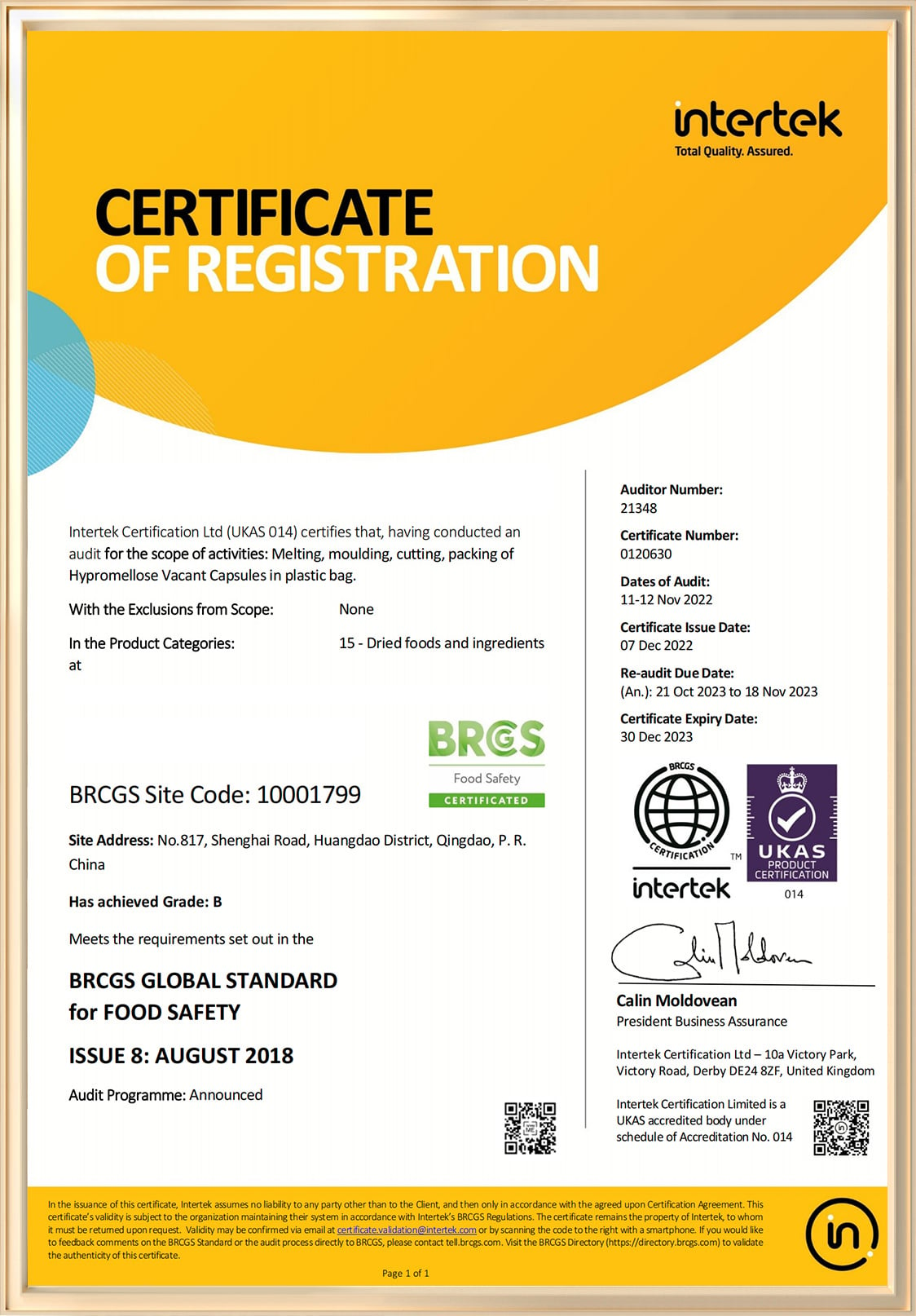
BRCGS Food Safety Issue 9 Grade A+ is certified by Micron2 Ltd (Body No. 197) for Dezhou Lanli Biotechnology Co., Ltd. (Site Code: 1513317, Ref: SZ017/26/01). Audited 2026-05-08 to 2026-05-10 and valid through 2027-07-06, it covers enzymolysis, decolorization, membrane sterilization, spray drying, and peptide packing.
-
02 / ISO 22000:2018
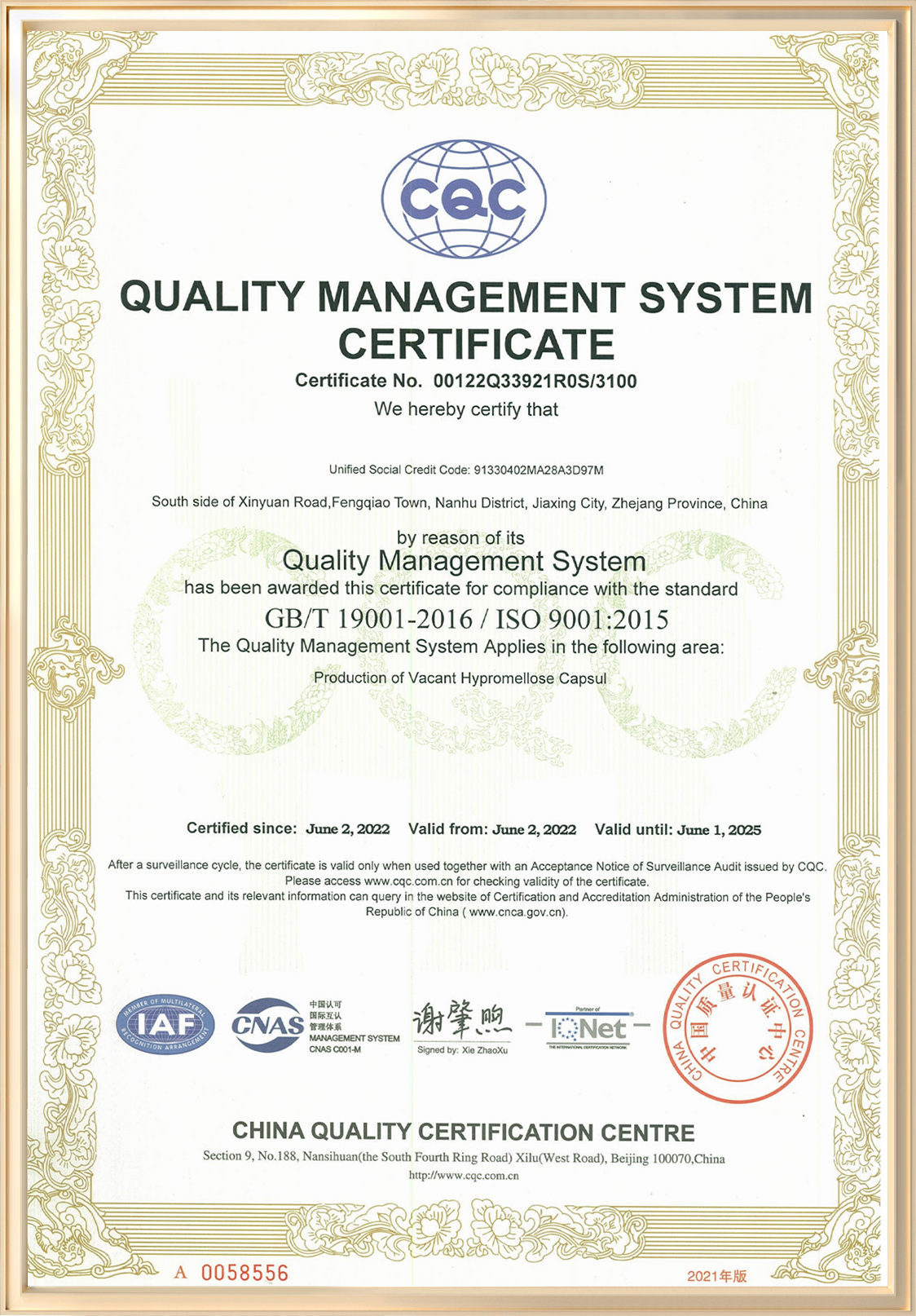
ISO 22000:2018 Food Safety Management System is issued by CQM (Certificate No. 002FSMS2300160, valid 2026-06-12 to 2029-06-12). It covers soy peptide powder, wheat oligopeptide powder, corn oligopeptide powder, and plant protein peptide for food processing.
-
03 / HACCP
HACCP Management System certification is issued by CQM (Certificate No. 002HACCP2300142, valid 2026-06-12 to 2029-06-12) for the identical plant peptide production scope.
-
04 / Kosher Pareve
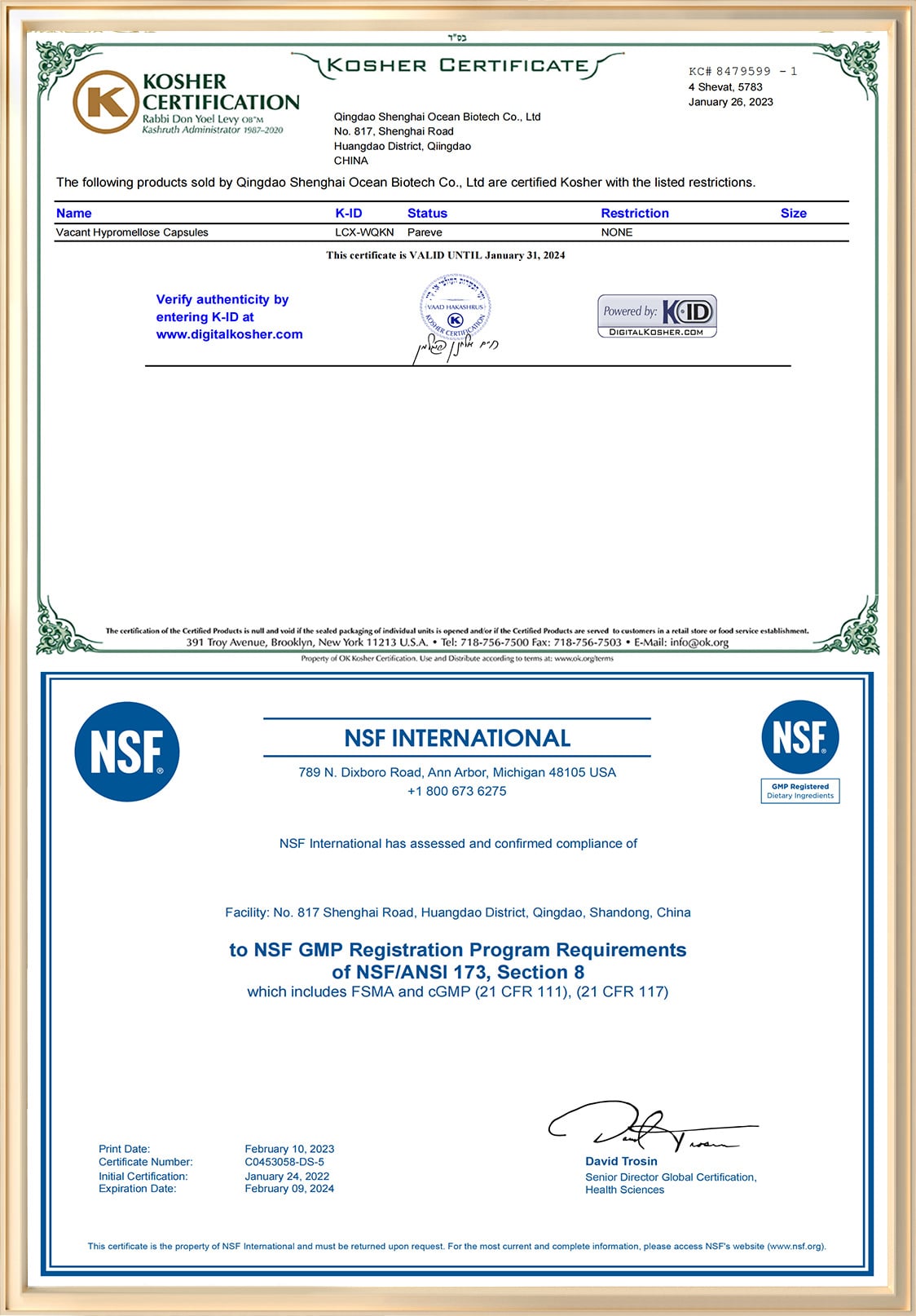
Ko Kosher Service (Pareve) certification is valid through 2026-12-31. It explicitly covers Soybean Peptide (20 kg/bag), Pea Protein Peptides (20 kg/bag; 10 kg/carton), Wheat Hydrolyzed Protein Peptides, and Rice Peptides.
-
05 / Halal & FDA
Halal compliance is certified by Shandong Halal Certification Service (valid through 2028-07-01) and Indonesian MUI / BPJPH Halal, alongside U.S. FDA registration.
Shipping Documentation
A batch Certificate of Analysis (COA), Technical Data Sheet (TDS), Commercial Invoice, Packing List, and Bill of Lading ship with your order. Health certificates and certificates of origin are provided for customs clearance.
Resources
Qualifying Yasin for your approved vendor list?
Request BRCGS Grade A+, ISO 22000, Halal & Kosher Audit Certificates →From 200 g Sample Evaluation to Bulk Container Delivery
Sourcing technical hydrolyzed plant protein requires validating sensory and solubility performance in your own formula before committing to bulk tonnage. Our six-step supply workflow pairs pre-sales, grade matching with export, shipping documents.
-
Step 1
Share your target botanical source, dosage, pH range, and regulatory needs. We recommend a matching grade and send the TDS and 2026 batch COA within 24 hours.
-
Step 2
We dispatch 200 g of the selected plant peptide grade free of charge. Your R&D team can run bench-top dissolution, thermal pasteurization, and flavor trials.
-
Step 3
Our team evaluates your trial results to determine if hydrolyzed grade needs to be adjusted for reduction of viscosity or turbidity.
-
Step 4
We issue a written FOB or CIF proforma invoice for your 500 kg minimum order quantity. This locks in specification limits, packing format (10 kg, 15 kg, or 20 kg), and T/T or L/C payment terms.
-
Step 5
Your lot is tested against GB/T 22729, GB/T 22492-2008, or QB/T 4707-2014 within our 10 days dispatch cycle. Any lot outside specification is held and replaced before shipment.
-
Step 6
We book ocean or air freight and supply the lot COA, packing list, commercial invoice, and bill of lading for customs clearance.
Formulation Design Notes That Lower Processing Risk and Cost
Specifications / RFQ Checklist| Formulation Parameter | What to Specify on Your RFQ | Why It Prevents Rework & Lowers Cost |
|---|---|---|
|
Beverage Matrix pH Window
|
Specify Acid-Beverage Pea Peptide (Lot 20260113230, pH 4.34) when finished drink pH sits between 3.8 and 5.5. | May reduce isoelectric precipitation risk near pH 4.5 and lower stabilizer usage. |
|
Complementary Amino Acid Pairing
|
Combine Pea Peptide (high lysine) with Rice Peptide (high methionine) in vegan nutrition powders. | Delivers a balanced essential amino acid profile without over-dosing a single isolate. |
|
Powder Bulk Density Matching
|
Match Corn Oligopeptide (0.40 g/mL) or Acid Pea Grade (0.44 g/mL) to high-speed sachet lines, or Standard Pea/Soy (0.21–0.26 g/mL) to canisters. | Prevents blend segregation and avoids re-tooling pouch or canister volumes. |
|
Allergen-Free Line Segregation
|
Select Pea, Rice, or Corn Peptides when formulating for allergen-sensitive channels instead of Soy or Wheat. | Avoids mandatory soy/wheat allergen callouts and simplifies plant washdowns. |
Client Formulation Results and Global Industry Applications
With industry roots dating to 1986 and Xiamen Yasin established in September 2009, we export collagen and plant peptides across North and South America, Europe, Asia, and the Middle East. We exhibit at trade fairs such as SupplySide West (Booth #3180 / #3918), Natural Products Expo West (Booth #3415 / #4705), Vitafoods Europe and CPHI. Our team helps clear up beverage clarity and address long lead times for clients.
Request Plant Peptide Formulation Support
UK Beverage Case Study: Feisty Drinks Ltd (Hydrolyzed Pea Peptide)
UK functional beverage brand Feisty Drinks Ltd previously sourced a plant protein that caused cloudy turbidity, sediment, and beany off-notes in their ready-to-drink (RTD) formula. Switching to Yasin’s deep enzymatic pea peptide (< 1000 Da ≥ 85.0%, 0.22 μm membrane-filtered) eliminated precipitation and delivered a clear solution with clean taste.
- Verified outcome: Clear RTD beverage solution and clean sensory profile in commercial production.
Thailand Beverage Manufacturer: Lead Time & Cost Optimization
A beverage manufacturer in Thailand was using hydrolyzed Pea protein from another Chinese supplier. Transitioning to Yasin’s 19,000 MT/year production line locked in a reliable 10-day dispatch cycle while lowering their landed ingredient cost per kilogram.
- Verified outcome: Consistent 10-day dispatch schedule and reduced landed procurement cost.
Core Industries Served by Our Plant Peptide Portfolio
Clear RTD & Functional Beverages
We provide low viscosity pea, rice and corn oligopeptides for high protein sparkling waters and other beverages with a non-chalky textured profile.
Dietary Supplements & Clinical Nutrition
High-purity soybean peptide (≥ 80.0% peptides, 92.5% protein) and glutamine-rich wheat oligopeptides for enteral sachets, tablets, and vegan protein blends.
Personal Care & Hair Cosmetics
Low-molecular-weight (< 1000 Da) rice, wheat, and soy peptides that penetrate low porosity hair cuticles to improve tensile strength and skin hydration.
Formulation Trade-Offs: When Enzymatic Plant Peptides Are Not the Right Fit
Proteolysis of enzymatic on the other hand alters the physical structure of plant protein. Based on a generic belief that smaller peptides are always better, deep hydrolysis are often used. Deeply cleaved grades are not recommended if your formula needs the four functional structures below.
| Formulation Scenario | Why Deeply Hydrolyzed Plant Peptides Work Against You | What to Specify Instead from Yasin |
|---|---|---|
| 1. Thermoreversible Gelling (Gummies, Marshmallows, Capsule Shells) | Cleaving proteins below 1000 Da destroys the macromolecular network needed to trap water into a firm gel (0 Bloom strength). | Specify our Food or Pharmaceutical Grade Gelatin (bovine hide, bone, or fish gelatin; 36,000 MT annual capacity) with Bloom strength matched to your recipe. |
| 2. High Emulsification & Foam Stability in Creamy Shakes | While enzymatic hydrolysis improves solubility near pH 4.5, deep cleavage reduces emulsifying activity compared to less-cleaved proteins. | Specify our Mildly Hydrolyzed Pea Peptide (Lot 20260319230, 85.0% protein, pH 6.92) to retain amphiphilic emulsion body. |
| 3. Leave-On Surfactant Cosmetics with Sensitive Skin | Partially hydrolyzed wheat gluten retains celiac-reactive peptides, and EU SCCS/1534/14 notes sensitization risks for higher-MW wheat proteins in surfactant cosmetics [7]. | Specify our Hydrolyzed Pea Peptide or Hydrolyzed Rice Peptide as wheat-free botanical alternatives for personal care formulations. |
| 4. Targeted Collagen Tripeptide (Gly-Pro-Hyp) or Joint Cartilage Protocols | Plant protein hydrolysates lack the collagen-specific Gly-Pro-Hyp tripeptide sequence; moreover, < 1000 Da size alone does not guarantee intact transport across intestinal PepT1 (which selectively transports specific dipeptides and tripeptides). | Specify our animal-derived Fish Collagen Peptide or Bovine Collagen Peptide lines when your label requires collagen tripeptides. |
Frequently Asked Questions on Bulk Hydrolyzed Plant Protein
-
How do I verify on a COA that a plant protein is enzymatically hydrolyzed rather than acid-hydrolyzed (aHVP)?
Check three indicators on the batch COA: the manufacturing standard, the < 1000 Da fraction (≥ 85.0% per GB/T 22729), and ash content (≤ 7.0%, with 2026 lots at 2.0%–6.6%). Acid-hydrolyzed vegetable protein (aHVP) is made by hydrochloric acid hydrolysis for savory umami seasoning, generating sodium chloride during NaOH neutralization and requiring 3-MCPD monitoring. We also provide a signed enzymatic process flowchart confirming food-grade protease cleavage.
-
Does the COA include degree of hydrolysis (DH%) or molecular weight distribution?
Every deeply hydrolyzed plant peptide COA reports the relative molecular weight fraction below 1000 Da (≥ 85.0% via GB/T 22729 SEC-HPLC). It also lists dry-basis oligopeptides (≥ 50.0% on pea, rice, corn, and wheat; ≥ 80.0% on soybean peptide per GB/T 22492-2008). If your QA protocol requires a specific DH% assay method (pH-stat titration, TNBS, or OPA) on the COA, we add it upon order confirmation.
-
Why is the protein percentage on Wheat Oligopeptides (77.5%) calculated differently from Pea (95.6%) or Soy (92.5%)?
Under Chinese National Standard GB 5009.5-2025, pea, rice, soy, and corn proteins use a nitrogen-to-protein conversion factor of N × 6.25. Wheat protein uses the wheat-specific factor of N × 5.70. On our Wheat Oligopeptides Lot 20260910200, dry-basis total nitrogen is 13.6 g/100g, matching our Mild Pea Lot 20260319230 (13.6 g/100g nitrogen, or 85.0% at N × 6.25).
-
Which hydrolyzed plant protein grade stays clearest in acidic RTD beverages (pH 3.8 to 5.5)?
Our Acid-Beverage Pea Peptide (Lot 20260113230, pH 4.34, 93.8% protein) and Rice Peptide (Lot 20260604290, 91.3% protein) are built for acidic drinks. Both pass through activated carbon, perlite, and 0.22 μm sterilization membranes. Request a 200 g free sample to validate UHT thermal stability in your finished drink formula.
-
Are hydrolyzed wheat, soy, pea, or rice proteins gluten-free and allergen-free?
Enzymatic hydrolysis does not remove major allergen status from soy or wheat. Our Soybean Peptide and Wheat Oligopeptides carry mandatory OPRP2 allergen declarations ("Soybean" and "Wheat") on outer packaging, and Wheat Oligopeptides are not gluten-free. Pea, rice, and corn peptides come from naturally gluten-free botanical sources; buyers making U.S. food "Gluten-Free" claims must verify FDA 21 CFR 101.91 compliance.
-
Which hydrolyzed plant protein is best for low-porosity hair and cosmetic formulations?
Formulators working on shampoos and serums for low-porosity hair choose our Wheat Oligopeptides (Lot 20260910200) or Rice Peptide (Lot 20260604290). For wheat-free personal care lines, Hydrolyzed Pea Peptide and Rice Peptide offer film-forming conditioning and hydration; always test your finished cosmetic surfactant and pH system.
-
What is your minimum order quantity (MOQ) and packaging format?
Our standard MOQ is 500 kg (1,102 lb) per plant peptide grade. Depending on bulk density (0.21–0.44 g/mL), powder ships in 10 kg (22.0 lb) cartons or 15 kg (33.1 lb) and 20 kg (44.1 lb) kraft bags with food-grade PE inner liners. Storage and shelf-life details are stated on each grade's Technical Data Sheet and batch COA.
-
How quickly do you ship samples and bulk production orders?
We return written quotations within 24 hours and dispatch 200 g free laboratory samples with matching batch COAs immediately after grade selection. Bulk production orders of 500 kg and above dispatch within 10 days from our 19,000 tons/year peptide facility under FOB or CIF terms.
-
What food safety, Kosher, and Halal certifications cover your plant peptides?
Our partner plant, Dezhou Lanli Biotechnology Co., Ltd., holds BRCGS Issue 9 Grade A+ (Site Code 1513317, valid to 2027-07-06). It is also certified under ISO 22000:2018 (002FSMS2300160) and HACCP (002HACCP2300142). In addition, the facility holds Ko Kosher Service Pareve certification (soy, pea, wheat, and rice peptides) and Halal certifications (Shandong Halal & Indonesian MUI/BPJPH).